The easiest way to test whether “cancel culture” actually exists is not to look at who gets cancelled, but at who doesn’t.
Because there are, very clearly, exceptions.
In my experience, two names tend to come up again and again.
The first is Michael Jackson. For years now, a certain kind of mental gymnastics has taken place around him — Gen Z’s professed commitment to hardline moral stances has, in theory, made it impossible to separate art from artist. But people really don’t want to let go of Michael Jackson, so instead, many simply sidestep the allegations or recast them as conspiracy (and, speaking from experience, the number of arguments this provokes is remarkable), allowing him to remain the King of Pop without any real sense of guilt attached.
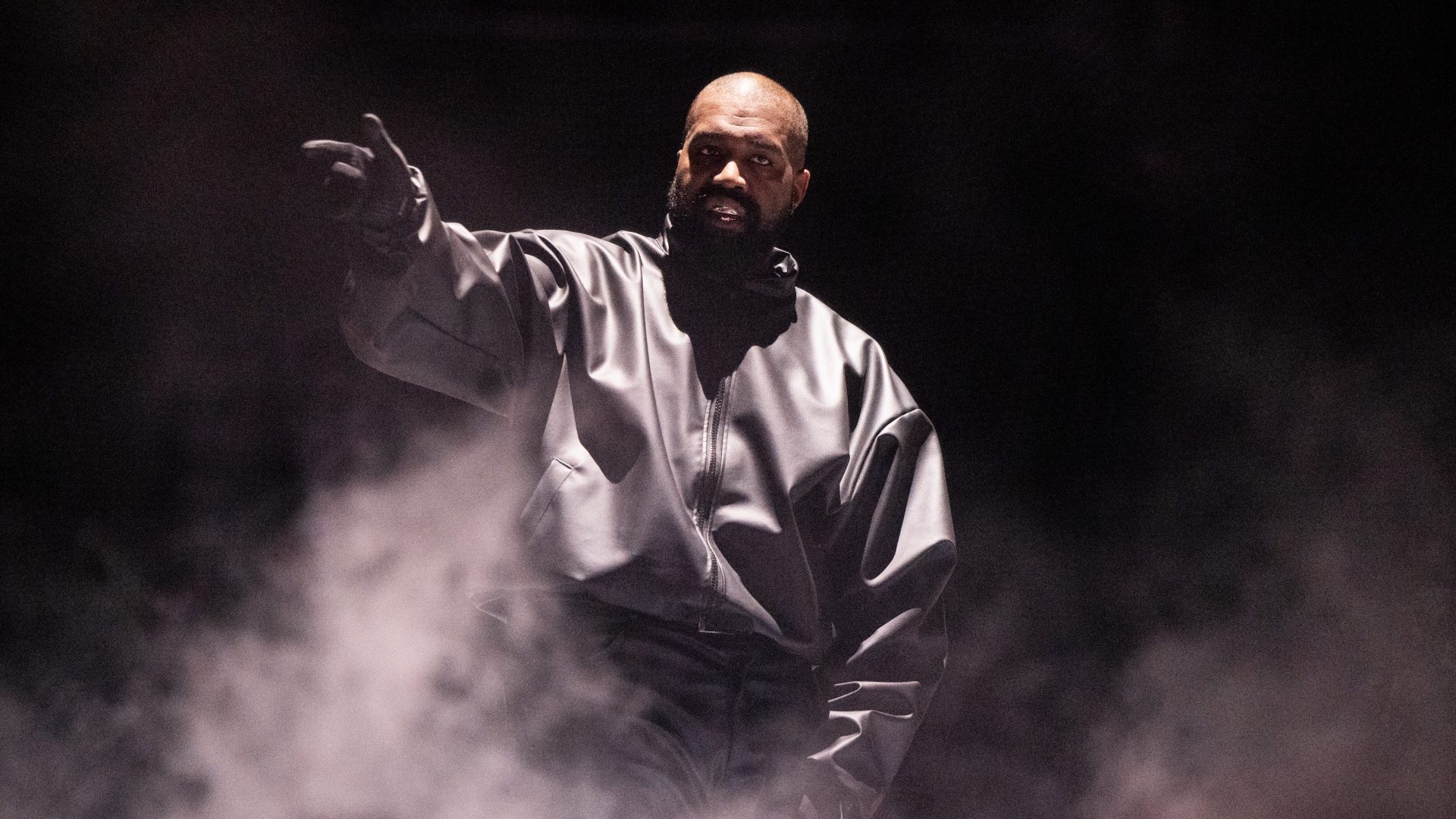
The other is Kanye West.
West is different, though, because there isn’t that same pretence. No one is really arguing that he didn’t say what he said, or do what he did. The record is public, extensive and, at times, astonishingly ugly: openly antisemitic remarks, a song titled Heil Hitler, self-identification as a Nazi, associations with figures like Nick Fuentes and Donald Trump.
And yet, when it was announced that West would headline all three nights of London’s Wireless Festival — his first UK shows in a decade — the reaction online was not one of mass outrage. Yes, there were a flurry of headlines and anger from Jewish communities, including a statement from the Jewish Leadership Community condemning the festival. It is being held in Finsbury Park, an area with one of the highest densities of Jews in the UK.
Sadiq Khan has criticised the organisers, saying that West’s comments and actions are “not reflective of London’s values”
But on social media, young fans were, if anything, upset at the idea that West might abruptly cancel after they had already scrambled for tickets – or worse, that the slot would get pulled due to backlash.
West’s latest album, Bully, has smashed Spotify streaming records. He has recently rowed back on his extreme behaviour and extremist views, insisting that he is actually not a Nazi and blaming bipolar disorder. In January, he took out a full-page ad in the Wall Street Journal apologising for his actions.
But it didn’t really matter, because prior to this apology, the consequences that are supposed to follow this kind of behaviour never really materialised for West. He remained commercially successful, and people who would readily disavow an actor for handsy behaviour on set, still talk about Kanye in the same tone: yes, it’s bad — but he’s Kanye.
If cancel culture is meant to draw clear lines about what a society will and won’t tolerate, then it’s hard to imagine a more obvious place to draw one than here. So why has West, for so long, seemed literally uncancellable?
Perhaps because controversy has always been part of the package. Long before this latest phase, West built his career on saying the unsayable — whether declaring that George W Bush “doesn’t care about Black people” on live television, or derailing teenage Taylor Swift’s Grammy acceptance speech. But that doesn’t really compare to making a song called Heil Hitler, does it?
There could also be a practical element to it; while for example actors are, in a very literal sense, dependent on other people’s willingness to work with them, musicians, particularly those operating at West’s level, are different. They can release music directly and reach millions of listeners instantly, whose engagement is, crucially, private – meaning you can condemn someone in public and still play their hits on the way home. There is no contradiction that needs resolving, because no one else needs to know.
Cancel culture, in that sense, has always had an element of performance to it: a public display of values, nailing your colours to the mast, as much as a set of actual consequences.
Suggested Reading

The UK Saturday Night Live is an unexpected hit – and this is why
But what’s interesting about West is that there was never, for fans, a great rush to distance oneself, and importantly, no widespread sense that enjoying the music required an accompanying disclaimer.
Which raises a more uncomfortable possibility. Could it be that the nature of his transgressions — primarily directed at Jewish people — is part of why there is less backlash? It is difficult to imagine a comparable situation involving other forms of racism being met with quite the same shrugging off.
In the online spaces where much of youth culture now takes shape, antisemitism is not exactly hidden. It is often displayed through “edgy” humour and inside jokes, and conspiracy theories recycling centuries-old antisemitic tropes, where the term “global elites” is essentially just an online dog whistle for jews.
But the people who will be front row to watch Kanye headline one of the biggest music festivals in the country are not in the mould of Nick Fuentes-esque fringe conspiracy theorists. They will be young, diverse, and, in most other respects, politically and socially progressive — arguably the same audiences who would be quick to call out other forms of bigotry.
Could it be that there’s a generational sense of distance? For Gen Z, the second world war is no longer within living memory, so making a song praising Hitler may not feel as obscene as it might have done for our grandparents. That doesn’t really wash though, as most children are taught about the atrocities of the Holocaust and the war as early as primary school (and also, not having lived through something does not absolve anyone from understanding its significance.)
And to be clear, the people excited to see Kanye West are not, for the most part, raging antisemites. But the reaction online has, at times, drifted uncomfortably close: responses to the announcement included lines like “a certain community will lock off the whole festival” or references to “Golders Green ultras” preventing it from going ahead.
Maybe the truth is less complicated than we’d like to think, and that, for all the talk of principles, people just care less than they claim to. Or at least, they care less when caring comes at the cost of something they enjoy.
Or perhaps Kanye West really is the exception that proves the rule — too culturally significant to be meaningfully “cancelled”. Like the banks during the financial crisis, he has become, in a sense, too big to fail.
Either way, and for all my generation’s appetite for hardline moral absolutism and standing up to injustice, you can’t help but wish that instinct might extend, just this once, to the idea that someone who has so openly and repeatedly trafficked in racism and bigotry shouldn’t be met with cheers as he walks on stage.
 Most popular

Matt Goodwin’s road to derision
GB News Scandal: How Ofcom let GB News corrupt British media

GB News sets its lawyers on to The New World
Matt Goodwin’s new book: The missing chapter