
It is nearly 16 years since Liam Byrne left a now infamous note reading “Dear Chief Secretary, I’m afraid there is no money” in a drawer at the Treasury. Now he realises what the note should have said.
It is 200 pages long and is a message not to his Lib Dem successor David Laws, but to his own Labour Party: that the mainstream political system has stopped delivering for the people it once promised to serve, and that populists are capitalising on their righteous anger.
When we speak over the phone, Byrne is in India on a trade mission. He calls the new UK-India free trade deal a “much, much bigger deal than I think the government has talked about at home.”
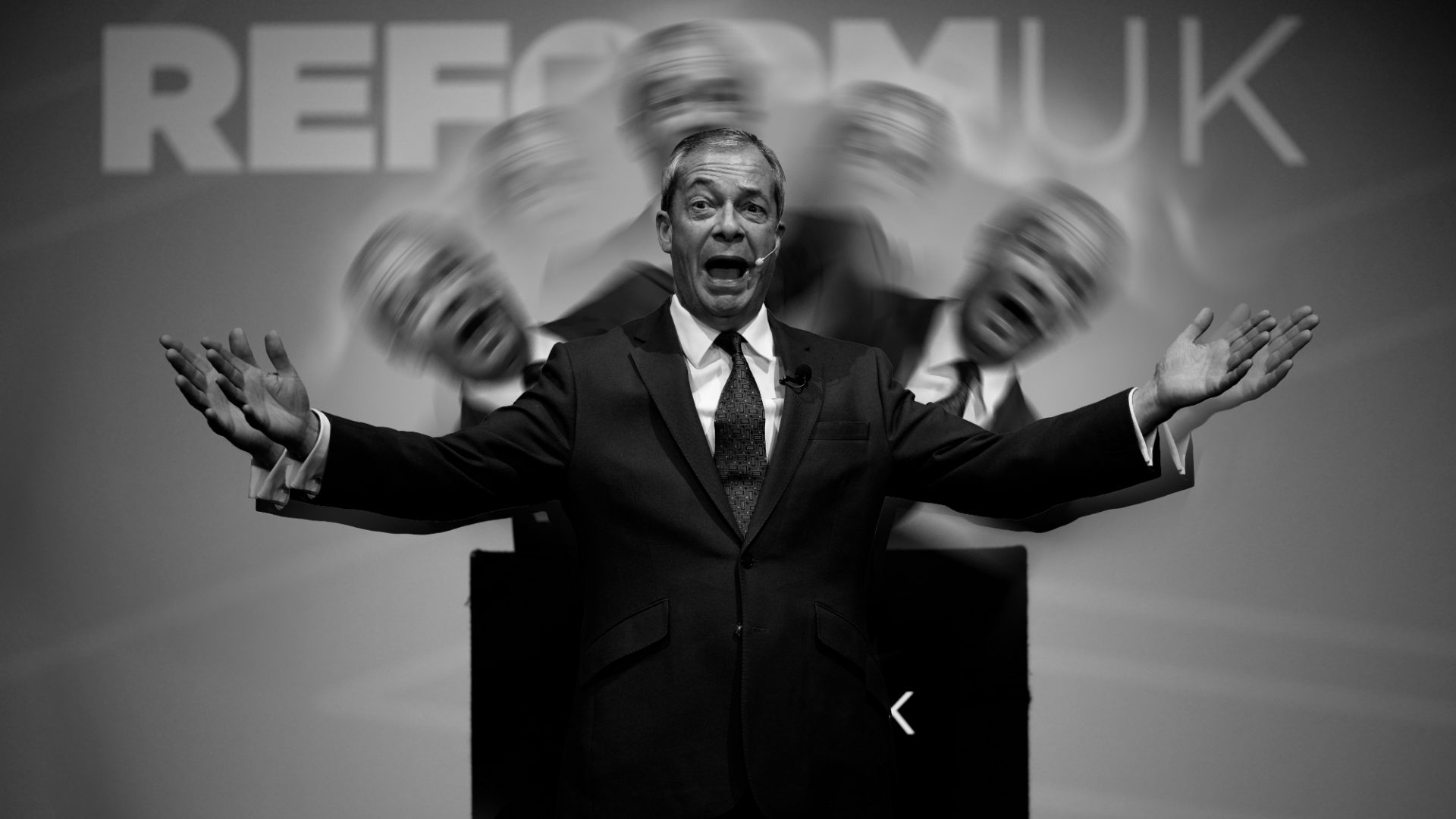
As you might expect, his latest book, Why Populists are Winning: and How to Beat Them, focuses on why Nigel Farage and Reform UK are fancied to sweep all before them at the next general election, and how to stop that becoming reality.
When I suggest that one way to beat populists might simply be to let them govern and fail, thus exposing their contradictions, he is adamant that Britain cannot afford the experiment. “Once populists are in power, they tend to be something of a disaster,” he says.
Over time, Byrne argues, they “shrink the economy by about 10%.” In Britain, that would mean “real GDP per head is £22,000 a person lower in 10 years’ time.”
“So, yes, they can reveal themselves to be hopeless. But crucially, they destroy the economy, and we just can’t afford right now a combination of appeasement, autocracy, and avarice.”
Byrne is fond of structure. The book begins with the three broad forces that have ushered in a rise in populism: the great disillusion, the great division, and the new age of human movement.
Alongside that, he splits Reform-curious voters into five different “tribes”, ranging from hardline culture warriors to more economically anxious, persuadable groups. He ends on a 10-point plan for beating populism, including raising living standards, rebuilding rundown public places, reclaiming patriotism.
The book traces the anger that populists are tapping into back to what he sees as the collapse of a post-cold war promise: that each generation would do better than the last. Before the financial crash, Byrne says, wages were “basically doubling once every 44 years.” Now, on current trends, it would take over a century for the same thing to happen.
The voters drawn to populism are not, in his view, the very poorest. “Populist voters are median voters,” he says. “They’re not dead poor, and they’re definitely not rich. They’re kind of in the middle.”
Many of these voters, Byrne says, live in communities that are visibly deteriorating; where the high street is boarded up, where the public realm has been closed down, and what he calls a collapse in “social capital” – the bonds and trust that hold neighbourhoods together.
The result is a broader sense of decline. A feeling that things are getting worse, not better.
And it is in this environment, Byrne argues, that populism thrives. There’s nothing especially original in that diagnosis, but the book makes it in a way that is both readable and hard to dismiss.
Byrne writes with the insider’s authority of someone who has seen a Labour government at its peak, serving as a minister under New Labour, and also in its more troubled present, as chair of the business and trade committee.
But this authority also raises an obvious question: the post-cold war economic settlement Byrne spends much of the book criticising – wasn’t that, in part, built under New Labour, a government he himself served in?
“It was after the crash that I kind of broke with New Labour,” he says, “because I was frustrated that they could not take inequality seriously enough.”
It’s now that I decide to broach the topic that has haunted him for over 15 years: the note. Isn’t it the perfect emblem of the Westminster insider elitism that populists have so ruthlessly exploited?
Byrne defends himself: “This was a note that was left by every finance minister to their successor back to the days of Winston Churchill, it was a bit gallows humour, and it was deeply regrettable. But this book,” he says, “this is the kind of note I wish I’d left all that time ago.”
Earlier in the book, Byrne compares populism to pornography: “you know it when you see it.” I ask whether that analogy can be pushed further. Pornography, after all, is often criticised for turning sex into instant gratification. Has politics undergone a similar transformation? Are we living in an OnlyFans era of politics?
Byrne laughs, but takes the question seriously: “Instant gratification is obviously a much bigger challenge now for politicians,” he says. But he resists the idea that voters are simply shallow or easily manipulated.
Suggested Reading


Sorry, but your dog should be illegal
“People are smart,” he insists. The problem is not that they cannot think long-term, but that immediate pressures – food bills, energy costs – make it harder to do so.
Byrne argues that politicians now have to do two things at once: set out a long-term direction and provide what he calls “real help now.” That balance, he suggests, is one the current Labour government is still struggling with.
“Mainstream politicians are planners, and populists are preachers,” he says – a fair diagnosis of Labour’s problem in government. You can never beat the populists if you cannot explain, in simple terms, what you are doing and who it is for.
“Mainstream politicians do need to become better preachers,” he adds.
Which raises the obvious question: what does that actually look like in practice? Byrne’s answer is to pull the argument back to economics.
“Ultimately, you’ve got to fight Reform on the centre ground of the economy,” he says. “They will make the country poorer… the economy is the centre ground.”
It’s a deliberate shift away from the terrain where populists are strongest, but he is clear that immigration cannot be ignored – every one of the five voter groups he identifies in the book ranks it as a top concern.
But how can Labour begin to take on Reform on the economy, when even on Byrne’s own account, the majority of the country think they’re completely botching it? Living standards, he notes, are projected to improve during this parliament – but only enough to make it the second worst on record. Which is why, in his view, Labour cannot afford to be cautious.
“We need to be a lot more forensic about increasing wealth taxes,” he says, alongside taking on companies “that are not playing by the rules”, such as Fujitsu and Amazon.
The aim is to rebuild what he calls a “something for something” deal – particularly for middle earners and younger voters who feel locked out of security and progress.
“You’ve got to have a stronger redistribution piece,” he says, “because that’s the only way you’re going to fix the inequality of progress.”
When I ask whether Labour needs to be bolder on this, he doesn’t hesitate. “100%,” he says.
Byrne reaches repeatedly for Franklin D Roosevelt as a model – Roosevelt, he argues, was able to tell a story big enough to embark on The New Deal, one of the most ambitious sets of reforms ever introduced in modern history. “Roosevelt reinvented progressive politics,” he says. “He was a brilliant storyteller.”
Which brings us, inevitably, to Keir Starmer. You don’t have to spend long in Westminster to hear that storytelling is not generally considered the PM’s strongest suit. Byrne is more generous – up to a point.
“I think what Keir shares with Roosevelt is a confidence in public institutions,” he says.
But Byrne is clear that the government has not yet “got its story straight”, and that Labour needs to be more willing to take risks – economically and politically. There are, however, figures within the party who can help close that gap.
“Angela Rayner is a brilliant storyteller, and so is Wes Streeting, as is Shabana Mahmood.” Infer from that what you will.
The book is very readable, and much of it rings true. Byrne is good on the economics of populism; it’s a clear account of the current mood.
But there are gaps: he is upfront that only two of his five “tribes” are really persuadable for Labour. He is also clear that Reform’s base is largely drawn from former Tory voters, not Labour ones. That raises an obvious question about how far this is really Labour’s fight to win – and how much of the party’s current strategy risks misreading where the pressure actually is.
Speaking of which, there is relatively little here on pressure from the left. If populism is “what rebellion looks like in a democracy”, then it is not only a phenomenon of the right. The risk of losing voters in the other direction – particularly younger, more disillusioned ones – barely features.
And then there is the bigger question running underneath the whole thing.
Byrne’s answer to populism is, in part, to meet it on emotional terrain – to communicate better, to tell a stronger story, to engage more directly with anger. At one point, he talks about the need to “ride the tide” of that anger rather than retreat from it.
But that leads to an uncomfortable conclusion. If populists win by simplifying politics, amplifying outrage and thriving in an attention economy, how do you adapt to that without becoming a part of the problem? The book never quite resolves that.
Why Populists Are Winning: and How to Beat Them by Liam Byrne is published by Apollo on March 26