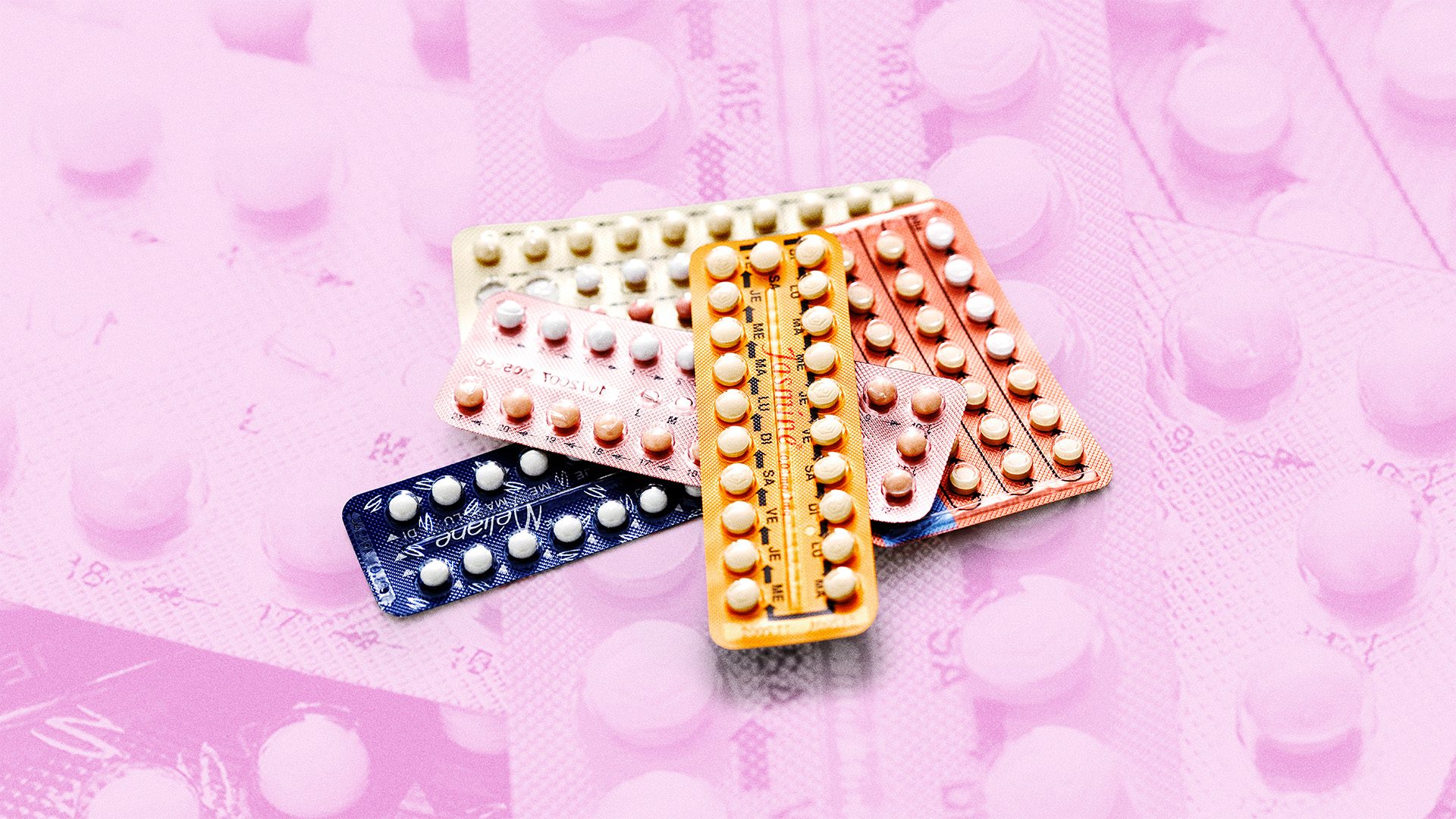
When I was 15, after years of periods so painful I’d cry into my pillow, my mum took me to our local GP. After taking my blood pressure and asking about family history, the doctor recommended I start the progesterone-only pill (the mini pill) which can stop menstruation altogether. Six years later, I’ve never come off it.
It is a fantastic invention. It has allowed me, and millions of women, to live life with fewer interruptions, less pain, and more control. But I will say this: almost every non-straightforward medical issue I’ve raised with a doctor has, at some point, been attributed to “side effects of the pill.” Anxiety? The pill. Headaches? The pill. Fatigue? Probably the pill.
And I do think something is unsettling about the fact that when teenage girls and young women present with reproductive pain, they are often funnelled en masse onto a daily hormone-altering medication. Much better would be a greater sense of urgency around researching the underlying causes of their pain.
But here’s the problem: even in 2026, you cannot attempt to have a candid, complex conversation about women’s health and reproductive rights without it collapsing into something hyperbolic and dangerous.
Any sensible criticism of hormonal contraception – about side effects, about medical misogyny, about women’s health – has been hijacked. At best, it has been taken over by click-baiting wellness influencers, and at worst, by pseudoscientific, anti-feminist rhetoric.
The internet is now awash with the idea that birth control fundamentally changes who you are.
One of the most viral and persistent claims is that, if you go off the pill while in a relationship, you’ll suddenly realise you’re no longer attracted to your partner. Variations of this story appear constantly across TikTok, Instagram and Reddit, of women describing how they simply woke up one day post-pill and found their boyfriend repulsive.
There are posts dressed up as scientific research warning that hormonal contraception “alters mate selection”. The short version is, those on the pill aren’t in a baby-making mindset, so won’t choose men likely to make good partners, hence why so many women are dating losers.
How’s that for an excuse when your grandma asks you why you still aren’t married? When I first encountered this narrative as a teenager, it terrified me: the idea that a medication I was taking for pain might secretly be chemically deceiving my brain.
But now this narrative has been intertwined with an almost spiritual mythology: hormonal birth control, we’re told, flattens you, dulls your intuition, and makes you less feminine. If you have perused X over the last year or so, you’ll have found posts saying something like, “i stopped taking the pill this year and i feel like my face is becoming more feminine.
Another: “When a woman goes off The Pill she starts to regain her femininity”.
And finally, “when I stopped taking the pill, my tastes in men changed dramatically, and i don’t understand now how I could ever be attracted to twinks. Or rather, I do, and that is a testament of the power of chemical hormonal manipulation over women’s lives.”
When singer Lorde spoke about experiencing ovulation without birth control for the first time and likened it to doing LSD, this did numbers with the types of accounts posting the above, and was seen as proof that synthetic contraception had been quietening something natural and wild in women.
Suggested Reading

Stop blaming women for Britain’s falling birth rate
A study found that 74% of contraceptive content on YouTube and nearly half on TikTok discouraged the use of effective birth control. And it is working. I have friends who refuse to go on the pill because they “don’t want to mess with their hormones,” yet regularly take the morning-after pill “just in case” – despite the fact that it is… also made of synthetic hormones.
The consequences of this aren’t abstract either. The Times has highlighted a surge in young women relying on period-tracking apps to predict “fertile windows” as their primary method of avoiding pregnancy, with around 69% of 18-24-year-olds reportedly using tracking tools this way, (despite this method being significantly less effective than the pill.)
Unsurprisingly then, between 2018 and 2023, abortion requests linked to these app failures rose sharply, with some analysts pointing to influencer endorsements of this sort of “natural” contraception as a contributing factor.
It’s no coincidence that much of this content is produced and consumed by younger women. They were born long after the feminist victories of the late 20th century, including widespread access to the contraceptive pill. We inherited the freedoms without seeing the fight for it.
The ability to decide when – or whether – to become pregnant has been so normalised in our lifetimes that it’s no surprise people have begun to rally against it, even if it is in something as harmless as pinterest moodboards romanticising different phases of your cycle (a real thing teenage girls make).
It is also impossible to ignore who benefits from anti-birth control messaging: right wing, misogynistic men who want to peddle the “tradwife” fantasy and convince us that sexual liberation, financial independence, and professional ambition are elaborate traps that have severed women from their natural role.
And when you look across the Atlantic, at the rollback of federal abortion protections in the United States following the Supreme Court’s decision to overturn Roe v. Wade, the stakes become harder to ignore.
We absolutely should challenge medical misogyny. We should demand better research into women’s pain, better options with fewer side effects, and doctors who don’t treat the pill as a catch-all sticking plaster solution.
But it is bitterly frustrating that even raising those critiques risks feeding a reactionary movement that would happily see women’s reproductive autonomy curtailed altogether.
The pill is not perfect. But it is undeniably a tool of liberation – and we are at a moment in history when the right to use it cannot be taken for granted.
 Most popular

‘Operation Epic Fury – as it happened’
Is Star Wars dead?
Morrissey returns.. and heaven knows he’s mythical now


Iran War: Trump has now sealed his own fate