On a windy afternoon in January, the Gdańsk shipyard looks deserted, its cranes immobile against a clear blue sky. Closer to the dock, rap music blares out of speakers as people whizz around a small ice rink. Nobody is selling cocktails today, but in summer this is one of the Baltic city’s favourite hangout spots. At the centre stands Hall 31B, an old wood-drying plant, now the Grid Arthub creative quarter.
Up on the top floor, Mariusz Waras is making tiny sculptures from black-and-white Lego. The artist, also known as M-City, is Poland’s only professor of graffiti and normally works on a larger scale, covering the facades of buildings from Warsaw to Rio de Janeiro.
Neighbouring studios house fashion designers, architects, and musicians. The Grid, inspired by creative hubs in other post-industrial cities, is vibrant and forward-looking, yet this Baltic city remains, more than most, profoundly shaped by its past.
Towering above the entrance to the Gdańsk shipyard are three steel crosses commemorating workers killed during protests in 1970 over rising food prices. It is the first monument to communist oppression in a communist state. A decade later, the shipyard, once named after Lenin, became the birthplace of Solidarity, Poland’s first independent trade union, led by the moustachioed and charismatic electrician Lech Wałȩsa.
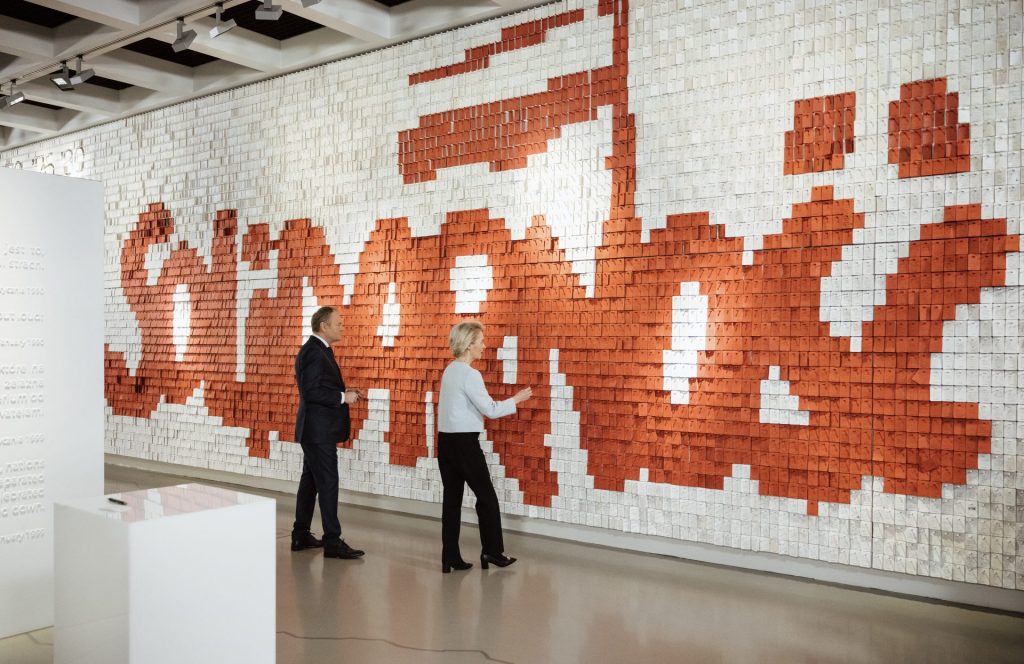
The legacy of the movement – which ignited a mass challenge to Soviet-bloc rule – is celebrated in a striking building nearby. Across seven rooms with historic objects and interactive displays, the rust-coloured European Solidarity Centre, which opened in 2014, tells the story of the shipworkers’ revolt. In the first hall, there is a clocking-in board with paper timecards, and visitors can sit inside the cabin of crane operator Anna Walentynowicz. After three decades of toil, she was let go just shy of her retirement. Her unjust dismissal led to a strike on August 14 1980, which erupted into a broader fight for workers’ rights and political freedom.
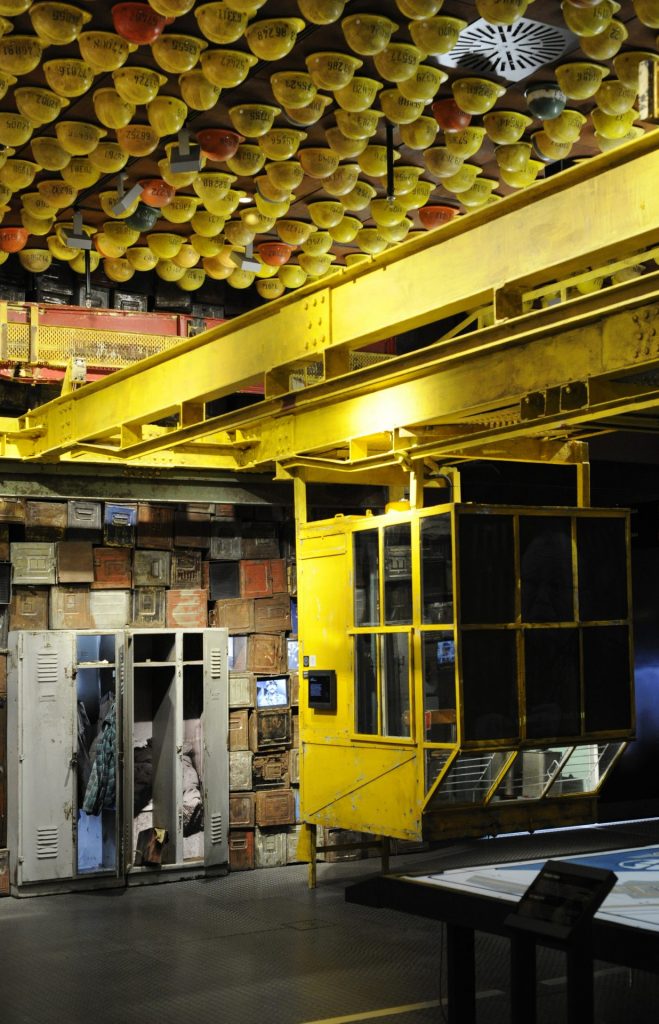
The ceiling is covered with yellow dockers’ helmets. “Each one has a number on it and workers used to try to cover these up,” said Jacek Kołtan, the centre’s director of research. “But with the Solidarity movement they lost their fear of the authorities and their spies.”
Other rooms feature Communist-era interiors, grocery shops with empty shelves, a prison cell, interrogation room and a mock-up of the famous round-table talks between the Communist government and Solidarity. Then comes the painful period of martial law, followed by the wave of revolutions across Eastern Europe at the end of the 1980s.
Apart from the museum, the building has a library, conference rooms and the offices of various NGOs. One of these is occupied by Wałȩsa. At the age of 82, the former president and Nobel prize winner still comes in most days when he is in Gdańsk.
The museum is one of Poland’s top attractions, welcoming one million visitors a year. But the place is less popular with the current president, Karol Nawrocki, who is aligned with the ultra-conservative Law and Justice party, PiS (Prawo i Sprawiedliwość).
Last August, Nawrocki unexpectedly beat Rafał Trzaskowski, the seasoned mayor of Warsaw and the centrist Civic Platform’s candidate, in the presidential election. A fortnight later, on the 45th anniversary of the Gdańsk Agreement, Nawrocki snubbed an invitation from the director of the ESC and chose to visit a rival museum a stone’s throw away instead. There, the displays centred on shipbuilding and the Catholic Church.
The European Solidarity Centre initially enjoyed cross-party support, but in 2018 the newly elected right wing government announced that its funding would be cut by almost €1m. Some members of the Law and Justice party thought the museum’s name lacked patriotism, and took exception to the fact that an LGBT youth-support group occasionally held meetings there
“They called our place the European Solidarity Centre for gays and lesbians”, sighed Kołtan. But within 24 hours, crowdfunding had made up the shortfall. When the government changed again in 2023, headed by the pro-Europe leader Donald Tusk, funding from the Ministry of Culture was restored.
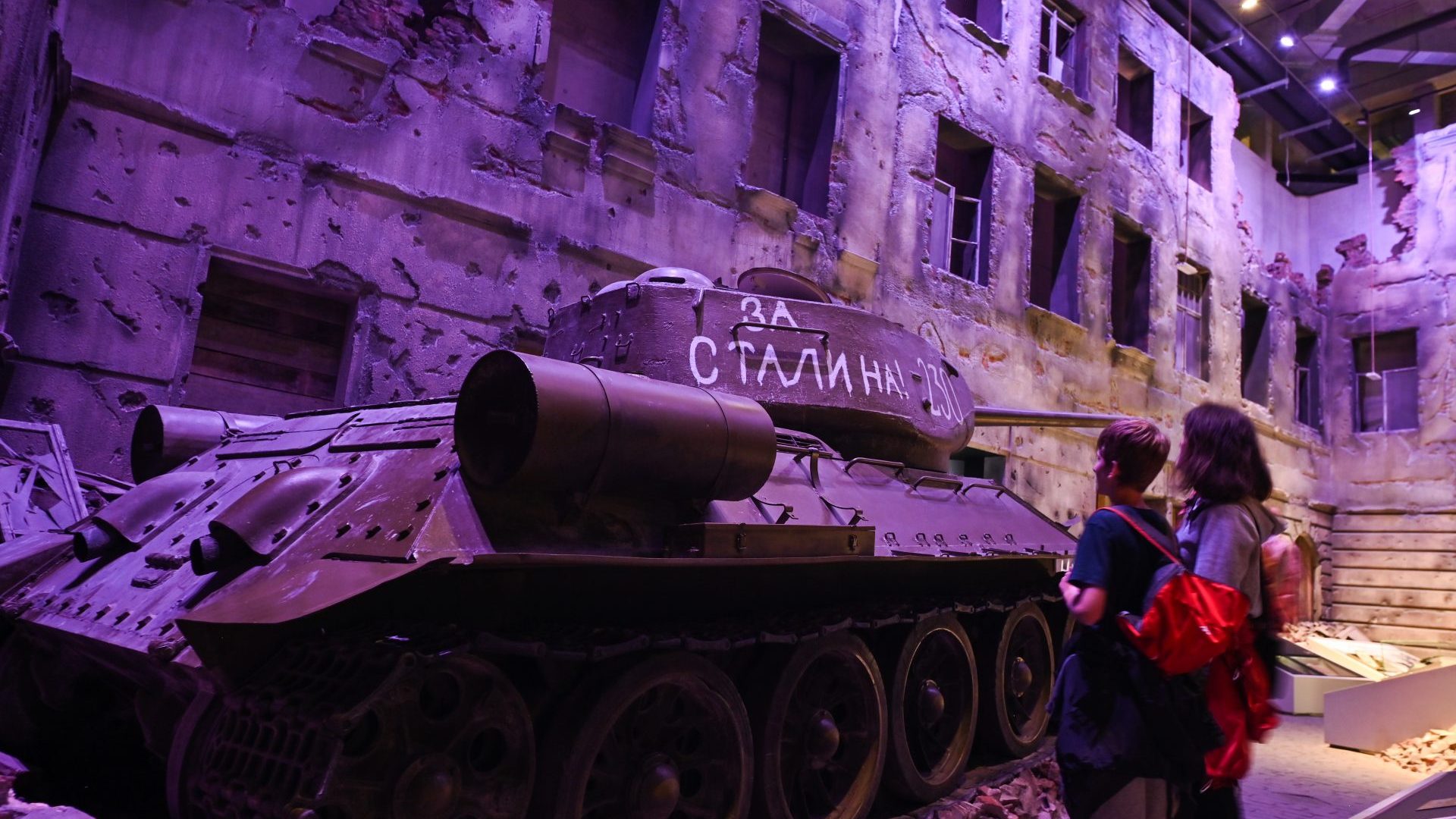
A fiercer battle broke out over another of the city’s museums, which opened in 2017 to commemorate WWII. The architects buried six of the Museum Of The Second World War’s building’s 13 storeys underground, “to be closer to hell,” explained Dr Jan Daniluk as he led us down dimly lit, sloping corridors towards rooms devoted to the rise of fascism, the Holocaust, terror, bystanders, collaborators and the resistance.
The emphasis throughout is on the suffering of civilians, but unexpectedly for Poland, one room documents the second-largest group of victims of the Nazis’ genocidal policies – Stalin’s soldiers. Around 3.3 million Soviet prisoners of war either died from starvation in open-air camps or were killed between 1941 and 1945.
A film shot by an American reporter records the 1939 German assault on Warsaw, including footage from a bombed maternity hospital. There are harrowing pictures of a teenage girl gunned down as she foraged for potatoes in the suburbs of the city with her family. The idea is to show the Polish experience of the war within a broader European context, although there is also material from Asia, including objects carbonised by the Hiroshima bomb. “We want people to understand that this was a world war,” said Daniluk.
But the curators have not always agreed on what to exhibit, leading to rows and even a lawsuit in the Gdańsk district court. Nawrocki, who happens to be a former historian from the Gdańsk region, wanted the museum to present Poland as both hero and victim caught between two malevolent powers, Germany and Russia.
During his four years as director, he gave pride of place to Polish resistance and sacrifice, and to the Poles who rescued Jews under German occupation. In all, he made 17 changes, which included getting rid of a plaque that broke down the death toll by nationality – possibly because it revealed that Soviet and German losses were the highest. He also removed a film in the last room that laments humanity’s inability to learn from its mistakes.
When Rafał Wnuk, one of the museum’s original creators, took over after the government changed in April 2024, he began rolling back the changes, which he saw as politically motivated. Our guide, Daniluk, told us the staff are already bracing themselves for Groundhog Day in case PiS is returned to power in parliamentary elections next year and Nawrocki’s edits are reinstated.
At the same time, demands for German cash for the devastation caused by the Nazis are growing louder. Back in 2022, the PiS government commissioned a report asking for €1.5tn in compensation. It is such a popular campaign that even many of Tusk’s MPs support it.
Against this backdrop, a small display in Gdańsk’s town hall proved incendiary. Tucked away in a corner of the 15th-century building, the Our Boys exhibition sparked street protests as well as long queues of visitors when it opened last year. In the first room are rows of sepia portraits of young Polish soldiers. Most are smiling – all of them are wearing Wehrmacht uniforms.
The fact that up to 450,000 Poles were conscripted by the Nazis is rarely mentioned. It doesn’t fit with the dominant national narrative about heroic resistance, culminating in the 1944 Warsaw Uprising. The widespread secrecy was not just prompted by shame, but also self-preservation. After the Red Army took control of Poland in 1945, evidence of service in the Wehrmacht could mean a death sentence.
Apart from one photograph of an execution, there is little on display here about Poles being complicit in Nazi war crimes or about their suffering on the frontlines. While some conscripts were sent north to Stalingrad, others ended up in German-occupied countries in southern Europe where they praised the food and landscapes in letters home.
The exhibition also reminds visitors that Józef Tusk, grandfather of today’s prime minister, briefly served in the German forces. Although he later joined the Polish resistance against Hitler, the revelation wrecked his grandson’s chance of becoming president two decades ago in the 2005 presidential elections.
With the presidency and premiership held by rival parties, Poland is split down the middle and embroiled in culture wars. Museums are often caught in the crosshairs. Just like the recent clash between the Trump White House and the Smithsonian in the US, they are put under pressure to whitewash and simplify a complex past.
One floor above the Our Boys exhibition, the desk and chair of Gdańsk’s former mayor stand behind a glass screen. It is a shrine to Paweł Adamowicz, who was stabbed to death in 2019 at a charity event. A staunch defender of minority rights, the mayor was popular, but also had his critics.
Many felt the murder wasn’t just the random act of a knifeman with a history of mental illness. They saw it as the result of rampant online hate and the ever-present danger of divisive politics. Seven years on, those same fears seem awfully current.
Lucy Ash is the author of The Baton and The Cross: Russia’s Church From Pagans to Putin, now published in paperback by Icon Books
 Most popular
Screen scandal: How Ofcom lets GB News get away with it

GB News Scandal: Read our dossier of their flagrant Ofcom breaches
Iran has killed off Reeves’s fiscal rules. Here’s how to radically rewrite them
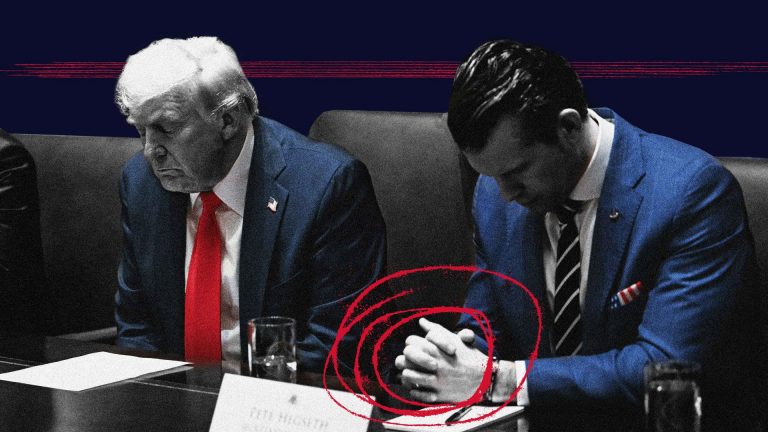
Trump’s Iran war is becoming a fundamentalist Christian crusade