It has been well over 500 days since our regional elections here in Brussels, but we are still without a government. This, unfortunately, is a world record. Yet the subject on everyone’s lips here for weeks now has been a new nativity scene in our iconic Grand-Place.
Designed by a local artist to replace a dusty, wooden predecessor that was reportedly falling apart after 30 years of dutiful service, the new nativity scene has been hugely divisive.
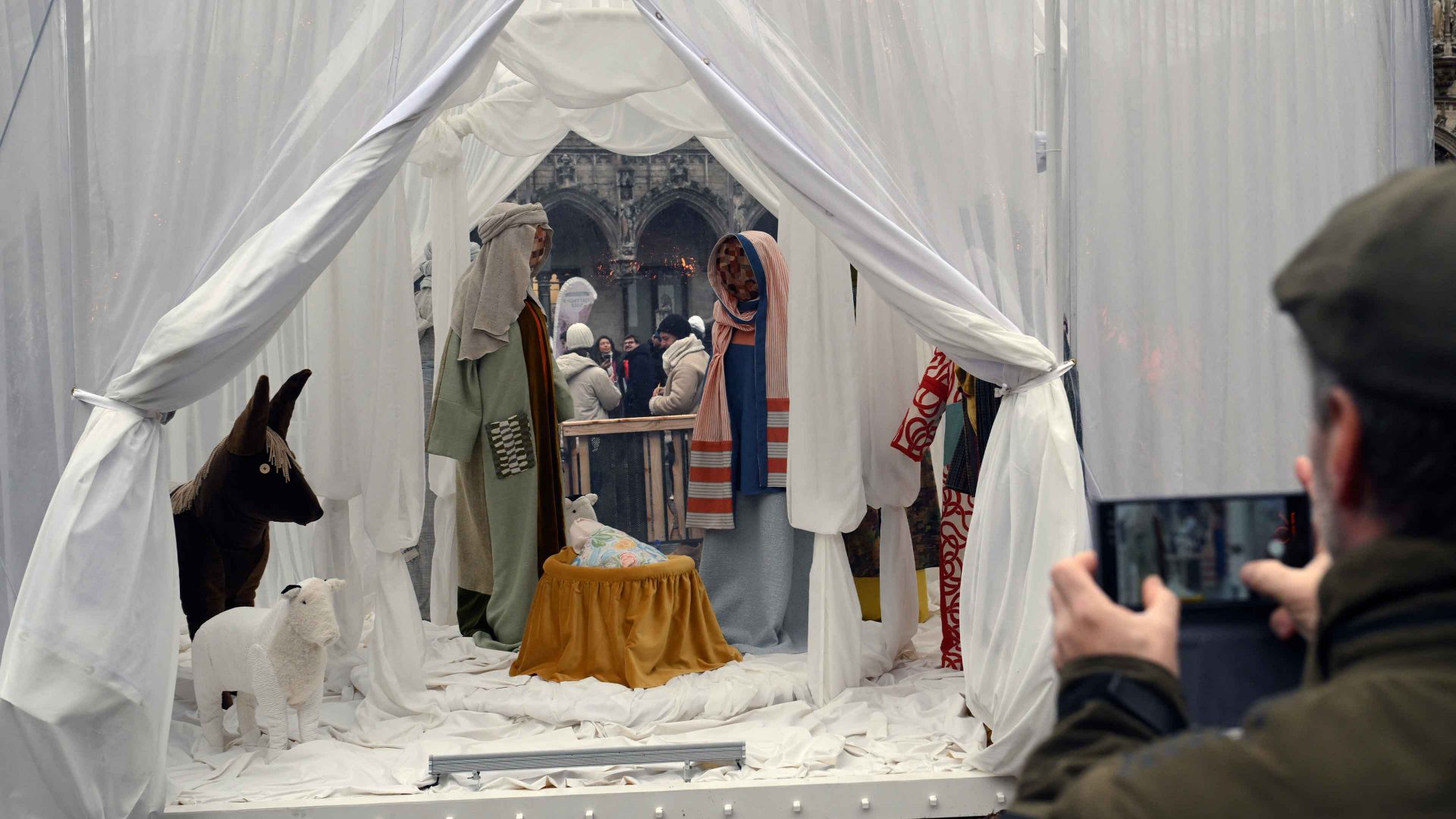
Housed in a 6×4 metre transparent structure and draped in white fabric, the vibe is much like an operating theatre. Then there are the life-sized rag dolls, depicting a faceless Mary, Joseph and baby Jesus. Dotted in between are a plush donkey and a few sheep that wouldn’t have looked out of place in a high-end toy store.
The strong overall impression is that someone is taking the piss. In true absurdist Belgian fashion, the whole thing – made from recycled leftovers – cost €65,000. To make things worse, baby Jesus was decapitated and his head stolen from the crib a few days after it opened. “I can confirm it was the ball of cloth that served as the head of the baby Jesus that was stolen,” a spokesperson told a local news outlet.
The new nativity scene, or crèche as we say in French, became a cultural lightning rod. The figures’ multicolour patchwork head coverings and lack of recognisable features were criticised for being “woke” and “sharia-compatible”. Thomas Meunier, a player on our national football team, declared that we – by which presumably he meant the Belgian nation – “had reached rock-bottom”. Meunier lives in France.
Georges-Louis Bouchez, the leader of Belgium’s French-language, centre right party, posted a long missive on X, in which he said the design’s featureless figures brought to mind “the zombies” found around the city’s train stations. It was a tasteless reference to the city’s growing homeless population.
The other camp in this culture war, mostly made up of city officials and local Catholic church figures, responded, saying that was precisely the point. The artist, Victoria-Maria Geyer, a German-born architect and designer based in Brussels, reportedly wanted every Catholic, regardless of their background and origins, to be able to identify themselves in the Biblical story.
Suggested Reading


The Italian town that doesn’t celebrate Christmas
But the biggest single group, as ever, is the silent majority of locals with no interest in the culture war nonsense. Our primary objection to the scene has been that it looks idiotic.
As one acquaintance dryly observed, at the very minimum a nativity scene should not scare children. It’s a good point. The first thing I thought of when I saw the life-sized figures were Harry Potter’s dementors.
Rather painfully for the critics, Geyer’s project was selected among several bids by a committee of city officials and other figures, and conceived in dialogue with the local Catholic church. Geyer herself is a Catholic. At a press conference hastily organised to defend the nativity, she sat next to city officials wearing a cross around her neck.
As it turns out, every aspect of the design was deliberate. The plain, greenhouse-like structure that hosts the scene? A reference to the city’s famous royal greenhouses. The decision to make baby Jesus, Mary and Joseph out of cloth? A homage to Belgium’s long textile craftsmanship. The reason they don’t have eyes? Reportedly because several people on the committee that chose the winning project thought that a previous version that had buttons for eyes would have been found… offensive.
This isn’t the first time city officials have managed to upset just about everyone. In 2012, instead of a traditional tree they gave us “Xmas3”, a Brutalist, cubic light structure. It was so widely detested that the authorities took it down before New Year’s Eve because they thought it might get vandalised. Ever since then we’ve had normal Christmas trees.
So, perhaps all is not lost. Perhaps the city can send the nativity scene where it belongs – a contemporary art museum – and restore our old crèche next year.
Linda A Thompson is a Belgian journalist and editor