Re: “A woman who would not be silenced” by Sonia Sodha (TNW #463).
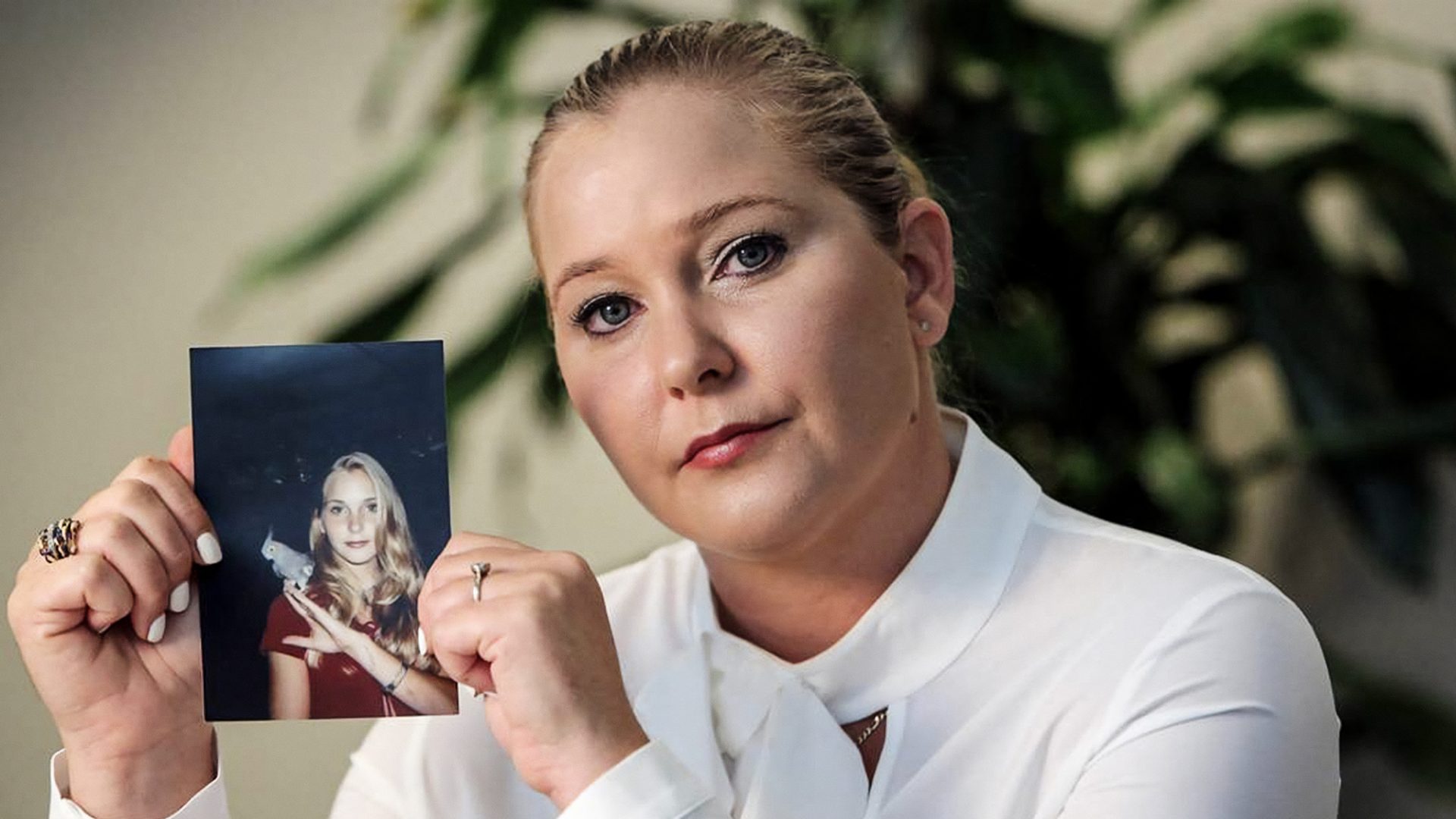
Virginia Giuffre was so courageous. Let’s hope that 2026 is the year that many more abusers and enablers associated with Epstein are named and brought to account. It is also extremely unlikely that Epstein was unique.
Sarah Lea
I am wading through Virginia Giuffre’s book and it really is horrific, but sadly, no more so than I expected.
Her story is not unique when you consider the victims of the grooming gangs. They were also victimised by more powerful men. It’s all related and the government needs action instead of talk.
Wendy Hodgson

Re: “Merger most foul” by Matthew d’Ancona (TNW #463)
It’s a very astute observation that the bursting of the AI bubble is likely to be blamed on Labour. The global financial crisis was very successfully spun as “Labour crashed the economy”. The number of right wing papers means they can trot out the same slogans day after day in unison and set the news agenda in a way that left/centre newspapers cannot.
Even if Starmer and Reeves are still in place at the time of the next election, or if Streeting or Burnham take over instead of Rayner, the likely recession triggered by the bursting of the AI bubble will kill their popularity.
David Roberts
Predicting the future, especially in politics, is a dodgy exercise. Matthew d’Ancona allocates seats to Reform, Labour, the Lib Dems and the Tories. But where is the Green Party? Somewhere in the 40 or so seats he doesn’t allocate? If Reform is on the rise, so are the Greens, and Matthew should surely have inserted them among the high flyers.
Christopher Ralls
Eastbourne, East Sussex
Matthew d’Ancona’s article is interesting and amusing, but why is the media – and even The New World, so obsessed with Nigel Farage? We don’t need this kind of speculation; let’s talk about policies and what might help Starmer to get ahead.
Richard Robinson
Matthew d’Ancona’s prediction for the next general election is scary and compelling in equal measure. I confess to being a natural optimist, but I still firmly believe that the next election will mirror Edwardian days.
The 2024 Labour landslide was similar to the Liberal landslide of 1906. In January 1910 Herbert Asquith called the people to the polls again. This time, the Liberals only just emerged ahead of the Tories by two seats but continued to govern thanks to support from John Redmond’s Irish Parliamentary Party.
I believe that in 2029 or earlier, Labour will win more seats than Reform and Tories combined, but only just, and end up governing with Lib Dem support. If I am wrong, God help us all.
Robert Boston
Kingshill, Kent
Re: “Britain’s most dangerous age group” by Zoë Grünewald (TNW #463)
The telling narrative is that social media has allowed middle-aged people to depart from the social norms which over the last five or six decades had produced a more tolerant society. This has resulted in intolerance, bigotry, racism and xenophobia becoming acceptable, with the anonymity of social media allowing people to express their previously constrained intolerant feelings openly.
Michael Boyle
Should MI5 start staking out Wetherspoons?
Shariq Siddiqui
Re: “Trump’s declaration of war on Europe” by Paul Mason (TNW #463)
It is choice time for the UK – become in effect the 51st state or embrace Europe. To try to sit in the middle will satisfy neither. We also need to reduce our dependence on US defence tech to give us real independence of decision-making.
Guy Masters
Paul Mason writes of Trump: “He wants Europe to take primary responsibility for its own defence.” This is what progressives like Macron have been on about for years, held back mostly by the likes of Angela Merkel. It is ironic that during the Brexit debacle, Leave kept going on about the EU wanting an army – now their dear leader Trump is demanding exactly that!
I think it’s time Europe takes back control of its own defence. We are stronger together, while America is a dying animal, reminiscent of Britain after 1901.
Jean-Marc Le Feuvre
Suggested Reading

Why Virginia Giuffre is our Person of the Year
Re: Alastair Campbell’s Diary (TNW #463)
The appointment of Nick Thomas-Symonds as UK-EU negotiator with full cabinet rank is to be welcomed, as is the recent Commons victory for a Lib Dem motion to back talks on joining an EU customs union. The absurdity of Sir Keir Starmer’s position is becoming clearer by the day.
David Hogg
Re: “Facebook nostalgia isn’t what it used to be” by James Ball (TNW #463).
I am in my 70s and have closed my FB account, fed up with the unmoderated tripe that was continually presented to me. I haven’t missed it at all.
John Bridger
James Ball quotes a remarkable chunk of doggerel, ending with “the wife was content with her lot”, then says anyone over 60 is “probably nodding along happily”. WHAT?
You need to hang out with us oldies a bit more James. Or at least, you know, solicit our opinion occasionally.
Kate Sweeny
I will be 90 next week and I have NO recollection of anyone having outside bathrooms, as stated by James Ball. We used to bring the galvanised bath in from outside, but it was used inside.
Was James perhaps referring to the toilet?
John Baldry Demontfort
Ventnor, Isle of Wight
Re: “The linguistic logic behind dropped syllables” by Peter Trudgill (TNW #463)
I agree that this is a fault pattern of many people’s speech, including my own.
What drives me mad, though, is the prevalence of “twenny” instead of “twenty” and I am always shouting at the TV about it. But as for going to the “libry”, mea culpa.
Judith A Daniels
Cobholm, Norfolk
Re: “The quiet genius of Fra Angelico” by Claudia Pritchard (TNW #463)
It was the late 1990s and I was living and working in Umbria. My girlfriend of the time and I went to Tuscany, and she asked if we could stop off in Arezzo because she wanted to visit a church to see some Fra Angelico paintings. “Whatever,” I thought.
But I was so astonished by their beauty that I have never forgotten that day. I can’t remember why we were in Tuscany, can’t remember the name of the church, or what we did later the next day, the day before or that week – but I remember the paintings. And I remember her. Great days.
Richard Riddle
BELOW THE LINE
Re: “The last good cheap meal in Paris” by Josh Barrie (TNW #463).
I had a meal in the same Bouillon Chartier in May. Good food, very decent wine, sensible prices. If it’s busy, which it usually is, you might end up table-sharing, so be prepared to make new friends. Loved the bill totting up on the tables. If you need an after-meal stroll, the fabulous Passage Jouffroy is a little wonder.
JOHN DALLIMORE
We ate there on our first visit to Paris nearly 50 years ago. Very memorable.
CHRIS NIXON
Re: Great Lives: Dinah Washington (TNW #463).
Lovely to read John Osborne’s appreciation of Dinah Washington. A brilliant singer whose clarity always gave lyric writers the credit they deserved, I have always said that there is no better elocution teacher. I can also thoroughly recommend Jim Haskins’ biography, inevitably entitled Queen of the Blues.
David Isaacs
Re: “Joan Armatrading’s sound of silence” (TNW #462).
In Ian Winwood’s list of great artists from Birmingham, he forgot to mention Christine McVie (née Perfect).
Frank Connor