Re: “Fear and loathing in Minnesota” by Emily Maitlis (TNW #469)
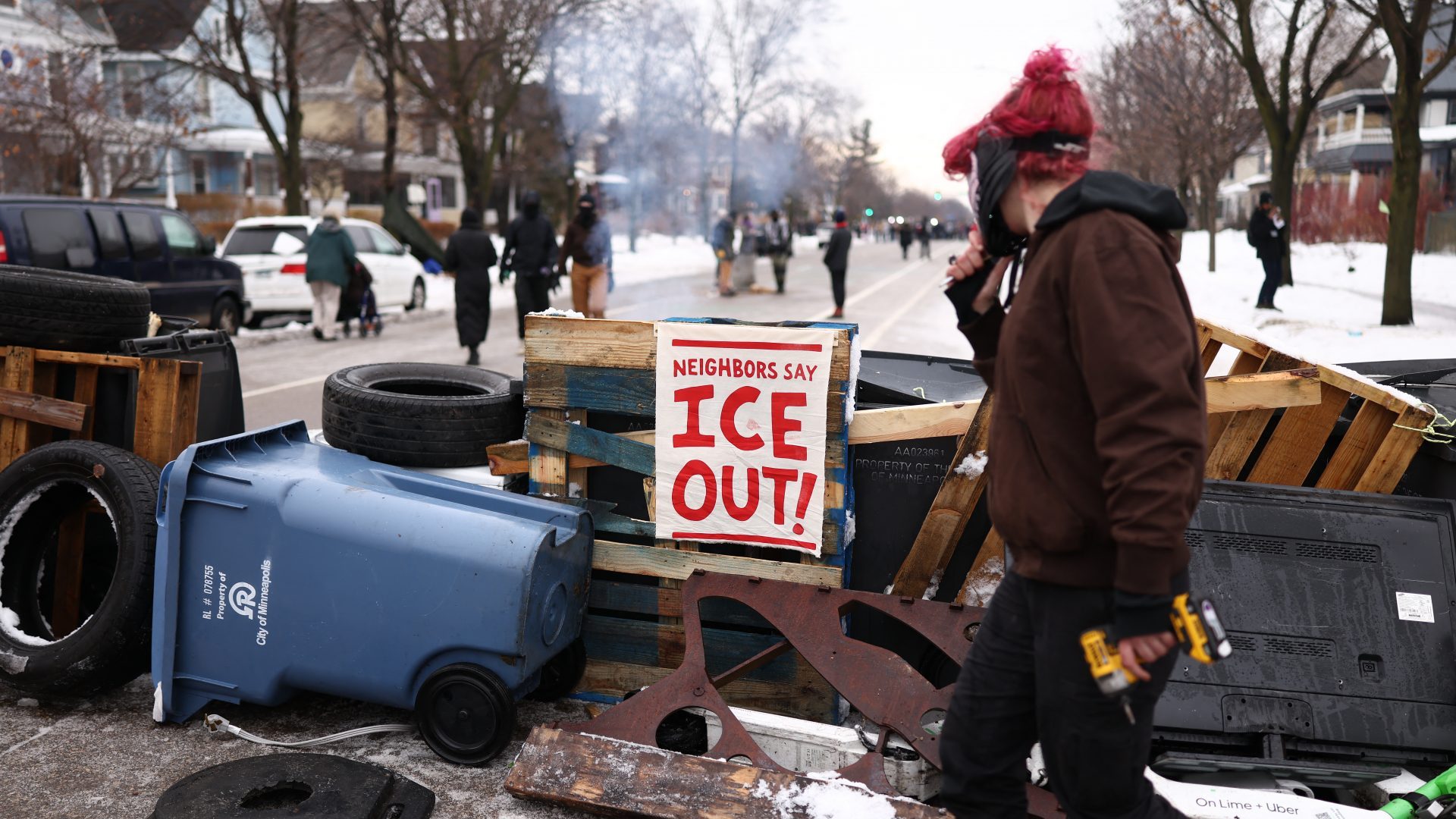
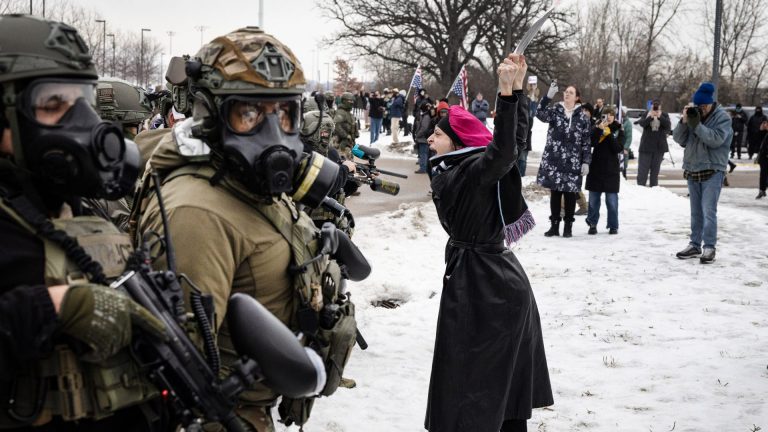
This article brings to life the reality of what is happening in the US, with Trump’s Gestapo. I really hope the American people send a strong message in the midterms that they won’t go along with this, and that at least some part of Congress starts to take its constitutional responsibilities seriously instead of being a rubber-stamp for the dear leader.
Martin Treacey
It’s worth reading Edwin Muir’s poem The Good Town (1949), focusing on how “good men are made evil”. Written after the fall of Prague and the destruction of WWII, it resonates with what is happening today.
Also, remember John Stuart Mill in 1867: “Bad men need nothing more to compass their ends, than that good men should look on and do nothing.”
Rosalind Russell
Re: Alastair Campbell’s Davos diary (TNW #469)
Alastair says Mark Carney should be proud to have his invitation to Trump’s “Board of Peace” withdrawn. Why on earth is Tony Blair joining it?
Jill Florent
I really love reading Alastair Campbell’s diaries – so eventful, so contemporary, so insightful, so informative and, as he acknowledges, so name-dropping. It reminds me of those Children’s Letters to God books, in one was: “Dear God, I read your book, a lot of things happened in your day didn’t they?” Keep sharing, Alastair!
Dr Ron Iphofen
Re: “After America” by Matthew d’Ancona (TNW #469).
I strongly agree there must be a shift from words to action in our efforts to develop autonomous European capacity for a new era. But Matthew d’Ancona’s call for “warp-speed mini-Manhattan Projects… beyond the procedural decorum, consensus-building and passion for regulation that characterises the EU” is naive.
There is a reason why it has been so difficult to integrate defence production in Europe. Pooling capacity implies a sacrifice of sovereignty for each participating nation, and it cannot be done without consensus-building and regulatory underpinning.
As we have discovered so painfully through Brexit, “Brussels red tape” usually means simplifying the cost and inefficiency of national regulation, which is often protectionist. It is tempting to think that fear and necessity could drive the Great Leap Forward for which d’Ancona pleads, without the need for tiresome institutional infrastructure. But that would be to wish the end without providing the means. It is the classic British misapprehension.
Anthony Cary
(former British high commissioner to Canada)
As thought-provoking as ever from Matthew d’Ancona. But surely rejoining the EU would help the process of integrating the “willing”, even if it isn’t the end of what is required.
The only sort of government that could do what is necessary is one on the progressive side of politics. The first battle, therefore, is to ensure progressives work together to defeat the forces of reaction.
Brian Ronson
Suggested Reading
Emily Maitlis exclusive: Fear and loathing in Minnesota
Brave thoughts, pungently expressed. But where are the leaders with the vision and passion to drive this? The only passion in British politics is juvenile (Greens: ban the bomb and leave Nato) or geriatric right wing (Reform: indulge all your crudest prejudices and scapegoating). The rest is all misfiring triangulation and lack of nerve.
Kevin Bonnett
May I recommend two films that tell us more about Trump and the USA today than any number of serious articles and blogs ever can?
First, The Death of Stalin (2017) by Armando Iannucci. Its dark humour makes clear how the ultimate dictator surrounds himself with sycophants who dare not whisper their concerns to their self-serving fellow travellers. It is a wonderfully graphic portrait of today’s White House.
Second, One Battle After Another (2025), which cannot now be viewed as anything other than a metaphor for ICE and America’s current-day civil war. Is it any wonder that Trump hates Hollywood so viscerally?
Tim Isaac
London, SW15
Re: “MAGA’s plan to wreck Nato must be stopped” by Paul Mason (TNW #469)
I believe a penny on income tax to fast-track our growth in defence and improve the resilience of our essential infrastructure from physical and cyber threats from Russia, would be accepted by the public, maybe even supported.
Stuart Singleton-White
Re: “Polanski’s nuclear misfire” by Patience Wheatcroft (TNW #469)
This is Zach Polanski’s Clause 4 moment. He needs to get this longstanding Green policy dropped.
Roger Barnes
Re: “Britain is running out of children” by Ros Taylor (TNW #469)
“Developed societies” across the planet want to make the most of their free time, and not necessarily by begetting heirs. The sickly grins and small sums proffered by politicians talking up maternalism are, frankly, revolting.
Our societies won’t die, but they will change rapidly because the global majority will continue to want to come, escaping climate change, war and famine. It’s the tide of human affairs.
This has been obvious for years, and yet we let our politicians heap up a national funeral pyre of resistance to migration. The answer is to change the politics, the policy, the debate, and face reality.
John Price
The graph that accompanies Ros Taylor’s article shows the postwar increase in fertility (“the baby boom”) ended in the early 1970s, when the fertility rate fell to below 2.1. There has been a steeper fall since 2010, which seems to be continuing.
In Scotland in 2024 the fertility rate fell to 1.25 with 45,763 live births registered and 62,291 deaths. The last time Scotland had more births than deaths was in 2014.
This is not a new societal change.
James Walker
Re: “A beach holiday in the Sudanese warzone” by Paola Totaro (TNW #469)
Thank you for showcasing the often-overlooked fact that, amid destruction and uncivil war, signs of hope exist and new opportunities arise.
Richard Laidlaw
Re: “Is there life after Melvyn Bragg?” by Olivia Seligman (TNW #469)
I cannot resist an opportunity to praise a man whose work as a radical TV and radio innovator I have long admired. Not only this but his writing – both as an autobiographer and novelist – cannot be recommended too highly. I mean it as no reflection on the admirable Misha Glenny when I say Melvyn is simply irreplaceable.
David Isaacs
BELOW THE LINE
Re: “Forget the under-16s. Ban the over-60s” by Matt Muir (TNW #469)
A contributory cause of the hostility and tension in British society today is herding people into groups without distinction. Matt Muir exemplifies this when he talks about “old people and social media” and “we need to ban their parents and grandparents”.
Dorothy Woolley
Newark-on-Trent, Notts
I am from the class of 1944 and I don’t recognise myself at all in this article. I am not on Facebook or X and I wouldn’t touch the Daily Mail with a bargepole. I’ve never voted for anyone further right than a Lib Dem, and racist and anti-immigrant propaganda makes me feel ill.
Sheila Sadler
I’ve watched an elderly relative go down the path described by Matt Muir, to the point where they think being overtly racist is now OK. It is now a matter of urgency for governments to tackle social media algorithms that radicalise, and cause addiction and mental health damage.
Guy Masters
Age isn’t the only factor. Evidence about social attitudes suggests education level is also a biggie in predicting political views.
Annemarie Kane