
Re: “The only path to Iranian revolution” by Paul Mason (TNW #467)
I can’t fault a word Paul Mason says, but for the role he attributes to Reza Pahlavi. The latest mass uprising cannot be attributed to him; he was on holiday when the bazaar strike began. His first call to the people was five days later, and the call for mass demonstrations on Thursday and Friday had already gone out before he jumped on the bandwagon.
In the past, Pahlavi has stated unequivocally that he was not willing to give up his freedom for the restrictions official duties would bring. His wife is on YouTube stating: “We don’t owe the Iranians anything. They kicked us out.”
Pahlavi is a divisive figure of the hard right who has zero prospects in Iran and has until the very recent past had almost no impact on the opposition movement in Iran.
Kaveh Moussavi
Iranian friends living here say Reza Pahlavi has no real base in Iran and that those in the crowds now calling his name have been placed there by the Iranian Revolutionary Guard. As I am sure you know, there is a very brave, organised democratic opposition movement, the NCRI, led by a woman, Maryam Rajavi, that is campaigning for a democratic, secular, independent Iran.
Rosalind Borley
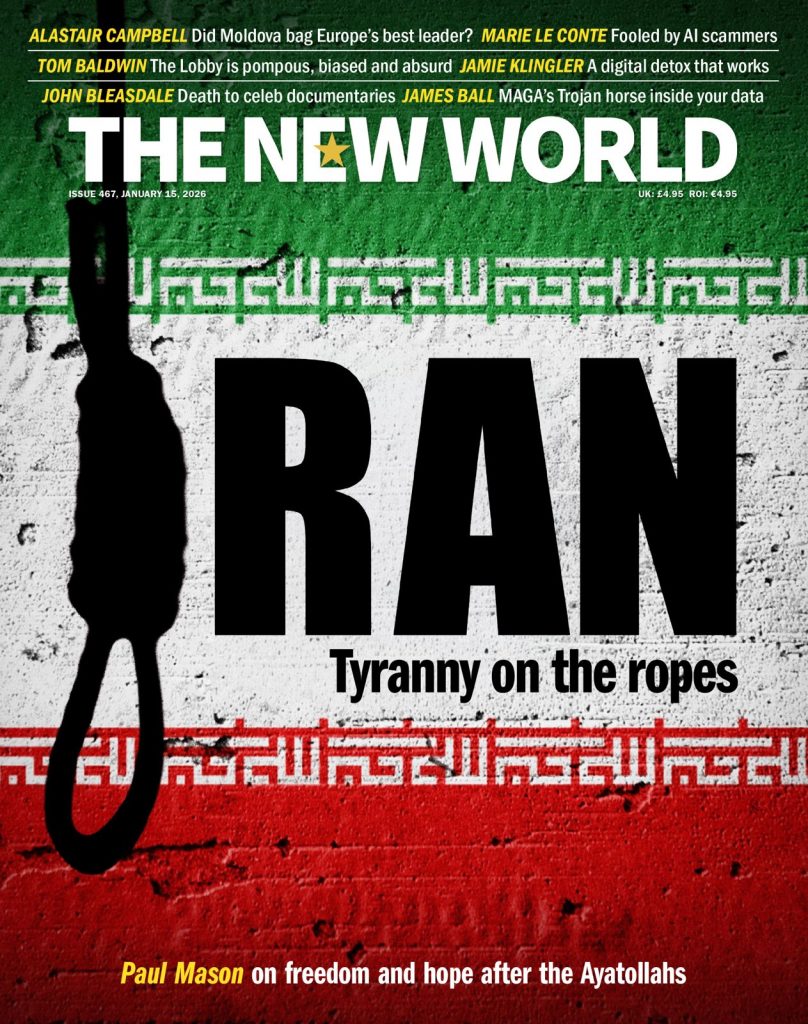
Paul Mason writes that there are “only two ways” to stage a revolution, suggesting the uprising of 1978-9 happened by the second: “The state cracks, its figurehead flees the country, and a coalition of insurgent forces takes over the state”. Having witnessed the Iranian revolution first hand (as a young traveller teaching English in Tehran), I believe it was a combination of the two.
What was crucial in the final overthrow of the Shah was the role of the armed forces. Airforce personnel finally rebelled en masse (this I witnessed), breaking into the armouries, handing out guns and ammunition to the angry crowds and, along with dissident army personnel, fighting Imperial Guards loyal to the Shah.
Paul is right that it was achieved through a coalition of insurgent forces, but without the “people with guns” the state would not have crumbled. Now, who is holding the guns? Equally crucially, the pull of traditional Islam on large numbers of the people cannot be underestimated.
David Laing
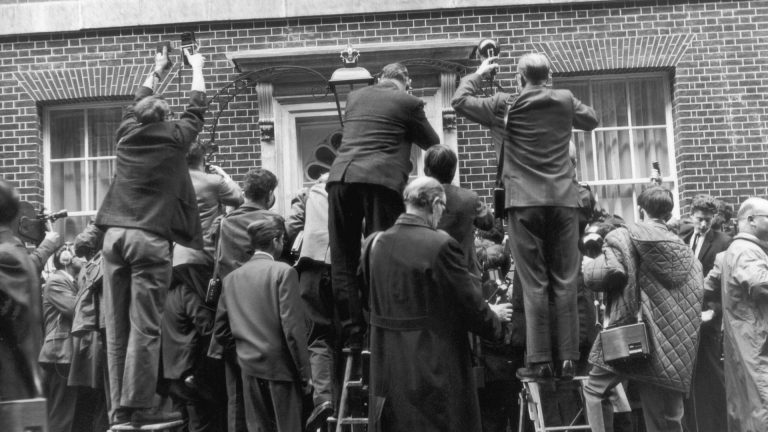
Re: “The press that thinks it’s the opposition” by Tom Baldwin (TNW #467)
Why do journalists think they are the arbiters of how our laws should be made, or how the country should be run? Or that their proprietors have the right to set the political agenda because of their ideology, or their wealth?
In a fair society, journalists would report facts and explain details with impartiality. It is, I suppose, what the BBC is meant to do.
I suppose mostly they try, except when their editors aim for more reaction, more feedback, more clicks. Sadly, division and rage do just that.
Lorraine Fannin
Suggested Reading

The press that thinks it’s the opposition
Excellent article, but the opposite appears to me to be equally true: the opposition seems to think it is the press.
Far from holding the government to account, Kemi Badenoch and her remaining MPs do nothing but take cheap shots at the government. No constructive criticism or considered alternatives.
Patrick Reynolds
Re: “Trump’s dark age of spectacle and power” by Matthew d’Ancona (TNW #467)
No further comment is needed. Donald Trump has become what we feared, and the world will never be the same.
Adam Primhak
The failure of progressive politicians has helped to create MAGA, Brexit and other populist movements (the internet and disinformation haven’t helped). Bill Clinton, Tony Blair and Barack Obama, for instance, did nothing except continue the ruinous Thatcher-Reagan economic consensus in a less vicious form. Since the wheels came off in 2008, nobody progressive seems to have come up with any bold ideas. The likes of Donald Trump and Nigel Farage have stepped into the vacuum.
Will Goble
Re: “MAGA’s Trojan horse inside our walls” by James Ball (TNW #467)
Palantir has only one point of reference when it comes to operating anywhere: America first. Now the USA has revealed itself as an unreliable friend and fickle ally, we need to be looking closer to home and across less water before awarding any government contracts.
Colin Hayes
Re: “A digital detox that works” by Jamie Klingler (TNW #467)
Decades ago, with a young family and friends, we would set off for rural France on holiday. We finished work on a Friday and caught the 9pm ferry, then drove all night.
This severed the link with the everyday, and so we became immersed in the heat and cicadas, swimming in the local river and deeply relaxing. Like a drug this infused everyone with a healthy, slow pace. Lunches were long and evenings spent in conversation or reading a book.
This to me is normal behaviour, a world where Trump couldn’t exist, no internet buckling under the weight of pornography, vile comments and puerile rubbish.
The best place for smartphones is the bin; they are too rarely used as phones and are most certainly not smart.
Keith Brisley
Re: Letters (TNW #467). Surely Mark Ballard meant to say “resident doctors” and not “junior doctors”? If it isn’t bad enough for them to be doing a vital and exhausting job and be paid just 40% of an MP’s salary, they also have to endure the perception that they are still in short trousers and play Roblox in their spare time.
J Ballard
Cotteridge, Birmingham
Re: “Government by reversal” by Patience Wheatcroft (TNW #467)
This government’s pattern is now set: it comes out fighting, then retreats ignominiously, and doesn’t appear to see the harm.
This jumping in feet-first without sufficient thought or even real consultation is damaging. Labour have introduced some good measures, but they are being outweighed by kamikaze ones, leaving them lacking plausibility.
Judith A Daniels
Cobholm, Norfolk
Re: Everyday Philosophy on AI slop (TNW #467)
Nigel Warburton wonders where internet memes on the horse manure crisis of 1894 originated. Certainly not in the Times as claimed.
I can suggest one source long before the internet. On October 8, 1972 in Cambridge, the Methodist preacher Colin Morris, in a quip on computer predictions, said, “if in 1872, at the time of the horse-drawn carriage, there had been a computer, it would have predicted that 100 years later, in 1972, the whole world would be 7ft deep in horse manure.”
Anthony Thacker
Hinckley, Leicestershire
BELOW THE LINE
Re: “The sport that’s popular and unpopular at the same time” by Jay Elwes (TNW #467)
I watched rugby at Blackheath on and off for many years up to 2014. It is two tiers below the great team of Bath that Jay is lucky enough to live near. Early this century it was announced that funds from the top of the game were to be reduced. And then every few years they were reduced further. The cutbacks soon became obvious to all.
The governing body of rugby union has been starving lower clubs of funds. If they continue on the path of enriching the top they will kill off the grassroots, which will drag the sport to oblivion.
Robert Boston
Kingshill, Kent
The split between rugby league and union probably has something to do with the smaller fanbase than football, particularly at the local level. As does the UK’s north/south divide. But the article overlooks Wales, Scotland and Ireland, where rugby is arguably far more important.
Tom Akerstrom
The 100 years-plus of rugby snobbery, where anyone who was paid for playing was condemned to rugby league, set rugby on a lower trajectory from which it’s unlikely ever to escape.
Nick Slocombe