Re: “Artificial intelligence and the end of capitalism” by Paul Mason (TNW #461)
How we adapt to an AI-driven economy is one of the human problems that AI will have to help us solve as it grows in competence. One thing is for sure: our current system couldn’t work in a world where very few humans are employed. If AI gives us even a fraction of what is prophesied, major economic reform will have to come.
As Sam Altman points out, we’re not far away from a situation in which AI is involved, to some degree at least, in making most decisions, from composing a menu, to choosing a career, to deciding the G7 governments’ economic policies. If decisions made with AI in the loop are better than those made without, AI can only grow in importance. Pretty soon optimal decisions can only be made with/by AI. A new economic paradigm should be a doddle.
RSP Zatsen
While I agree that AI will likely replace many roles currently performed by humans, claiming it may replace the creative process itself is fallacious.
Current AI technology, and arguably all future AI, is basically the quantification of input data via the assignment of probabilities. The output is a numerical consensus based on the particular input. As such, the adage garbage in/garbage out applies (the sometimes bewildering output of chatbots is an example of this in action).
I would argue that the true creative process is an informed (rather than random) leap away from the consensus to something entirely new. Would an algorithm have come up with Einstein’s Theory of Relativity or Picasso’s Guernica? I don’t think so. Perhaps there’s still a future for us humans after all.
Dr Tony Currie
Great Malvern, Worcs
Re: “Why I hate bleak, bland AI” by Marie Le Conte (TNW #461). I am on the same page. I see that in science and medicine, AI could be revolutionary but in all other aspects, give me a break.
The sad death of Sir Tom Stoppard, whose writing was second to none, was announced on November 29. What AI gizmo could replicate his vocabulary, sense of fun and general genius? To mistitle one of his plays, it would be more like Creativity and Linguistics Are Dead.
Judith A Daniels
Cobholm, Norfolk
Marie Le Conte nails the problem with her question, “Why have friends when you can have AI?” Hoping to catch up with old friends over a pub lunch, I was saddened to watch them, heads down, scrolling their phones. It is ironic that with the technological potential to enhance communication, we have become less connected at a human level.
David Jeffrey
Suggested Reading
Nick Land, the dark magus of AI
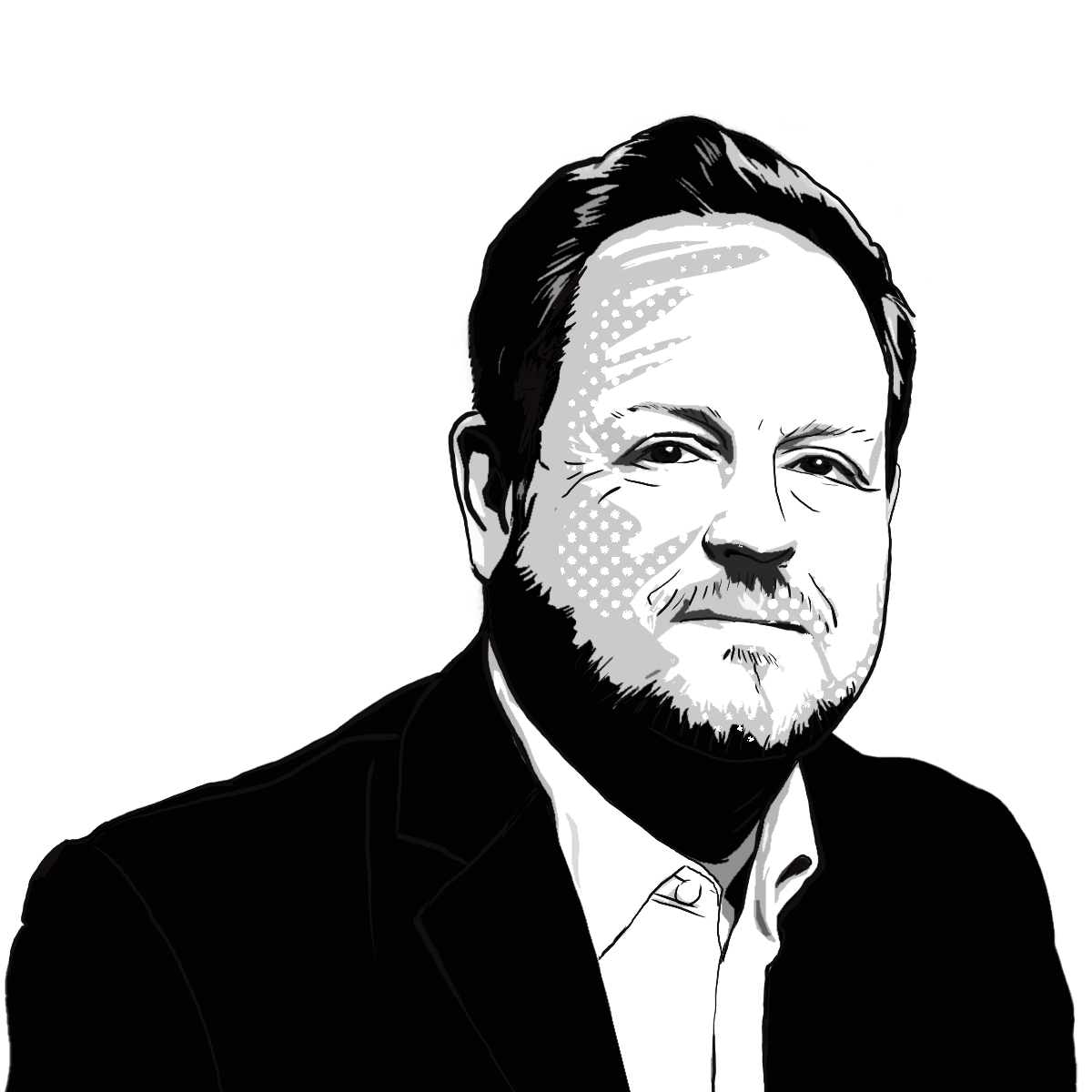
Re: “AI’s dark magus” by Matthew d’Ancona (TNW #461). I always thought of Nick Land as just someone who took too much speed and read too much Ayn Rand.
I’m not sure that he’s quite as influential as this extremely well-informed article makes him sound, and as he’d no doubt like to think he is, but what definitely IS worth exploring is the malign influence of the wider so-called “Dark Enlightenment” of which he is but a part, along with others mentioned here, in particular Curtis Yarvin. Benjamin Noys, who’s quoted in this piece, is a particularly acute guide to this overheated dystopian realm.
Julian Petley
Re: “The surveillance delusion” by Nigel Warburton (TNW #461)
We seem to be wedded to the idea that the greatest danger with surveillance and shared personal data will come from the state. I’m not sure that this is correct. I can think of plenty of global corporations and oligarchs who are far less trustworthy, less accountable, and less honourable in their purpose, than the UK government. And I’d prefer not to give them any of my data.
Mike Dowd
This is one of the reasons why I’ve gone back to using cash, where possible. It allows me some anonymity as regards my spending. After a recent use of my debit card in a shop (one of a chain of food shops based in the West Midlands), I found an advert for the company on my Facebook page just hours later. It seemed too much of a coincidence. Information is being passed to others in all sorts of ways.
Audrey Bailey
The Californication of technology means that Big Tech no longer has to hide its aims. Larry Ellison, CEO of Oracle and sometime richest man in the world, stated in 2024 that once his data project was combined with AI, “Citizens will be on their best behaviour because we are constantly recording and reporting everything that’s going on. It’s unimpeachable.”
Paul Doolan
Re: “How AI turned Gen Z into narcissists” by Lucy Reade (TNW #461). Beware of geeks bearing gifts!
David Isaacs
Re: “Journalism’s race to the bottom” by Matt Kelly (TNW #461). My dad was on the board of directors for the Daily Express so I grew up meeting plenty of editors, journalists and managers and, shockingly, they were all white men.
This is an observation, not a criticism. I don’t think that any meaningful debate can be had unless it includes people who are not white.
That’s where my dislike of the right wing press really took off – when I was expected to sit quietly and listen to these, as my teenage mind thought, boring old farts speak of the great Rupert Murdoch. The respect he gained in that era was amazing – is there really any wonder that we are where we are talking about these issues now?
Wendy Hodgson
Re: “The Telegraph falls into the wrong hands” by Patience Wheatcroft (TNW #461)
I think the Telegraph morphed into the Daily Mail a good while ago. They are both rabid right wing publications that excoriate any liberal views.
The Telegraph was once considered a “quality” paper that, although right-leaning, refrained from the more excessive and extreme rants that the Mail specialised in. That is all long gone, and these days the Telegraph competes with its soon-to-be sister paper for outrageous opinions masquerading as journalism. I’m not sure this takeover will make much difference.
Liz Court
Being the owner of the Telegraph looks a lot like opening the Mummy’s tomb! Get your chequebooks out, Lord Rothermere and crew – it couldn’t happen to a nicer bunch.
Christopher Harrison
I note a headline on the TNW website, “It’s budget day: probably best to avoid the Telegraph”.
Why do you recommend acting in such a prudent manner only on a budget day?
David Irwin
BELOW THE LINE
Re: Rats in a Sack on Nathan Gill (TNW #461).What a sign of the times. Leak a budget and get page after page of news. Get paid to speak for the Russians? No mention.
ADAM PRIMHAK
Re: “Will the Beatles industry ever let it be?” by David Quantick (TNW #461). Yes, the Beatles had some good tunes but the way people bang on about them you’d think they were Bach and Mozart combined. George Harrison and Lennon did better stuff when they left. As for Wings – LOL. That’s not to say the Beatles weren’t good in their day – but I agree, give it a rest now.
RICHARD RIDDLE
Re: Great Lives.
Thank you and John Osborne for the recent entries on Vichai Srivaddhanaprabha, chairman of Leicester City, and Leonard Cohen.
May I respectfully suggest you feature Duane Eddy in a future edition? To quote Ritchie Hart in his 1959 hit The Great Duane: “Well, if it hadn’t been for Duane and his twangy guitar, things wouldn’t be the way that they are.”
Derided by some, no one was ever able to quite reproduce his sound. In 1961, he was voted Top Pop Personality in New Musical Express, ahead of Elvis Presley!
JOHN STRETTON