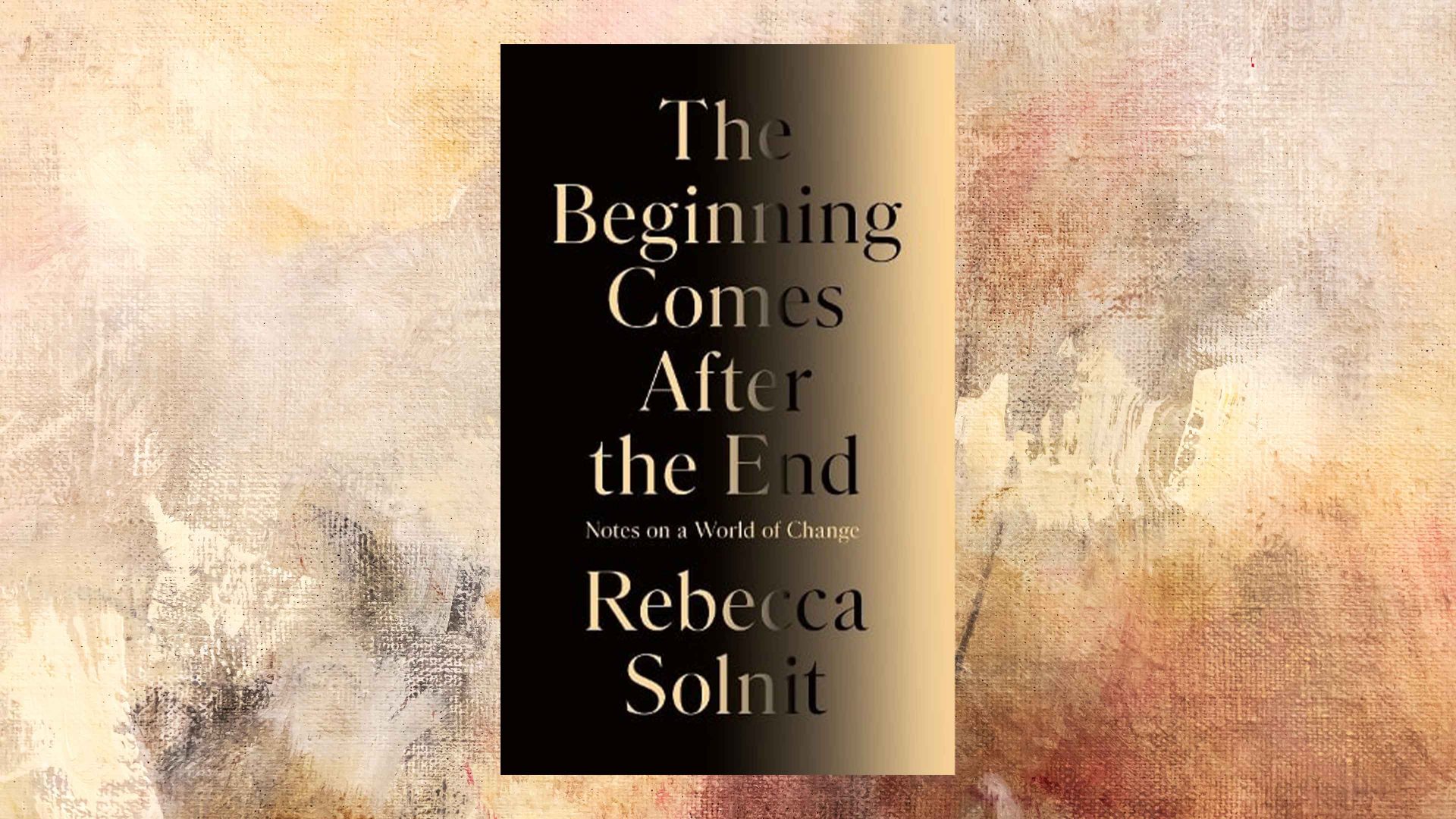
If you are struggling to catch your breath in these tense times, here comes Rebecca Solnit with a shot of fresh air. The author of Hope in the Dark (2004) and the splendidly named Men Explain Things to Me (2014) is always the voice of well-researched reason. In The Beginning Comes After the End, the American writer and activist delivers a study in optimism to savour in between TV documentaries about toxic masculinity, the looming threat of AI, the advance of populists and the sewers of social media.
Solnit’s central argument is that although things might look bleak out there, this might be as much a result of progress as a signal of its retreat. She talks of decades of successes, triumphs in civil rights, environmental law, social attitudes. How some of the hardship and prejudice that was once taken for granted has become unthinkable.
She cites advances in indigenous rights, renewable energy, women’s rights and civil rights as areas of growth in which the world is unrecognisable from how it was 20, 30, or 50 years ago. Using the words of Antonio Gramsci –the thinking woman’s Marxist – Solnit argues that “The old world is dying. The new one is slow in appearing. In this light and shadow, monsters arise.”
Yes, we might be in a moment where democracy is imperilled, human rights are threatened and governments routinely attack their own people. But this is not defeat, suggests Solnit. It is merely the cost of doing business.
And she’s right. Despite the thrashing of the usual beasts – in their death throes, she argues – certain ways of thinking and behaving have been well and truly relegated to the dustbin of history.
It would have been inconceivable in the 1960s to imagine that, in the future, gay couples might marry and enjoy a full and fulfilling family life, adopting children, having their own, celebrating their love with family and friends. Or that 96% of new global electricity demand could be met by renewables.
As Solnit writes, “our world has changed more than almost anyone imagined, in ways both wonderful and terrible, and the sheer profundity of change in the past guarantees that this change will continue, that stability is not an option, but participating in directing change might be, if we recognise it.”
Yes, we appear to be in danger of forgetting the real criminals in the Epstein trial, yes Roe v Wade has been repealed and yes, environmental standards are being rolled back in Trumpland. But, as Solnit points out, all these are still seen as scandals by a majority who are educated about the issues and increasingly willing to call things out.
However much the noisy right try to turn back the clock, she says, the genie is out of the bottle on so many things. Minds have been changed. For ever.
Suggested Reading

A Beast Slinks Towards Beijing, the Asian horror novel with added bite
The success of the populists is to some extent attributable to vast funding by businesses and individuals with a vested interest in the old way of doing things. Even then, they are not proving as successful as perhaps they should be. People still know: They can see, they can read, they feel the injustices in their pockets. Ask the voters in Gorton and Denton.
Populists are also fuelled by the backlashes that follow all successful progressive movements. Feminism suffered this in the 1990s, after noses were put out of joint by the hard-won progress of the 1980s – on pay equality, entry to the professions and financial independence like having a bank account, a mortgage or a credit card that did not need to be co-signed (yes Gen Zers, really!).
Soon, we were informed that we were now post-feminism and, indeed, post-race. Everyone was now equal, they said. Women – you are now free to drink beers with the lads, laugh at their extraordinary banter, know that your oppression is actually a really funny joke which you are now in on. Lots of women agreed.
By the second decade of the millennium though, feminism was back and looking at the next peak. Everyday sexism was challenged, more and more women came out to speak about rape and sexual harassment. Some (imperfect) progress was made.
That’s the thing with progress, it often falls short of the high hopes we have for it, but even a good old-fashioned backlash can never take things right back to how they were. Eventually, the momentum springs up again, people gather, we lurch forward.
This is Solnit’s argument. We are in a period of monsters. They are thrashing as an old order is challenged. They are protesting the loss of their privilege, their easy money, their assumption of power. But changes in people’s thinking cannot be reset by draconian measures and state-sponsored violence. The future cannot be stopped or set back. The whirligig of humanity stumbles on.
The only option, Solnit argues, is to keep treading the path in small acts. To keep gathering and planting the seeds of positive change. To stay hopeful.
Forget your wellness gurus. I’m recommending a healthy dose of Solnit’s radical optimism, once daily.
The Beginning Comes After the End by Rebecca Solnit is published by Granta on March 26.
Dr Katherine Cooper is a writer and literary historian