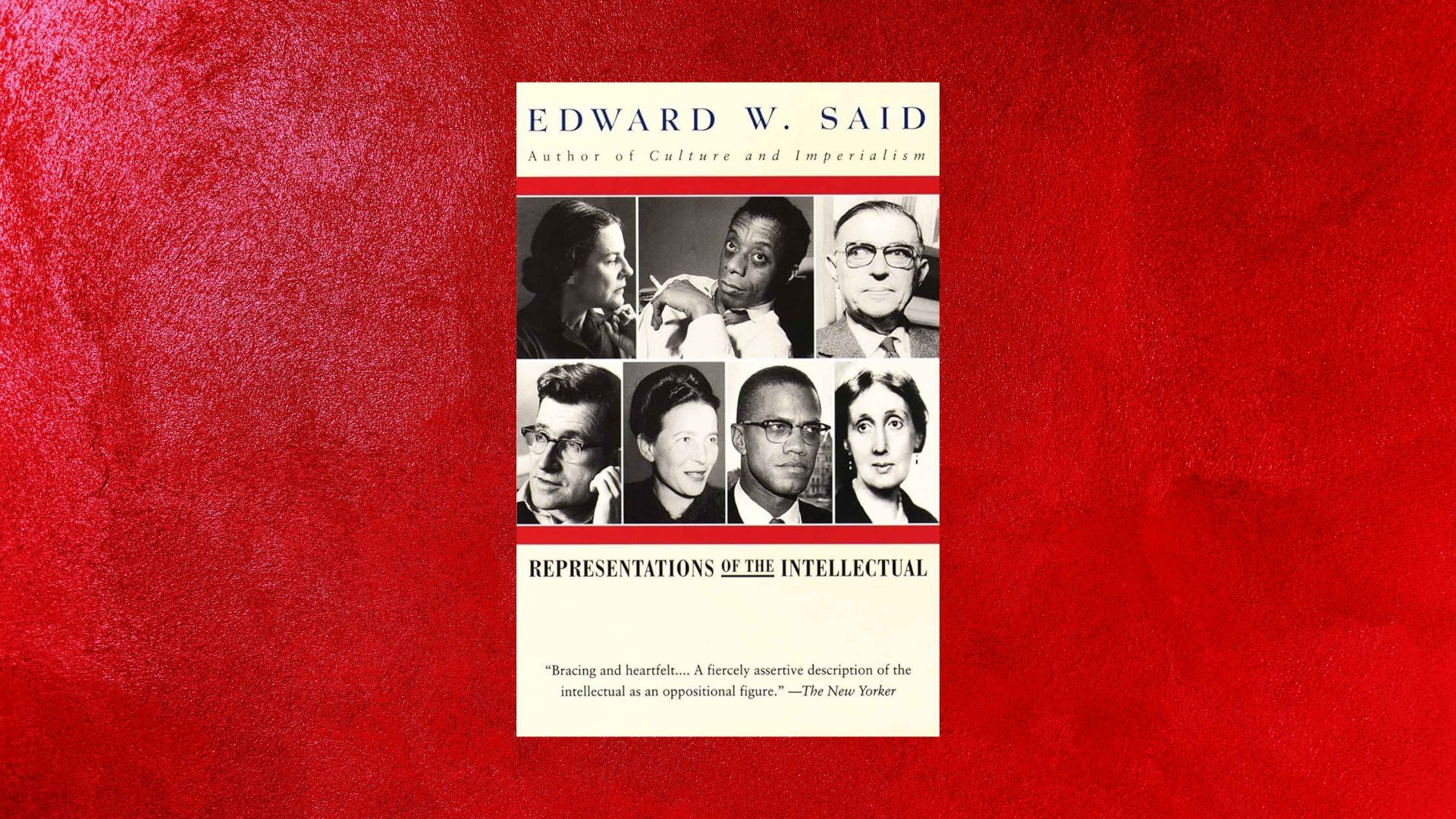
In 1993, the BBC invited the Palestinian-American writer and intellectual Edward Said to deliver its Reith Lecture. This was a doubly controversial move.
The annual talks pay homage to Lord Reith, the organisation’s first director-general and to his commitment that it should be a home of education and information, as much as entertainment. They are supposed to introduce audiences to new concepts, perhaps difficult ones, in an accessible way.
As Said admits in his introduction to the six lectures he delivered, his name and topic (Representations of the Intellectual) were not greeted warmly when announced, perhaps explaining why, a year earlier, the BBC had simply announced that they could not find anyone suitable to take on the job. The usual suspects were aghast that a Middle Eastern clever-clogs whose background lay in deciphering the power struggles of postcolonial literature might be the BBC’s pick. And why should the great British public possibly care about intellectuals, least of all what he thought of them?
Yet Said, who died in 2003, was an irrepressible intellect and arguably one of the most significant thinkers of the 20th century. He was famed for Orientalism (1978), a book that described for the first time the ways in which the exoticising gaze of west on east (or coloniser on colonised) created the power dynamic which underpinned racist and imperialist power dynamics at every level of culture and politics.
He was also a true renaissance man – a writer, thinker and musician, creator of the Western-Eastern Divan Orchestra, on which he worked with Argentinian-Israeli conductor Daniel Barenboim with the aim of bonding Arabs and Israelis through music.
It almost feels that Said was being deliberately provocative in proposing to talk to a British audience about that mysterious figure, the “intellectual”, but this is why it was so important. What was the role of the intellectual, he asks? And what is the role and importance of ideas in our modern globalised world?
It was, as one journalist said at the time, a most “un-English” thing to talk about. Even before Michael Gove declared that we didn’t need experts, it was widely assumed that the British regarded intellectuals as supercilious swots, at odds with the swashbuckling spirit of turning up under-prepared and winging it (think Boris Johnson). In the 1950s and 60s, Tony Hancock became a celebrity playing a character readily mocked for his own pretensions.
Suggested Reading
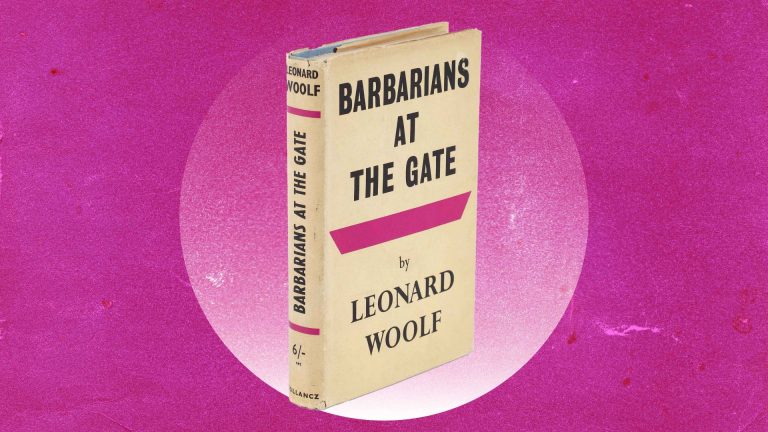
The book from 1939 that reads like breaking news
In his lectures, Said examines the motivations for thinkers, commentators and teachers; those who produce and communicate ideas to a wider public. He thinks through the limitations of the intellectual and in particular, the ways in which they serve knowingly and unknowingly certain national and even corporate interests, from capitalism to imperialism.
He discusses the ways in which intellectual assumptions or the material circumstances in which thinkers operate (who employs them and how much they’re paid, which country they work in and what their nationality is) can blind disciplines, nations and even international systems to certain realities. It limits what may be thought, taught or understood within universities, think-tanks, newspaper pages, even expounded in books.
Said argues that it might be more fruitful for intellectuals to deploy their craft as an “amateur” to be as little in the thrall of institutional, public or political censorship as possible. To be able to see outside the snowglobe of received wisdom and to perceive the margins or darker corners beyond.
He argues that, in the west, “in spending a lot of time worrying about the restrictions on thought and intellectual freedom under totalitarian systems of government we have not been as fastidious in considering the threats to the individual intellectual of a system that informs intellectual conformity”. He suggests that in the case of those hired to advise governments, “if, for instance, you were not a political scientist trained in the American University system with a healthy respect for development theory and national security, you were not listened to.”
It all seems rather pertinent in a time when western governments – grown lazy after decades of postwar consensus – have been apparently taken by surprise by the extra-legal actions of nations who have for months or years been thinking extra-legally. “I don’t need international law,” Donald Trump said, and panic ensued.
Who could have foreseen such a thing, I wonder? Are we – as Said would argue – trapped within conceptual systems which do not allow us to grasp such a way of seeing and understanding the world? Has our teaching, discussion and even our public commentary become a sort of “bad faith” thinking that allows us to delude ourselves about the world?
Even beyond this, there is much food for thought in Representations of the Intellectual in terms of how we think. There is also a lot to consider about the role of intellectuals and writers in speaking out about atrocities, about policy, and the ways in which their words might be co-opted by those in power. It all seems very relevant to the current moment, in which the work of Edward Said is taking on a new and very eerie significance.
Representations of the Intellectual by Edward Said is published by Fitzcarraldo.
Dr Katherine Cooper is a writer and literary historian.