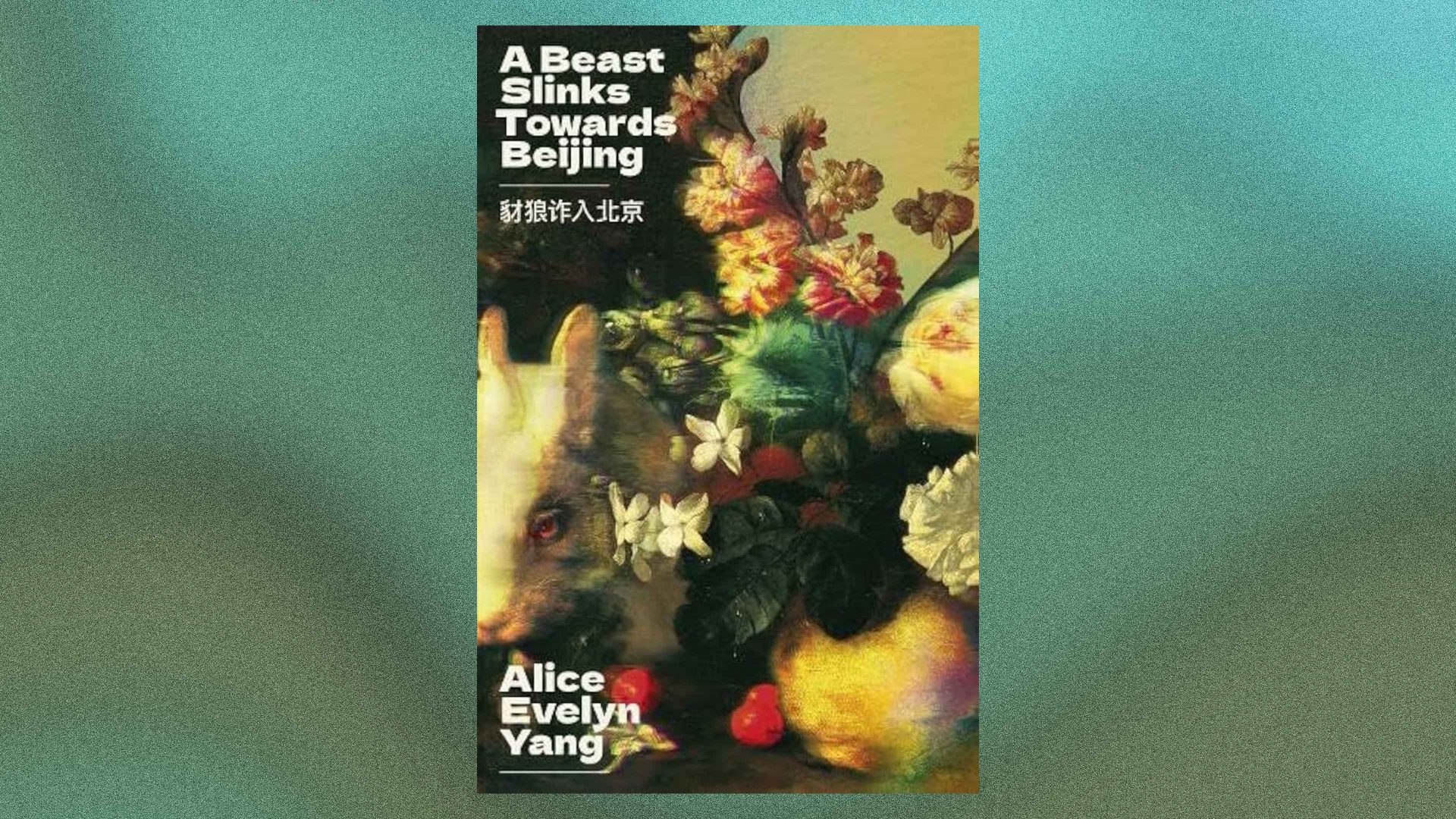
A Beast Slinks Towards Beijing, an intoxicating and devastating debut by Chinese-American writer Alice Evelyn Yang, tells a haunting tale of fate and redemption. It is another ballsy number from Dead Ink Books, based in Liverpool and with a self-styled mission to invigorate and shake up a publishing world too often defined by big companies more interested in their bottom line than creative risk and literary innovation.
Described as magical realism yet falling into the sort of compulsively readable but visceral horror that has characterised many Asian bestsellers in recent years, it sits somewhere between Booker Prize winner Bora Chung and Sayaka Murata.
Asian horror is big business in the book industry after a run of high-profile successes such as Chung’s, but it would be selling this novel short to categorise it simply as part of the genre. Yang provides the expected gore and fantasy, while also offering a real-world critique of a wider history of human cruelty.
The real beast is the violence that haunts the main characters, often symbolised by mythical creatures – the jackalope, a giant wolf, a red-eyed hare. It slinks into the corners of their eyeline, reminding them always of what pursues them. It is a shadow, or a stain that grows larger and harder to elude.
Yang’s is a novel of reckoning with colonialism and the alienation of exile. It straddles the generations of her character Qianze’s Chinese family in Japanese-occupied Manchuria, through the blood-stained Cultural Revolution and into the racist capitalism of modern-day America. Each generation is hobbled by the activities of a brutal power play operating just beyond the novel’s and the characters’ line of vision.
This is not actually the proverbial beast but a particularly human lust for domination, blood and revenge that runs through major political upheavals, whether the flagrant brutality of the Japanese in Manchuria, the bloodlust of Mao’s Red Guards or the indifference of capitalism and the societies it creates. There is a line traced between occupation, revolutionary violence and oppression and the everyday violence of being simultaneously forced to assimilate into a culture that rejects you because of your skin colour, your name and your accent. It is a violence that permeates every generation.
While here it is characterised by the imagined presence of mythical creatures, this escalating violence signals something far more sinister and mundane: the rot that festers within each of these human animals is a remnant of the cruelty of their forebears, cruelty doled out and cruelty endured.
Suggested Reading

AI partners who can’t say no
Weihong is hollowed out by the violence of his alcoholic father and the relentlessly brutal acts he was forced to engage in as a member of Mao’s Red Army. Encouraged by his mother to prove his loyalty at all costs in order to protect their family from the purges, as an adolescent, he eviscerates teachers, hacks to death classmates, buries grandmothers alive: “They did not so much sweep as raze. The reds had been raised by brutality, had suckled at its teat… Mao told them that to rebel is justified, so they unleashed their sleeping sadism, and in its wake, left bodies in the streets.”
His mother, Ming, is held in a Japanese prisoner of war camp in the 1940s, where daily rape and mutilation is a way of life. These familial traumas seep downward, destroying family lines and corrupting bodies and minds.
The novel charts cycles of trauma that are enacted generationally, framing violence as inescapable: “The living thing that craved violence did not feel altogether like him, but he did not know if he should fear it, if he wanted to be rid of it.”
Like the magical realist narratives of the Caribbean and South America, Yang uses the otherworldly to express the inexpressible horror of oppression, as it snakes through bloodlines and twists up lives and communities. These injustices are enveloped in folklore and stories of hexing, protection and superstition.
The novel captures the relentless cannibalism of systems designed for power and domination: colonialism, capitalism, patriarchy. All intersect here to pull apart the men and women they imprison with a monotonous efficiency, across time and geography. Injustice quite literally devours these characters.
Yang’s writing is mesmerising and the narrative as propulsive as its most violent moments. Her words evoke vividly the sounds and smells of poverty-stricken life in rural China just as easily as the airless dayglow of a New York apartment in the 20th century. Her characters are alive, spitting, sweating, sobbing, smouldering, sinking through the quicksands of time and into each other’s narratives, arms outstretched.
Their disorientation is palpable and yet the sense of chronology is never lost: The beast slinks ever onward looking for more to devour.
A Beast Slinks Towards Beijing by Alice Evelyn Yang is published by Dead Ink Books.
Dr Katherine Cooper is a writer and literary historian