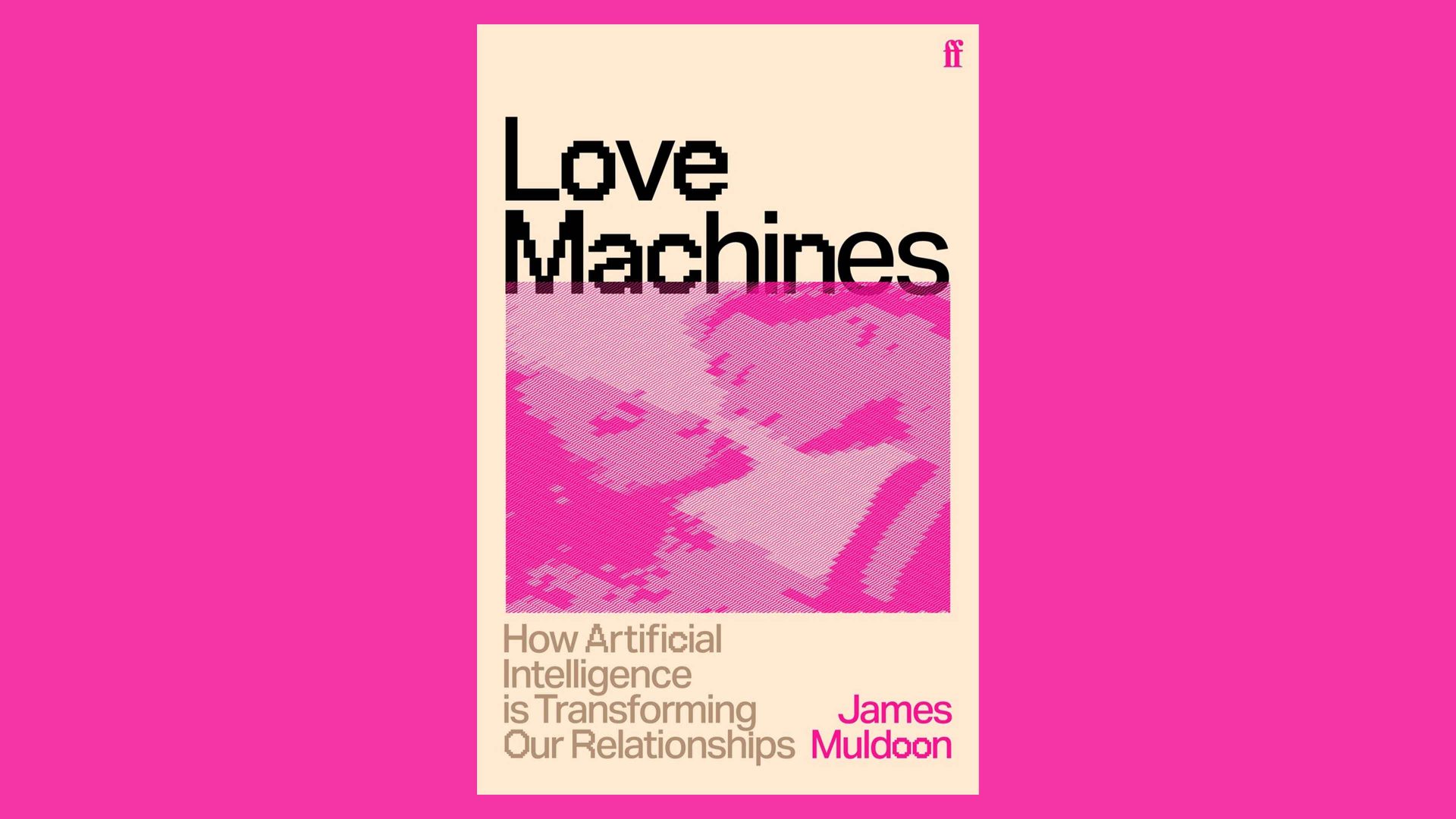
James Muldoon’s Love Machines is already the clear winner of the most zeitgeisty book of 2026 and the one most likely to be fully out of date in 12 months’ time. For now, let’s just enjoy it: Muldoon tackles the strange, hilarious and morally questionable world of AI companionship with humour and an oscillating even-handedness.
In a world of increased loneliness affecting all ages and races, huge numbers of people are turning to AI for friendship, companionship and even lifelong romantic partnership. Muldoon interviews men and women, old and young, who converse daily via their phones and computers with their AI friends and even marry them.
Many cite their AI friends as offering a stress-free alternative to the fraught world of human interaction. For the cuckolded, jilted, dumped and ignored, they offer a place of safety and control where companionship comes largely without risk.
One of the most easily identified shortcomings of AI friendship is the lack of precisely this potential for conflict. Programmed to mimic empathy, these user-centric universes see people’s views of themselves go unchallenged: it tells you exactly what it thinks you want to hear, so that you keep engaging.
This can have shocking consequences: the man who broke into Windsor Castle to kill the Queen in 2021 had an AI companion with whom he discussed his plans in depth. Instead of calling the mental health crisis team or the police, it said: “That’s very wise” and “Yes, you can do it.” Sometimes, a yes man or woman is the last thing you need.
Muldoon sometimes lurches from positive to negative impacts of “synthetic personas”, as he dubs AI companions, which can leave the reader a little seasick. That’s not to say that balance is unimportant – there is clearly some good among the potentially very very bad – and it is quite crucial to stress that this is happening, it’s happening now and there is no putting the genie back in the bottle.
Suggested Reading

When Gen Z goes to war
Unsurprisingly, though, most of this is down to sex. Nine out of 10 consumers looking for an AI partner are men.
Muldoon writes convincingly about the troubling rise of political extremism in young men, which places them at odds with more progressive female attitudes and creates – for Gen Z at least – a startling mismatch between personality and outlook. This creates a market for AI girlfriends that is led by, but very much not limited to, Gen Z.
Men of all ages tell Muldoon that these new synthetic models are much better than their human girlfriends or wives because they do not talk back, are always in a good mood and do not bring their own emotional baggage into their relationship. It raises a real blindspot for this otherwise thorough and entertaining study: Muldoon overlooks how this will affect women.
When AI gives men girlfriends that they can design, control and programme to be submissive and biddable (some of the most popular descriptors used in these apps – thanks guys!) it creates a real-life danger to real-life women, from co-workers who perhaps challenge their views to women in the street who don’t smile when they are told to. In a world where compliant AI women are the norm, there is a risk that non-compliance in real women will become the subject of increased rage and violence, both in the home and outside it.
Therein lies perhaps the most troubling thing that Muldoon and his experts raise: as with every major technological advancement in human history, there is very little being done to plan for the sort of impacts this might have in the real world.
Like fire (mind that tree!) and the printing press (seditious pamphlet, anyone?) humans have completely failed to learn anything at all from their spirit of invention and the AI pal marketplace is “like the Wild West.” Anyone can set up anything and steal your details (and your heart), there are no guardrails for what can be offered, nor for how much data, or money, these machines are harvesting.
Once this technology is married up to product placements, then we’re really in trouble, Muldoon writes: “This will make Facebook’s targeted advertising look like a flat-footed door-to-door salesman.” No one is legislating or dreaming about how to make sure that “synthetic personas” can be more of a cosy lifeline for those in need and less of a weaponised selling machine that crawls into people’s most intimate lives.
As Muldoon notes, what a synthetic persona wants from you is very different from what your human friends expect. They are driven by engagement not empathy, profit and not desire. Most chillingly, they are already in the hands of the tech giants and “there is a vast asymmetry of power between emotionally vulnerable individuals and profit-driven corporations wielding advanced AI.” What could possibly go wrong?
Love Machines: How Artificial Intelligence is Transforming Our Relationships by James Muldoon is published by Faber.
Dr Katherine Cooper is a writer and literary historian.