There might be another name for the near-forgotten dish they serve at Logma, the hit London supper club-turned-bistro. Ziad Halub, one half of the Logma team, just calls it “Duck”.
It’s an old winter recipe, one that used to be widely eaten in the wetlands of southern Iraq. Then Saddam Hussein drained the Mesopotamian marshes, causing its key ingredient to depart.
Halub, a British-born Iraqi, grew up eating it. His parents left Iraq for Britain in the 1980s and brought the dish with them.
“Most (younger Iraqis) haven’t heard of it,” he said. “It’s from when ducks used to migrate south to the marshes, in a landscape the size of Wales. It was this giant waterscape that was drained by Saddam.
“When the waters were gone, the ducks stopped coming. The dish became almost extinct. So I try to preserve it. I cooked it at one of our supper clubs.
“We poach the bird in spices, a secret blend, with dried limes, and then cook rice in the duck broth and fat. It’s a little like confit – the duck meat becomes crisp on the top. We add sultanas, blanched fried almonds, and blistered onions.”
Halub has opened Logma in Hackney with his Iranian partner, Farsin Rabiee, who cooks the food he grew up eating: Persian dishes such as ghormeh sabzi, fesenjoon and fluffy saffron rice. When it opened in late December, long queues began – first locals, plus Iraqis and Iranians from across London, and then just about everyone.
People already knew about Logma. “We started out with a simple supper club for friends,” Rabiee tells me. “We just wanted to get people together to enjoy Middle Eastern food in a non-kebab way. People ended up just inviting themselves to our house. It was a fun project and we weren’t considering much beyond it, we just love to cook, but it got really popular.”
Halub chimes in: “Random people would turn up and we’d be like, ‘who are you?’. It was arranged privately through Instagram, and we’d curate a list, but eventually it developed beyond that and we did pop-ups. We were in a nightclub once, and someone came over and started asking about our food.”
Still, they had no designs on opening a restaurant until they passed by the empty site near home.
“We were walking home, saw a sign, looked at each other, and just said ‘fuck it’,” Rabiee, who was born in Colorado and raised in Sweden, says. “We saw an opportunity to showcase some dishes to a wider community and for our neighbourhood to come together. It’s brought people together – we had no idea how many Iranians and Iraqis live here. So we get to introduce new flavours to some, and we provide home-cooked food to those who miss it. Little reminders. It’s about representation, I suppose.”
Suggested Reading

The year we all get stout: what to eat and drink in 2026
Both say food was the foremost topic when they started dating. “Our discussion points and arguments were always about food,” Halub explains. They’re clear and honest about their plans.
“We cook food traditionally sometimes, but we exist in a weird, ‘Hackneyfied’ food scene. We only have sourdough in our house and we eat seasonally and organically. We’re millennials. So we’re hesitant with the names of dishes, flavours and techniques. We do things in our own way and we don’t want to upset the purists. Aunties might take offence. We add modern twists to things sometimes…”
Rabiee adds: “Ziad is more experimental, adventurous and creative. I mostly cook what I grew up eating and do what I was taught. But I still tweak and change things. I use what’s available here.”
I talk to the pair after service on what was a busy Friday lunchtime, thankful that a friend arrived earlier and saved me an aubergine sandwich. Lebanese jazz is playing and a handful of locals are having coffee as sunlight pours through the window on to the mirrored menu by the bar.
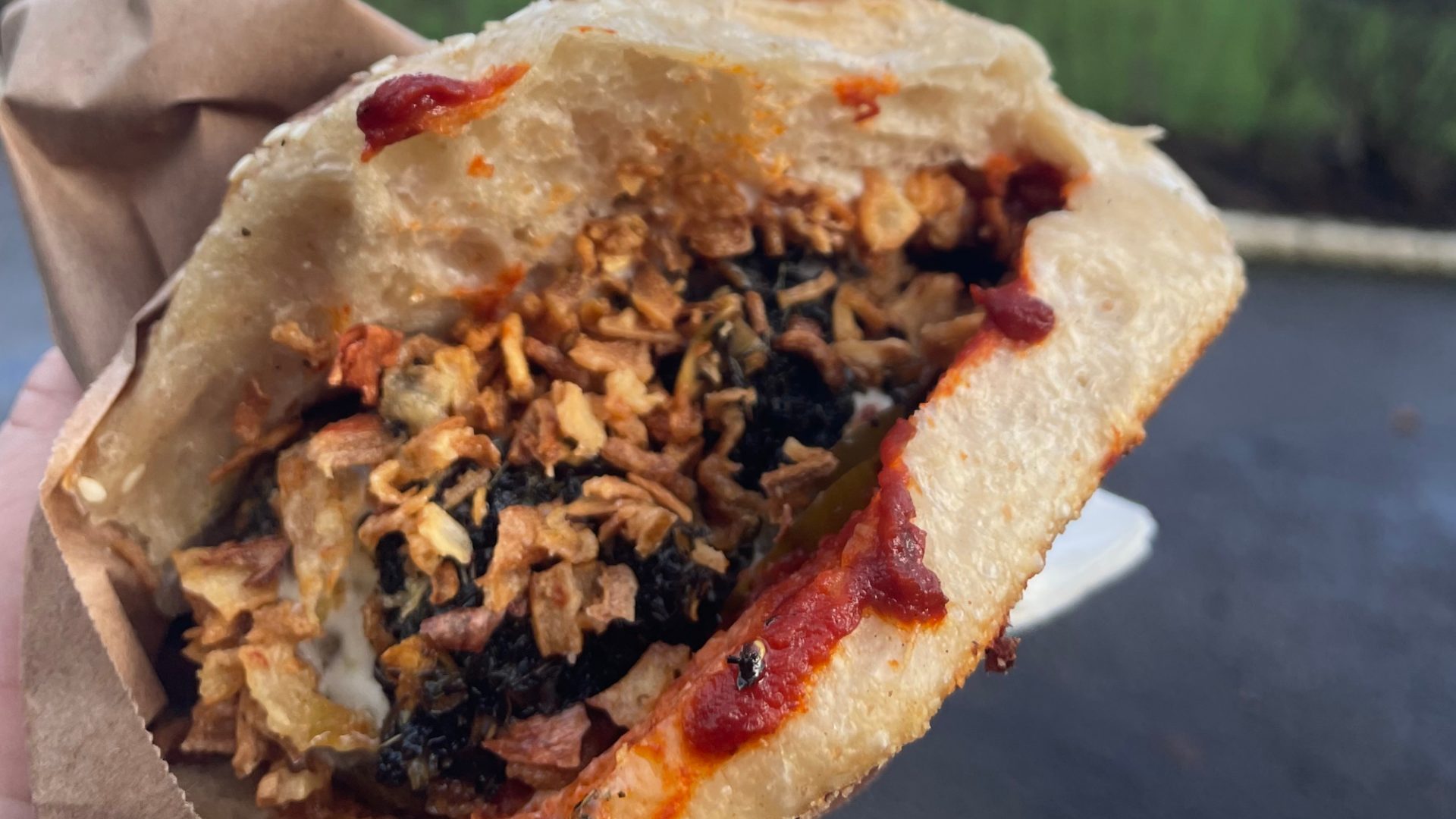
The bread is bouncy, the aubergine cooked down slowly to be soft, gently spiced and covered in herbs and fried garlic. But it’s the kashk, a tangy, umami-laden fermented yoghurt (in simple, westerner-trying-to-understand terms) that brings the sandwich home.
The kashk, used in various ways across much of the Middle East, adds beautiful depth and richness, rolling about with chilli and oil and soaking into the bread. It’s an exceptional sandwich. No wonder people are clamouring for it.
“We’re really thankful that so many people are coming,” Halub says. “But we don’t just want to be a viral sandwich shop. The whole point is to highlight the breadth of regional food.”
I leave and let them clear down. Of course Logma is more than a viral sandwich shop. They’ll have to contend with the interest regardless. We are, after all, merely migrating ducks in search of food.
Josh Barrie is a food columnist for the Standard