The answer, based on the available evidence, is no. And this is not a small problem.
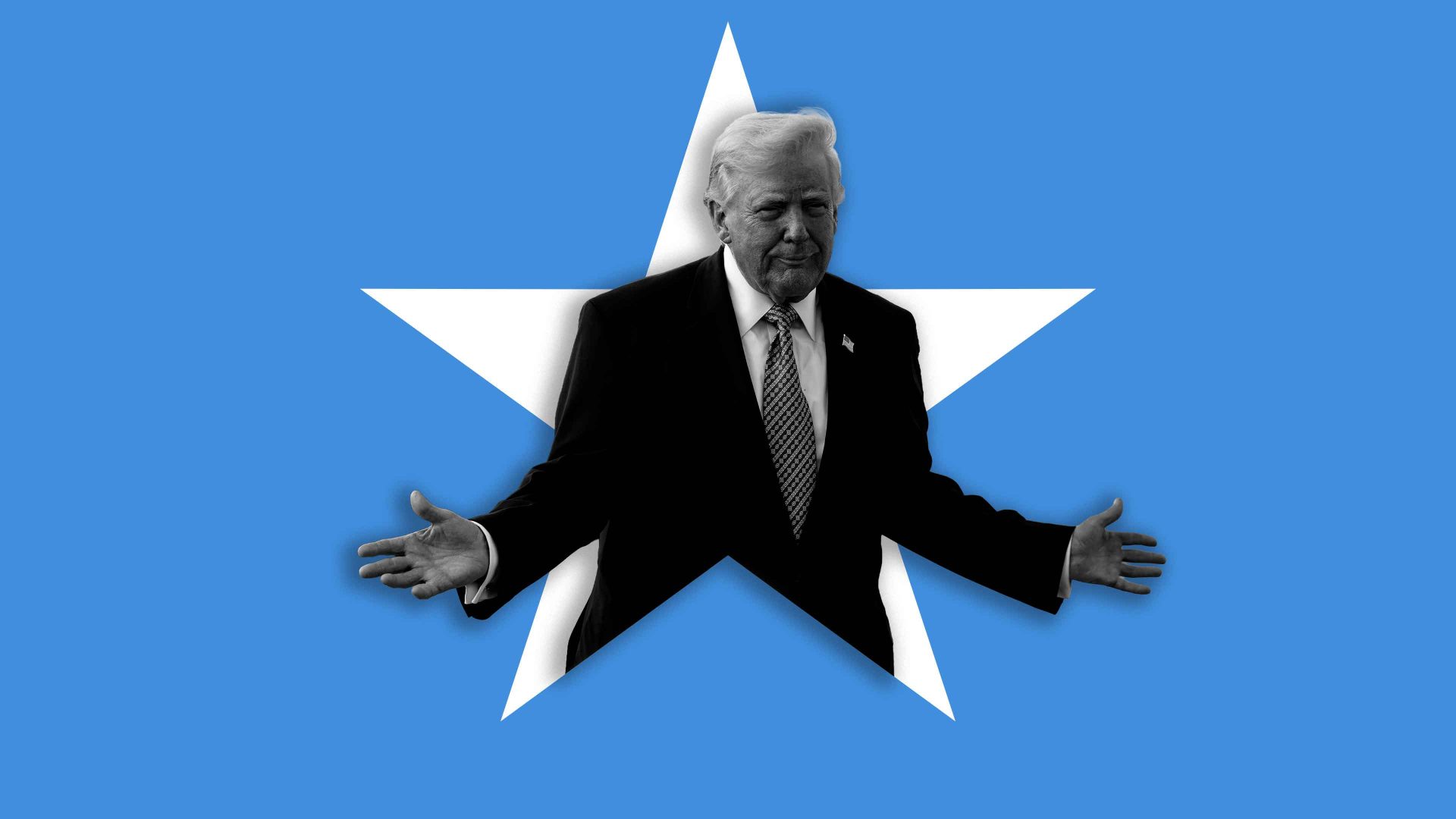
The Trump administration is currently caught up in its war in Iran. But on the rare occasions when he talks about African affairs, Donald Trump will often refer to Somalia, and when he does he tends to use a restricted vocabulary: terrorists, migrants, failed state, threat. Somalia is processed, in Washington’s imagination, as a kind of geopolitical malfunction. Like Iran, it is a place that produces bad things and needs to be bombed until it produces fewer of them.
This has been American policy, in various forms, for over 30 years, in Somalia. It has not worked. It has never worked. And the reason it has never worked is not a mystery: you cannot manage a country you have not bothered to understand.
Donald Trump, to be fair, is not uniquely guilty here. Somalia has been misread by western policymakers since the early 1990s, when the United States stumbled into Mogadishu with the breezy confidence of a country that had just won the cold war and assumed that the rest of the world would get the memo.
What followed – the humiliation of Black Hawk Down, the chaotic withdrawal, the two decades of drone strikes and proxy wars – was not simply a military failure. It was a failure of imagination. Washington kept asking what to do about Somalia without ever seriously trying to understand the Somali people.
Trump, however, takes this ignorance and electrifies it. Where previous administrations at least maintained the pretence of strategic thinking, the current White House has replaced analysis with bluster. Somalia, in the Trump worldview, is not seen as a country with a history, a culture, a political logic and a population of 17 million people, but as a problem.
This tells you something important – not just about Somalia, but about the limits of The Apprentice model of foreign policy. Trump’s instinct, applied to everything from trade negotiations to territorial disputes, is that dominance is the universal language. Show strength, apply pressure, threaten consequences, win.
Sometimes it works. But not in Somalia. It has never worked in Somalia. And anyone who had spent 20 minutes reading the country’s history could have told you why.
Somalis have an exceptionally well-documented relationship with outside interference. They have been colonised by the British, the Italians and the French, each of whom left behind borders that cut across clan territories with casual destructiveness.
They have been used as a cold war proxy battleground. They have been subjected to a civil war that the international community made worse by repeatedly backing the wrong factions. They have watched American-trained and American-funded forces collapse, defect and switch sides with a regularity that by now should have prompted some serious questions about that training and funding.
Suggested Reading
The Africans dying in Putin’s failing war
What emerges from all this might look like a broken people waiting to be fixed – but that is far from the truth. This is a society that over centuries has developed an acute sensitivity to being ordered about by strangers. Somali political culture prizes independence, personal honour and clan solidarity in ways that outside powers consistently underestimate.
Humiliation, in this context, is a mobilising force. A policy that is experienced as an insult – and American policy very often is – tends to produce exactly the resistance it was designed to prevent.
Trump’s travel bans have included Somalia. His drone programme has continued and, at various points, intensified. His rhetoric about African nations is the diplomatic equivalent of a foghorn in a library: loud, disorienting, and entirely counterproductive.
None of this is designed with any apparent knowledge of what Somalis want, what they fear, what they value, or what history has taught them to expect from powerful outsiders who arrive with guns and good intentions.
The madman question – does he really know nothing? – is almost certainly rhetorical, but it points to something real. The Trump administration is scarcely staffed with Somalia scholars. It is not, as far as anyone can tell, drawing on deep anthropological or historical expertise when it formulates its Horn of Africa policy. It is operating on vibes, threat assessments, and the assumption that force, or the credible threat of it, is sufficient.
It is not sufficient and never has been. The British empire, for all its brutality, at least produced men who studied the places they intended to dominate. They learned languages, recorded customs and tried to map the internal logic of the societies they were dealing with. You can find that knowledge in libraries. It is not classified, and it is not difficult to access. It simply requires the belief that knowing something about a place is more useful than knowing nothing about it.
Washington has not yet arrived at that belief. Under Trump, it seems further away than ever.
Joseph Maina is a freelance journalist based in Naivasha, Kenya