If you are a young person in Nairobi today, your social media feed is a frantic kaleidoscope of get-rich-quick schemes. Between the Forex “mentors” and the apps promising credit at 400% interest, a new, oddly sterile genre of advertisement has emerged. It features stock photos of snowy, orderly European streets and the kind of font usually reserved for mid-tier accounting firms.
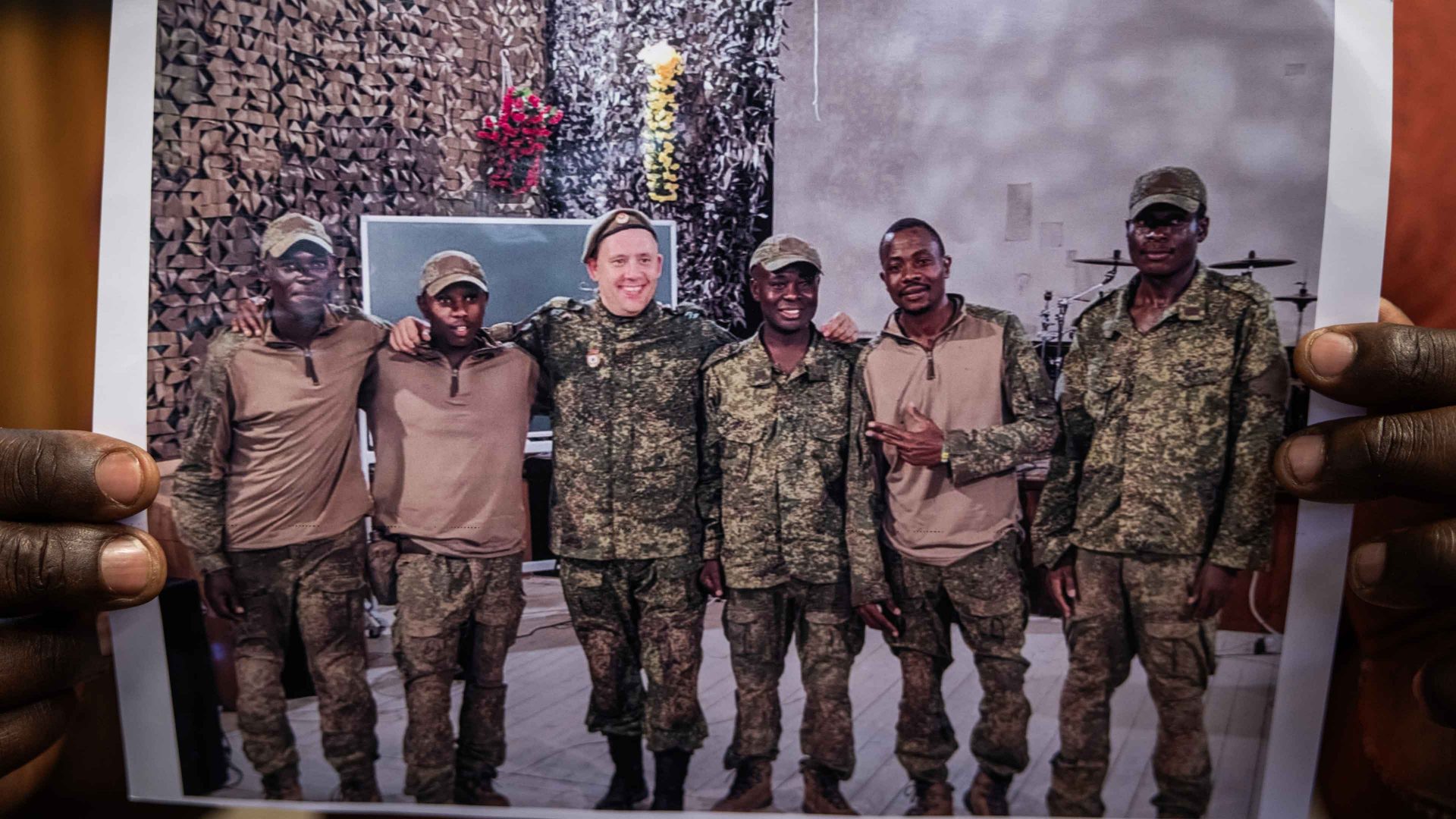
It sounds like a dream for anyone trapped in the Kenyan “hustle” economy. But as it turns out, the “logistics” involve moving ammunition under drone fire, and the “security work” is defending a trench in the Donbas. Welcome to the 21st century, where the global labour market has been so thoroughly disrupted that Russia’s war effort now looks suspiciously like a recruitment drive for a tech startup – just with significantly higher turnover.
The brilliance and the deep, dark irony of this pipeline is its reliance on the language of human resources. Instead of us seeing a traditional call to arms, we are seeing an evolution in the labour export industry. Based on testimonies from the handful of Kenyans who made it back, recruiters do not talk of “the Motherland”. They lead with fancy talk that reflects irresistibly good payment packages.
By replacing “bayonets” with “benefits packages”, the system bypasses the pesky moral dilemma of fighting a war that isn’t yours. Kenya’s foreign minister, Musalia Mudavadi, recently noted that, since February 2026, his office had shut down over 600 recruitment agencies. Apparently, these “travel agents” were a little too enthusiastic about their job descriptions, forgetting to mention that the “office” was a penal battalion near Lyman and the “colleagues” were often recruited from Russian prisons.
For a subset of Kenyans, the system actually works. Russia has legalised a path to citizenship for any foreign national willing to sign a one-year military contract. For a young man from Migori in western Kenya who survives the winter, $2,000 a month and a Russian passport is a life-changing exit.
These are the guys who make the “volition” argument complicated. Some people may view them as victims, but it’s also possible to regard them as entrepreneurs.
However, as the foreign affairs principal secretary, Korir Sing’Oei, has pointed out, their choice is often made under the duress of a debt trap. Upon arrival, many recruits find themselves billed $18,000 for their own trafficking costs, essentially making them indentured servants with assault rifles. It’s the kind of gig where the employer holds your passport and the HR department is an FSB officer.
Then there is the diplomatic dance. The Russian embassy in Nairobi has been performing a masterclass in evasiveness. In September 2025, it claimed that a Russian national, Mikhail Lyapin – who was linked to a recruitment syndicate – was just a tourist who had been “invited” to have a chat with the police. Ambassador Vsevolod Tkachenko’s official stance, in which he made it clear that Russia has zero tolerance for involuntary recruitment, remains a crowning example of bureaucratic disingenuousness.
If a Kenyan happens to find himself in a Russian uniform, the official line is that he simply followed his heart (and perhaps a very persuasive TikTok ad). This is a bit like a casino claiming that it doesn’t encourage gambling and that it just happens to have all those roulette wheels, the music, and the doors locked from the outside.
Suggested Reading

How Europe stops Gen Z going to war with Putin
The human cost, however, is no joke. In February 2026, Ukrainian intelligence confirmed the deaths of Ombwori Denis Bagaka, Wahome Simon Gititu, and Clinton Nyapara Mogesa. These men weren’t ideologues; they were security guards in Qatar who were up-sold on a “better opportunity” in Russia. They were processed at the Pogonovo training ground, sent to the front, and killed probably before their first “paycheck” had even cleared.
For the Russian state, these men are the perfect “outsourced” assets. A death in a trench is a tragedy when it’s a boy from Moscow, but it’s a mere footnote when it’s a boy from the lakeside city of Kisumu. You could rightly think of it as the ultimate form of “offshoring”: a war in which the casualties are moved off the national balance sheet.
Nairobi is now scrambling to draft a labour agreement that explicitly says, “Please don’t put our migrant workers in tanks”. It’s a necessary, if surreal, piece of legislation.
As you read this, the ads are still circulating. Somewhere in a Nairobi cybercafe, a young man is looking at a picture of a snowy city and a promise of a life without debt. He thinks he’s applying for a job. He’s actually the latest “raw material” in a globalised war machine. In the logistics of despair, the recruiter’s smile is the first weapon fired, and the contract is the only thing that’s bulletproof.
Joseph Maina is a freelance journalist based in Naivasha, Kenya