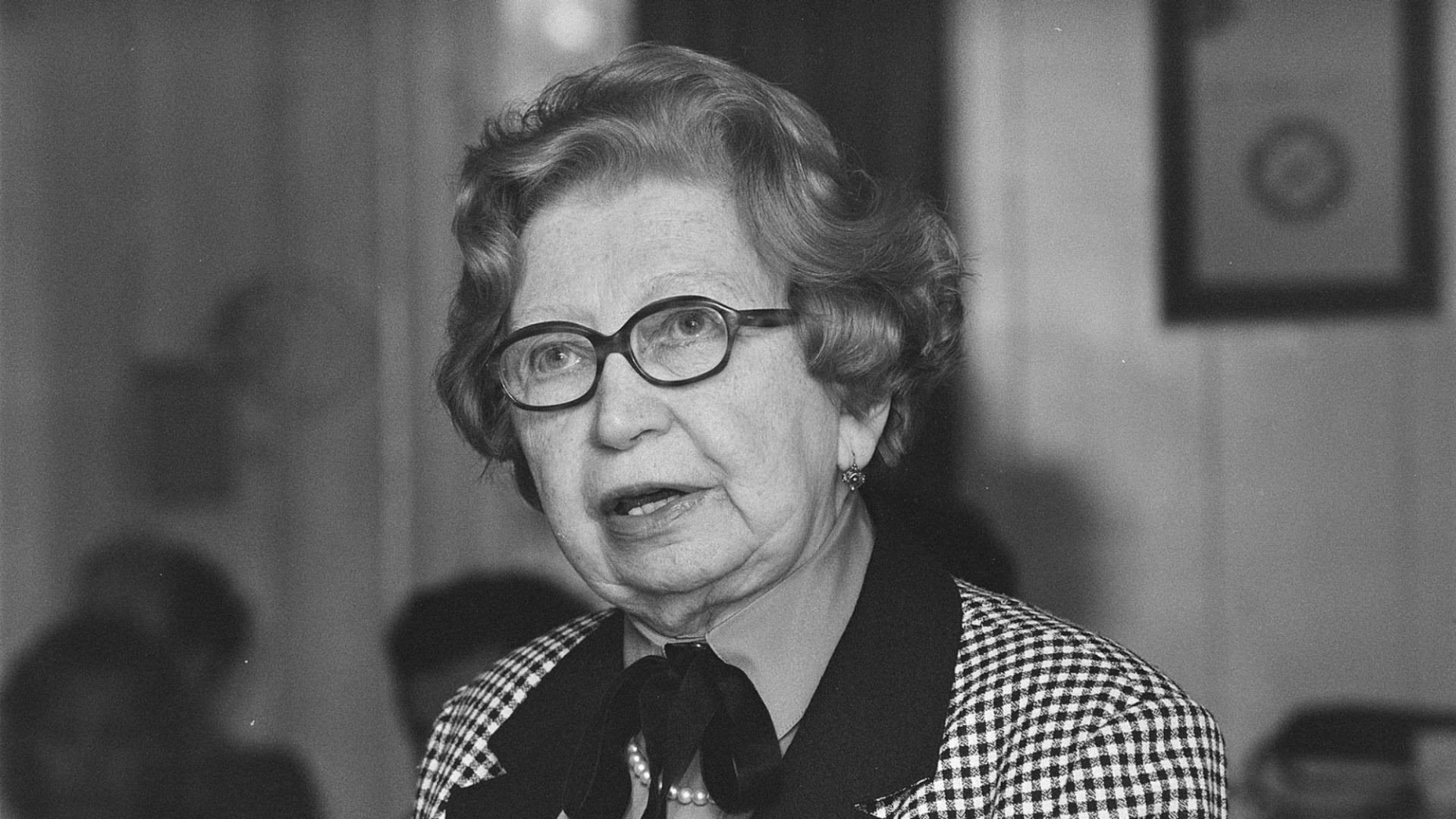
On the Friday morning of August 4, 1944, Miep Gies is at her desk ready to begin another day of work when she looks up to see a man at the door with a revolver. “Miep,” her colleague whispers to her, “I think the time has come.”
The whole day passes with Gies fraught and frozen, unable to do anything. Only when the soldiers have left the building on Prinsengracht and her colleagues have gone home for the night, does she cautiously make her way through the disguised bookcase and up the stairs. After a day of footsteps and voices, she knows there is little chance of her friends still being there.
The place has been ransacked, everything overturned, everyone gone. On the floor, she sees the diary that belonged to Anne, the youngest of the eight who had been hiding in the annexe of the building where Gies worked. Terrified of being caught by a returning soldier, she grabs it, along with Anne’s shawl and some other paperwork, and runs.
Back at home, she finds out that her husband Jan has seen everything. Standing by the canal, on the opposite side of the road from the Franks’ hiding place, he tells Miep how the police truck arrived, how their friends were led out of the building as prisoners. “I did not know for sure if you were with them,” he says to his wife.
All that is left is hope. “I’ll keep everything safe for Anne until she comes back,” says Miep. And she puts the 15-year-old’s precious diary in her desk drawer, where it remains for months.
Miep Gies had been working for Otto Frank’s Opekta company, which sold pectin and spices for jam-making and pickling, since 1933, when she was 24. She and Jan became friendly with his wife Edith, and their daughters Margot and Anne. They saw the Nazis roll into Amsterdam in May 1940, saw the steady creep of anti-Jewish measures that followed. Until, in the summer of 1942, with deportations days away, Otto asked her: “Miep, are you willing to take on the responsibility of taking care of us while we are in hiding?”
Miep knew the risks – prison, or worse – but she knew she had no other choice. “I asked no further questions. The less I knew, the less I could say in an interrogation.”
Miep combined her day job with her role as provider and protector for two years, up until the day the Franks and others hiding in the annexe were captured. “Miep, who is always so helpful, brought us everything she could manage,” Anne wrote in her diary, a red and orange chequered cloth-bound diary given to her by her dad for her 13th birthday.
“Never did I hear a complaint from the hiding place,” Miep later wrote. “Never a comment about how tired they were of eating kale. Never did they complain.”
Suggested Reading

Ágnes Keleti, the gymnast who resembled the Spirit of Ecstasy
One day, Anne excitedly asked Miep and Jan to spend the night with them, and Anne couldn’t believe it when they agreed: “You’d have thought that Queen Wilhelmina herself was about to make a visit.” The couple experienced first-hand what it was like to spend a night in fear, with Gies admitting, “I never slept; I couldn’t close my eyes.”
The Franks were not the only people Gies helped during the war. A Jewish friend reached out, asking if she would store his leather-bound volumes of Shakespeare, as he was certain he was going to be taken away. When other friends told her their son Karel to go into hiding after refusing to sign a loyalty oath – compulsory for all Dutch students – Miep invited him to live with them, once more breaking the law and risking her freedom for others.
One day, a young neighbour banged on her door, begging her to look after her cat and Gies “realised that she was being taken away by the Germans and had been given a very short time to get ready”. Berry the cat became part of the family; another mouth to feed, another under the protection of Miep Gies.
When the war ended, Otto Frank returned from Auschwitz. He had been separated from his wife and daughters in the camp and had no idea if they had survived. Unsure they’d ever see him again, Gies invited him to live with her and Jan, which he did for seven years. “I prefer staying with you, Miep,” he said to her. “That way I can talk to you about my family if I want.”
He was with Gies in his office when the letter arrived, telling him the news he had dreaded. That was the moment she gave him the diary. Living in the Gies family home, Otto would sometimes call out to her while reading it, exclaiming, “Miep, you should hear this description that Anne wrote here! Who’d have imagined how vivid her imagination was?”
In her later years, Miep Gies became an ambassador for the diary, travelling to talk about Anne Frank. She received praise and awards throughout her life, but she was always adamant that she had done nothing heroic; saying helping other people should be considered normal, not exceptional.
She was married to Jan for 52 years and after the war ended they had a son, Paul. She died at the age of 100, in January 2010.
It took a lifetime for Miep Gies to come to terms with the loss of her friends, but she did not need to come to terms with her decisions. “In that dark time of the war, we did not stand on the sidelines, but extended our hands to help others,” she said. “Risking our own lives. We could not have done more.”