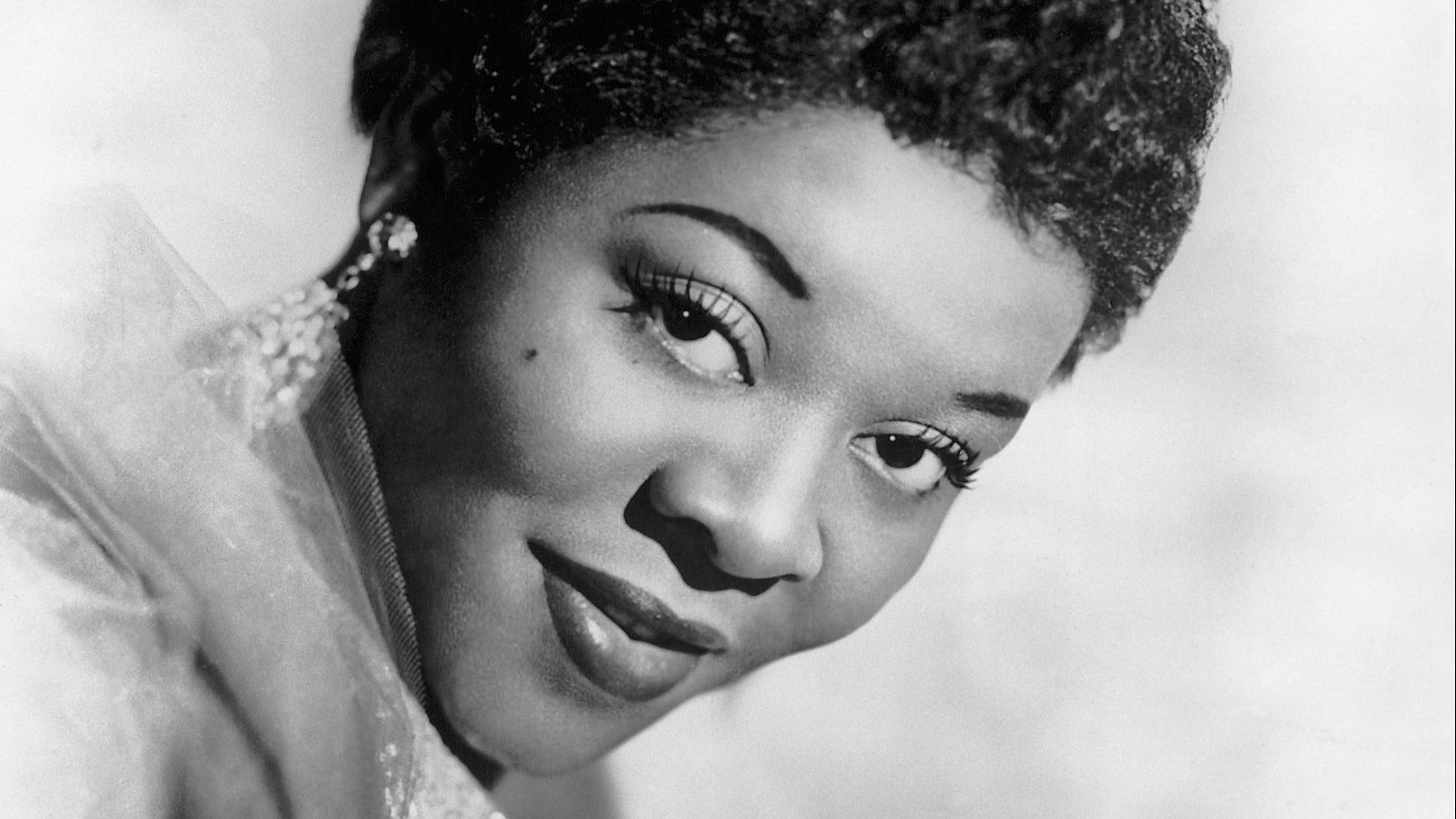
“I’ll give you one take on that,” said Dinah Washington to her new producer, Johnny Otis, and to him it felt like a victory. It was February 1959, and Otis had been outlining his vision for the next stage of the singer’s career: recording with a string section as well as her usual sidemen, aiming at a broader audience with a song that had first been a hit a quarter of a century earlier.
Except Washington didn’t want any of it. She insisted that she was “pretty good” with her largely black fanbase as it was, selling 25,000 copies of every record she made, constantly working on the live circuit. “I don’t cut with no strings. I’m a horn person,” she added; a lie since she had recorded with strings several times.
As for What a Diff’rence a Day Makes, a 1934 hit for the Dorsey Brothers, she’d think about it. But then, as she got up to signal the end of the meeting, she made her concession. One take.
What a take it was. On February 19, she stepped into the studio, saw a couple of familiar faces sitting among the assembled players and gave them her trademark greeting: “It’s good to see you motherfuckers.” Then, for the next 145 seconds, her rich, clipped tones took command. The clarity of emotion she expressed over the strings and a rhythm and blues beat – insouciant, vulnerable, yet still with an edge – came as naturally to her as breathing.
The song that Dinah Washington had tried to toss away was released in May as What a Diff’rence a Day Made. Pushed to white radio stations as well as her old audience, it reached number eight on the Billboard Hot 100 that September. Its success would see Washington refer to it later as What a Diff’rence a Yellow Canary Diamond Made, showing off the expensive South African rock on her finger, hinting that the song had given her the money to buy it.
At what was only the second-ever Grammy Awards in November, it won Washington the honour for best rhythm and blues performance, beating Nat King Cole and Elvis Presley. The award cemented her status as the Queen of the Blues. It was a name she enjoyed, but she wanted another. “Not just Queen of the Blues, but The Queen,” her sister fondly remembered.
Born Ruth Lee Jones on August 29, 1924 in segregated Alabama, she was raised in Chicago where she sang gospel songs in her church. Her mother was deeply religious, meaning the young Dinah led a double musical life, singing with her in church but sneaking out in the evenings to embrace the rhythm and blues that would infect her singing style and her personality.
Mrs Jones disapproved, worrying that Ruth would pick up bad habits, drinking and mixing with the wrong people. She was proved correct.
As an 18-year-old, Ruth was given the stage name Dinah Washington. With a powerful voice that made audiences sit up and take notice, she was the only female in the huge entourage of the Lionel Hampton band, touring segregated America as a young black woman.
Suggested Reading
Shane MacGowan, the poet laureate of chaos and loss
But Dinah Washington wanted to be centre stage. To realise this dream she worked with an up-and-coming Quincy Jones. They thrived in each other’s genius and versatility.
Early collaborations featured Washington in a salacious, Bessie Smith mood – including the nudge-nudging I Love My Trombone-Playing Daddy with His Big Long Slidin’ Thing, but Jones quickly discovered Dinah was capable of much more. “She could take the melody in her hand, hold it like an egg, crack it open, fry it, let it sizzle, reconstruct it, put the egg back in the box and back in the refrigerator and you would’ve still understood every single syllable,” he said.
Her gift was a route out of poverty, and she celebrated leaving hardship behind. At one point in her youth, her mother could only afford one pair of stockings between them, and they would take turns wearing them.
As soon as Washington started to earn money, she loved to buy stockings. “I want plenty of stockings. I don’t ever want to have to wear somebody else’s stockings,” she said.
She was fiercely opinionated and a forceful personality, refusing to accept the norms of femininity or of blackness. When she wanted to be blonde, she bought a blonde wig. She loved big collar coats, all the latest fashions.
Yet she was repeatedly shamed for her figure and ridiculed for her wigs, her fur coats, her weight. Despite giving the illusion that she did not care, creating a fearless stage persona, repeating the mantra that she would not listen to what other people said, she struggled with the criticism. Her weight and the way she was perceived were huge personal battles for her.
Washington was married seven times, although that number has never been officially confirmed (it may have been six or as many as nine). “I change husbands before they change me,” she once remarked.
She tried prescription medications for dieting as well as crippling insomnia. In 1963, at the age of 39, less than four years after that Grammy win, she mixed the pills and went to sleep. Her husband of only six months, American football star Dick “Night Train” Lane, rolled over in the morning and found her dead beside him. It was ruled an accident.
Today, What a Diff’rence a Day Made is the official song of Tuscaloosa, Alabama – Dinah Washington’s home town. It was covered again recently by Raye for the Netflix show Black Rabbit, but the definitive version remains the one Dinah Washington recorded in one take; two minutes and 25 seconds that will thrill us for ever.