My mind casts back to the mid-1980s: clusters of people, cigarette in one hand, jabbing away at their typewriters as they summon another act of defiance. The Moscow of yesteryear has been transferred to the Budapest of now, except I’m taken from a digital newsroom to a podcast and TV studio.
I’m in the offices of Telex, Hungary’s largest independent news organisation, on the second floor of a non-descript office block in the north of the city. At least they have a proper office. Until a year ago, they were operating out of people’s apartments.
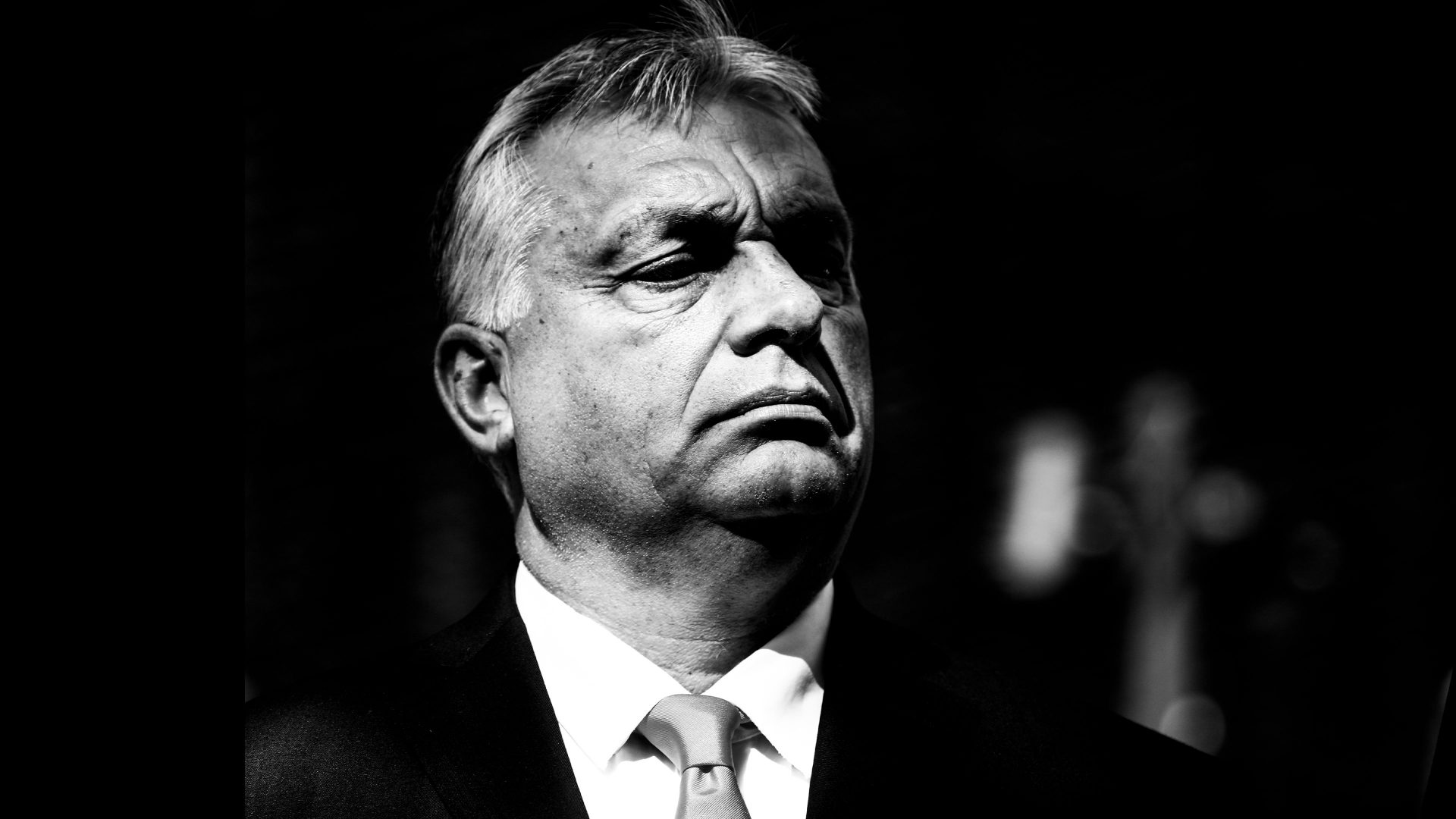
Yet in a few months’ time, on 12 April, if Viktor Orbán defies the odds and is re-elected prime minister for the sixth time, the operation could be forced to close.
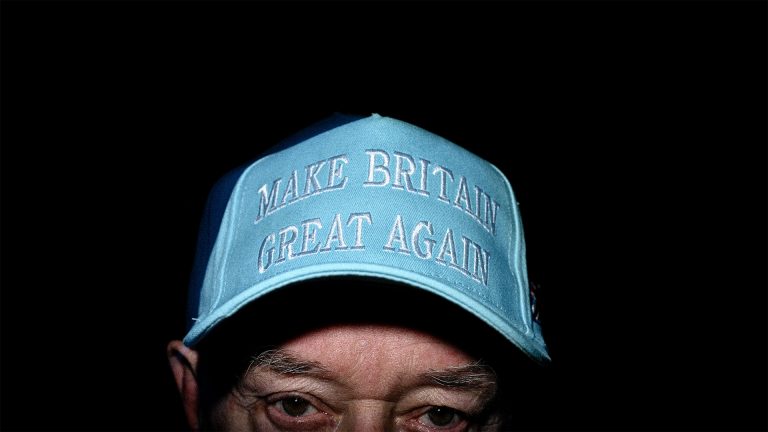
Hungary isn’t like Russia or Belarus, not yet. Unlike Slovakia, journalists haven’t been killed. Orbán is too clever for that. He straddles the ground between notional adherence to democratic norms, while trampling on them. He is Trump’s dream. He is MAGA’s lodestar. That’s why the fate of a man leading a country of fewer than 10 million people, with past glories and an obscure language, matters so much and why in Washington and Moscow they’re desperate for him to win.
Marton Karpati, one of Telex’s founders, recounts its story. It arose out of another online paper called Index. In 2020, with the pandemic at its peak, two Hungarian oligarchs appeared out of nowhere on the board. “They started telling us how to operate,” Karpati recalls. “When we didn’t do as we were told, they fired the editor in chief. So, we all walked out, minus one or two.”
During that time, he and a small group had started working on a Plan B. “We had no revenues, no office, no laptop, no mobiles, no money to pay anyone.” They did a crowdfunder and within a fortnight they had received more than €1 million.
Six years on, they have an annual turnover of €3 million, with money from advertising (though many companies are scared to finance them), individual donations and the odd international grant. That used to include the US State Department, but within a week of Trump gaining power, they were sent a “sorry to inform you” email. Unabashed, they have amassed half a million unique readers – some feat in a small country – providing an antidote to the relentless Orban propaganda that pours out across the media.
They are invariably shunned by the government. Only a few days before I visited, the prime minister had given his annual state of the union address in a huge state ballroom. Journalists from Telex and other independent outlets were told all the space had been allocated. During a visit to Washington to see Trump, Orbán took a plane load of influencers, keen to do his bidding such as including fake AI bots into their “reports”.
That is how it works. But at least they can work. Telex’s most recent big hit was an investigation into a toxic leak at a Samsung battery factory just to the north of Budapest, on the outskirts of a comfortable spa town, incongruously called Göd. The report alleged that for three years ministers have been sitting on an internal report that gave details of how some workers had been poisoned. The government dismissed the report as “fake news”.
Last May, as parliament debated a law that would snuff out independent media, academia and civil-society work, Orbán described such journalists and NGOs as “bugs who must be swiped out of the country”.
The “Transparency of Public Life” bill would give the state unbridled powers to punish organisations it deems a threat to national sovereignty. Entities receiving foreign support – as small as €5 – without government authorisation could be fined up to 25 times the amount received – if they don’t promote values aligned to the government. Failure to pay would result in a ban and closure. The bill was deliberately suspended, a sword of Damocles hanging over the heads of the opposition; Orban remarked in his recent state of the union speech: “We must finish off the job”.
Hungary therefore stands on the edge of a precipice. Extraordinarily, given Orban’s control of almost all aspects of public life, he faces possible defeat, thanks to a stagnating economy, deteriorating public services and entrenched corruption
Polls show that his opponent, Peter Magyar, has a 10-point lead. A long-time senior figure in Orbán’s Fidesz party, Magyar quit two years ago, just as his ex-wife, Judit Varga (they had just divorced) was forced to resign as justice minister in a scandal over a secret pardon that covered up sex abuse at an orphanage close to Orbán’s home village. Varga has since accused her ex of physical abuse, claims he says she was blackmailed into making.
On Hungary’s March 15 national holiday, Magyar held a rally to announce the formation of a new party, “Tisza” – a hybrid of the words freedom and respect – to fight against what he called “the feudalistic system” of politics in Hungary.
From that point on, Magyar has toured the country, delivering a message of change, denouncing Orbán as a “gangster”. At 44, Magyar is two decades younger than an opponent who has been around since the end of Communism (hard to imagine that Orbán was once on the side of the angels).
Magyar has cut a deal with most of the opposition, to ensure that the vote isn’t split. But try as he might to portray himself as marking a new era, he hardly sets the pulses racing. Some of his critics say he is a Fidesz hack in sheep’s clothing and suspect he may just be a slightly milder and more pro-European version of what has come before.
In echoes of French presidential elections past when it was anyone but Le Pen (father or daughter), voters will be given the choice of Orbán or not Orbán. Many will be going to polling stations holding their noses, but a return of the monolithic prime minister would not be a choice for continuity. Just as Trump I bore little resemblance to Trump II, an Orbán re-elected despite his dismal record would be dramatically different. He has made no secret of his desire to undermine Ukraine and the European Union – two of the Trump administration’s key goals.
On the fourth anniversary of the war, Orbán made one of his most confrontational decisions yet, blocking a fresh package of measures against Russia. He portrays Hungary as besieged by a belligerent West that wants to send his young compatriots to die in defence of an immoral Ukraine. He draws parallels between the Soviet Union and the EU. “In 1956 they came with tanks. Today they come with financial sanctions.”
Suggested Reading
I’m in Ukraine, a nation let down by America
Across the country, billboards display posters of varying themes depicting a cabal who would enslave Hungary. The three figures who usually appear in them are Ukraine’s President Volodymyr Zelenskyy, EU Commission President, Ursula von der Leyen – and Magyar taking orders.
Orbán, like his friend Vladimir Putin, has seized the “encirclement” theory of grievance with alacrity. He is also doing it to divert attention from bread-and-butter issues. With the latest data showing that living standards in Hungary are the lowest in the EU, it is unsurprising that Orbán is focusing his campaign on three issues: immigration, the culture wars and Ukraine. He is inviting voters to choose between “the Brussels path” – LGBT rights, money for Ukraine, the unfettered arrival of millions of foreigners – or the Hungarian path of decent, Christian, white folk.
His rhetoric is a cut and paste from MAGA. Or rather MAGA is cut and pasting from him. After all, back in the 2010s, 2000s even, Orbán was the precursor, the prototype for Trump, who said after one meeting “it’s like we’re twins”.
It was no surprise that Marco Rubio, US secretary of state, went straight after the Munich Security Conference to Budapest (via a stop-over in like-minded Slovakia) to give a ringing endorsement of Orbán. Welcome though that was, what Orbán would really appreciate would be a Trump stump event. That might yet happen, though in the White House they are weighing up whether the optics would look good if they travelled across the ocean to back a losing horse. Best still for Orbán would be a Trump-Putin-Zelenskyy peace deal (Ukrainian capitulation) to take place in Budapest. That was mooted at one point, but the prospects of that have all but disappeared.
Orbán’s fate matters across the far-right world, which is why he received a coordinated string of endorsements in a campaign video from the likes of Marine Le Pen, Giorgia Meloni, Javier Milei and Benjamin Netanyahu.
Orbán remains central to the ideological struggle. The Mathias Corvinus Collegium (MCC) is the largest private education institute, which is oozing with money, some of it coming from Hungary’s MOL oil company that works with Russia. It has so much cash it sponsors fellowships at US and British universities, including Oxford and Cambridge, and is closely aligned to the agenda of Reform UK.
Another organisation is the Centre for Fundamental Rights, which proclaims “God, Homeland, Family” on its literature and is close to the Conservative Political Action Conference, which is at the core of MAGA. CPAC is holding its annual gathering in Hungary on March 21 – the fifth time it has done so in the country – providing a jamboree for Orbán on the eve of the election. It is not inconceivable that Trump might attend.
In 2024, the Centre for Fundamental Rights opened its first international office in Madrid. Others are expected to follow. The Mathias Corvinus Collegium is working in Brussels and Vienna, with offices due to open in London and Brussels.
For all the opprobrium heaped on the EU, Orbán has no intention of following the Brits for the door. Huxit is a non-starter, even if other member states are desperate to kick him out. What he wants is not to leave, but to occupy and weaken the EU. His agenda on that is identical to the Trump administration’s – as set out in the National Security Strategy – are identical.
Orbán has made Hungary pivotal to the march of populist authoritarianism, which is no small achievement. But Hungary remains a small canvas, and the export of his goals would serve his purposes while he bides his time waiting to come back to power.
That is his fall-back scenario. With several weeks of campaigning left, anything can still happen. He and his lieutenants are pulling out all the stops. Social media and traditional media are already being flooded with disinformation and deep fakes.
The voters he needs are being bought off – increased pensions for the elderly, taxes cut for large families. Local constituencies, which account for just over half of the 199 parliamentary seats, have been gerrymandered to favour Fidesz.
State capture is almost complete. The government has changed the rules to ensure that its placemen will survive any possible change of government. The presidency, audit commission, electoral commission, the constitutional courts, education sector and the media are firmly in Orbán’s grip.
If the result ends up being tight, Orbán is almost certain to do a Trump and cry foul. Would Hungary descend into violence? More likely is that he would use the interim period – four to six weeks or so – in which the old parliament sits and in which he enjoys his two-thirds “super-majority” to consolidate his grip on power structures.
He would then watch and wait for Magyar’s government to crumble. Then he would step back in. The nightmare scenario is that he would not just be re-elected but again with a super-majority that allows for constitutional changes. As Karpati points out: “They would pass the transparency law within a week. It would enable a Russian-style shutdown of foreign agents, with no right of appeal. It would be brutal.”
John Kampfner’s latest book, “Braver New World”, is published by Atlantic on April 16
 Most popular

Matthew Goodwin’s by-election diary
The big secret of Small Prophets
I’m in Ukraine, a nation let down by America

The Queen, the palace and the media were accomplices in the Andrew fiasco