I vividly remember my first time watching a match in San Siro stadium three years ago. As the partner of an avid Inter Milan supporter, with no real team back home, I half-jokingly pledged my allegiance to Inter after learning that backing Juventus would be the equivalent of a social death sentence.
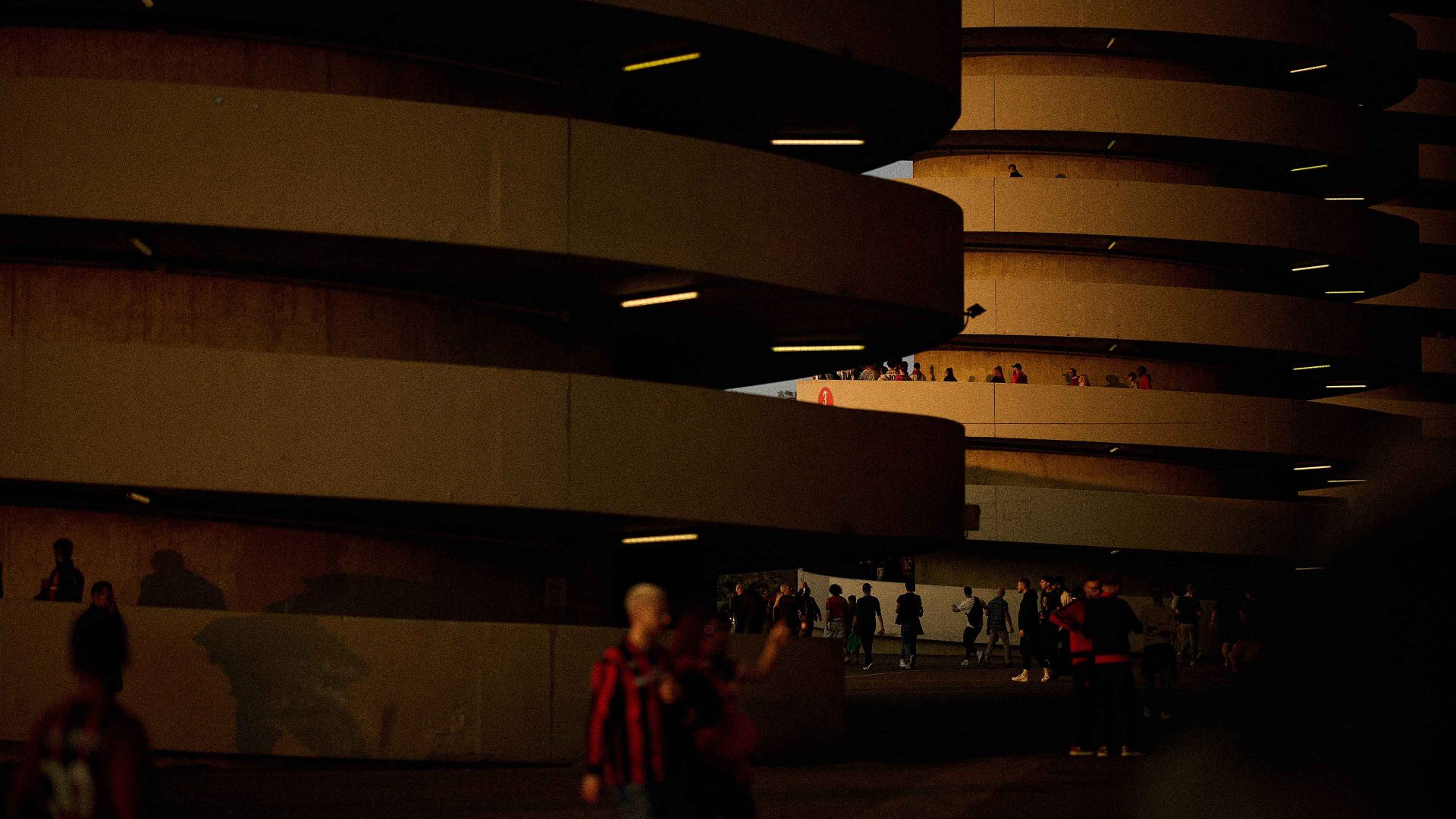
As I rode up the escalator to get out of San Siro Stadio metro, I was stunned by how sci-fi the structure appeared. It basically looked like a stadium on springs. It wasn’t conventionally beautiful – a hulking, weathered concrete relic of fascist-era architecture, more stubborn than striking.
Inaugurated in September 1926 during Mussolini’s rule, it was first known as the Nuovo Stadio Calcistico (new football stadium), and then later the Giuseppe Meazza after the late Italian football manager.
Structurally, it wasn’t what I expected from the home of two of Italy’s top Serie A teams – Inter Milan and AC Milan – and the largest stadium in the country. When Inter won 3–0 against Spezia, I half-expected the entire thing to bounce into the sky under the weight of fans jumping in celebration.
I clearly wasn’t alone in questioning the San Siro’s place in modern Milan. Following a marathon debate lasting nearly 12 hours and concluding at close to 4am, Milan’s city council narrowly approved the sale of the stadium to the two clubs by a vote of 24-20.
The sale passed partly thanks to the abstention of councillors from the centre right Forza Italia party, founded by former prime minister and AC Milan owner Silvio Berlusconi.
By contrast, the hard-right Lega Nord and Brothers of Italy parties voted against the proposal, alongside several councillors from the left-leaning majority that supports the mayor, Giuseppe Sala.
The two footballing rivals plan to demolish their 99-year-old home and replace it with a 71,500-seat arena as part of a €1.2bn project. Both clubs had warned they would build outside Milan if the plan was rejected.
Suggested Reading


The crisis in Italy’s schools
In a press release, the clubs called the vote “a historic and decisive step for the future of the clubs and the city”. Once the €197m sale is completed, Inter and AC Milan will assume control of just over 28 hectares of public land in a densely populated area on Milan’s western outskirts.
The new stadium is set to be designed by Foster + Partners and Manica Architecture. Once construction is complete, the existing San Siro will be demolished to make way for parkland, office space, and entertainment facilities. The new ground is expected to open in 2031. Until then, the clubs will continue to play their home fixtures at the San Siro, which will be partially torn down once the replacement is operational.
Though the venue will host the opening ceremony of the 2026 Winter Olympics hosted by Milan-Cortina, it does not currently meet Uefa’s standards to host events, and was recently rejected for the 2027 Champions League final.
Feelings around the brand-spanking-new stadium are mixed.
“I think they’ve made the right decision,” says Antonio Rossi, a 50-year-old local who has been a die-hard Inter Milan supporter since he “entered into the world”. He said he had grown tired of how shabby-looking the stadium had become over the years.
“It’s an embarrassment. We’re a great team and we deserve a great stadium. Imagine being a supporter from far away and seeing that. I’m proud of our territory, I really am, and I have very fond memories of watching games there with friends and family. But this may bring more money in. Now is a good time for change.”
But an AC Milan supporter told me the opposite. “I’ve been going to that building ever since I was a child, so as far as I’m concerned, shame on the councillors. They think they can make a decision like this and that it won’t affect us. Tearing it down will be like someone tearing down my childhood.”
“For us, it’s not just a stadium,” he added. “It’s an extension of home. New stadium or not, the spirit of San Siro will always live on. No one can sell that.”
Jessica Lionnel is a freelance journalist based in Rome, specialising in politics, the environment and culture