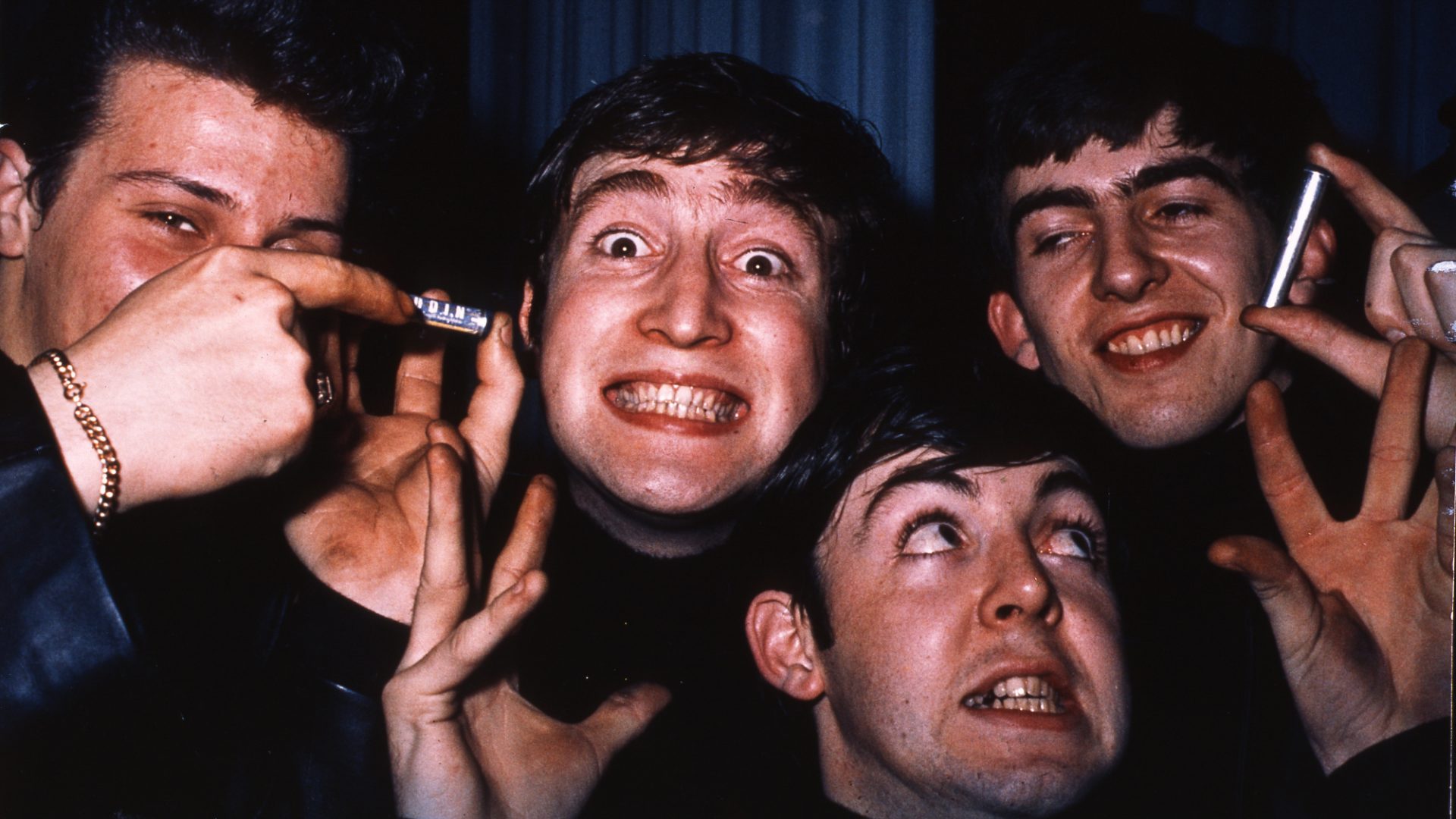
Mark Lewisohn is the foremost chronicler of the life of a ghost. For 50 years, he has spent each day immersed in the history of the Beatles, committed to writing the definitive and accurate history of the band that shaped global culture and continue to resonate decades later.
It’s a journey that has taken him around the world from dusty local newspaper archives to the hallowed vaults at Abbey Road, making him one of only a few people to hear the Beatles’ complete recording sessions. It’s helped inform his authoritative works on the band, and now a major new television documentary Evolver:62, available on Amazon Prime.
You might think then, everything there is to know about the Beatles has already been discovered. But as Lewisohn talks to me from his own extensive personal archive, surrounded by a lifetime of research, it’s clear the opposite is true, even 56 years after they split.
“Things we’ve never seen before are still coming up on almost a daily basis,” he says. “You wouldn’t credit it, but it’s true.” After books chronicling the Beatles’ live dates, recording sessions and more, his exhaustive, highly acclaimed tome Tune In appeared in 2013, covering their pre-fame years. It’s the first part of a three-part definitive biography. At over 1,500 pages, it dispelled many myths, uncovered startling new information and delivered fresh insight, based on meticulous research. It informs Evolver:62, which takes a fascinating and engaging look at the pivotal year of 1962.
Lewisohn is hard at work writing Volume 2 of his trilogy, but despite all his research, telling the Beatles’ story has only grown harder, not just because many first-hand witnesses are no longer with us. Lewisohn has conducted more than 600 interviews with key and ancillary players in the Beatles’ story, but all that research, and the information still emerging, needs weaving together into a single, flowing narrative.
He prizes contemporary accounts, documents, correspondence, photographs and recordings above all else, drawing on these for Evolver:62 as well as his books – material date-stamped to the moment they occurred, lending immediacy to the story and offering invaluable context – such as revelatory correspondence between manager Brian Epstein and his solicitor concerning then drummer Pete Best’s departure.
“You absolutely cannot beat contemporary accounts because they’re not prone to the fallibility of memory and the possibility of exaggeration or confection that happens, especially with a story as huge as the Beatles,” he says.
“Everybody who had any association with them will have talked about it a lot, and there’s always a tendency with retelling for things to deviate from the truth, often more and more with the more they’re told. So go back to source is always the best thing.”
But he fears for the future accuracy of the Beatles’ story with threats posed by new technologies that are already creating and spreading false information.
“Everything being bitesized these days is not helping the accuracy of the Beatles history to sustain,” he says. “Then, of course, AI is really muddying the waters by creating events that never even took place in the first instance. So, there are causes for concern.
“It is very important, therefore, I complete the trilogy I’ve started, because that is an attempt to get the story absolutely right in granular detail. If I can leave these books behind me, when I go, that will be a good thing to have done. How much regard is paid to them is another matter, but at least they will be there for those who do want to know. But I think history generally, not just about the Beatles, but in every aspect, is going to be seriously screwed by technology from now on.”
A few days before we speak, a faked photograph of all four Beatles backing Mary Hopkin in the studio around 1968/69 appeared online. Something that never occurred. Other posts promoted a fictional joint farewell tour from Paul McCartney and Ringo Starr.
“You can’t expect people to understand that photo’s fake, because it looks genuine enough, and why would people doubt it? But those who know, know it’s fake. But we who know are already in the minority and soon won’t even be here to point it out,” Lewisohn says.
“I don’t see the benefit of creating events that never happened. Those people who do it should do something else with their life. I don’t suppose they care two hoots, but they’re running the risk of changing history that is already about as beautiful and perfect as it could be. Leave it alone. But unfortunately, that isn’t going to happen.”
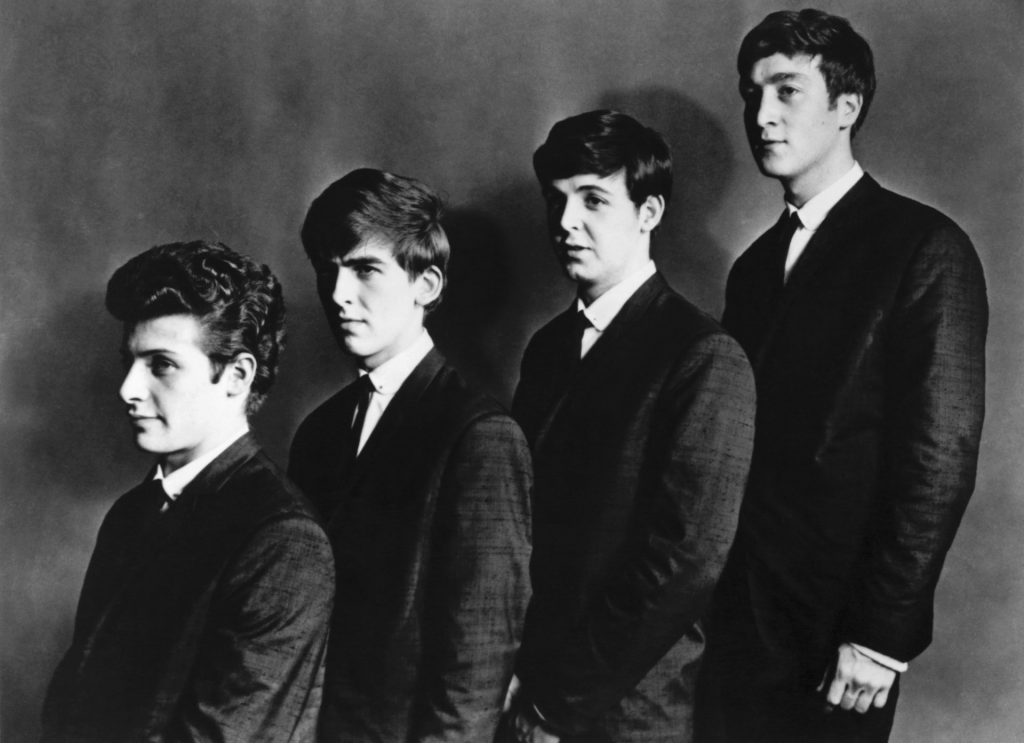
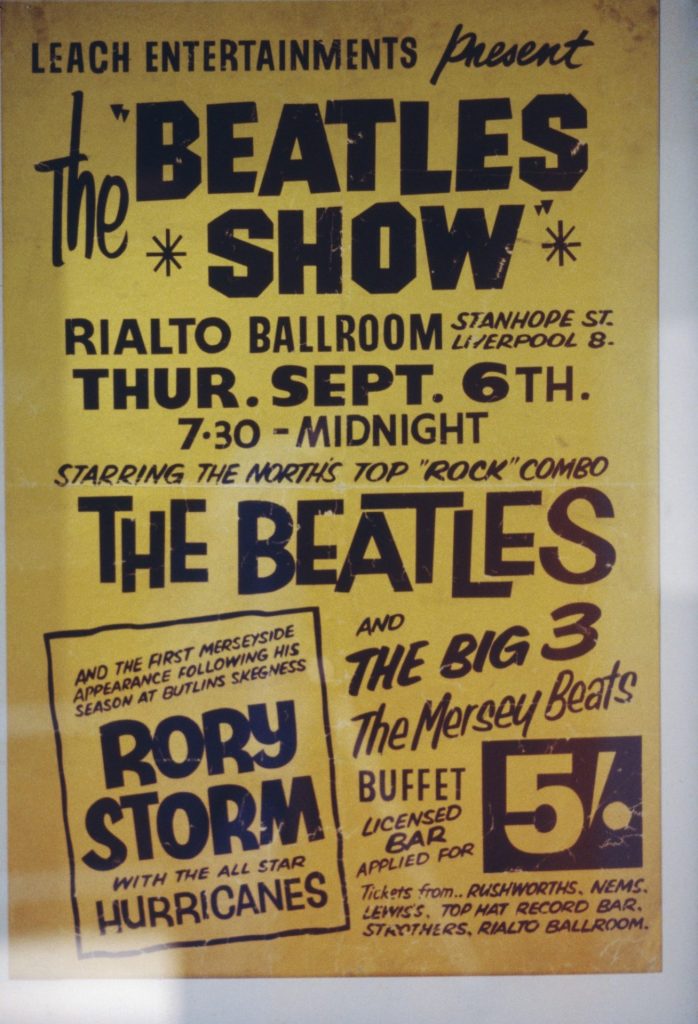
A born researcher, Lewisohn, 67, started his career at the BBC in the 1970s before becoming a research manager at Music Week, the trade publication of the UK music industry. It was a role which led him, in 1983, to go freelance as a writer-researcher-historian, intent on turning his lifelong interest in the Beatles (and much else) into his profession. He spent a lengthy period working directly for McCartney as well as being employed on The Beatles Anthology, the band’s own official history.
Evolver:62 finds him revisiting some of the key locations in the Beatles’ story alongside extracts from his one-man show at London’s Bloomsbury Theatre as he weaves an array of short, sharp stories from 1962, a momentous year which began with a failed audition at Decca on New Year’s Day and ended with them on the brink of stardom. It’s not just the story of the Beatles, but of an embryonic postwar music industry.
He paints a striking contrast between London’s middle-aged A&R men and the thriving music scene in Liverpool, where it was possible to earn a living as a professional rock’n’roller. George Martin was the youngest of this cohort, then aged 36.
Most had served in the war and had no idea what teenagers (still a new concept) wanted. Their music was dance bands, jazz and swing. Not the nascent rock’n’roll scene they looked down on. In an amusing detour, Evolver:62 runs through some of the acts who were signed that year – a variety of non-singers from decorators to wrestlers.
While the Beatles’ later innovative studio work often receives most attention, Lewisohn maintains they were just as interesting and original in 1962.
“There is a tendency for people to think somehow or other in the early days, it was all a little bit more simplistic, and it really only gets interesting later. But you can’t suddenly switch these things on.
“They were interesting later on because they were interesting early on. It turns out they were just always interesting people. The whole thing is whipped up by them because of the nature of their personalities and that was always there.”
They were not prepared to conform to make it either. Epstein worked tirelessly on their behalf but was met with a constant refrain from record company executives: no one makes it from Liverpool. No one’s going to make it with a name like the Beatles. But, says Lewisohn, the Beatles’ response was, “we’ll break the mould or we won’t do it”.
Lewisohn’s respect for Epstein is clear, a man who dedicated himself to his clients. Any criticism of his efforts should be disregarded with full knowledge of the facts, he argues. What he had for his acts was genuine affection, and for the Beatles, love.
The documentary provides a paper trail proving that, far from exploiting them, Epstein gave the Beatles a way out by effectively nullifying his first management contract. Not only did he not sign, but he removed space for the legally required signatures of the parents of McCartney, George Harrison and Best (all under 21 at the time).
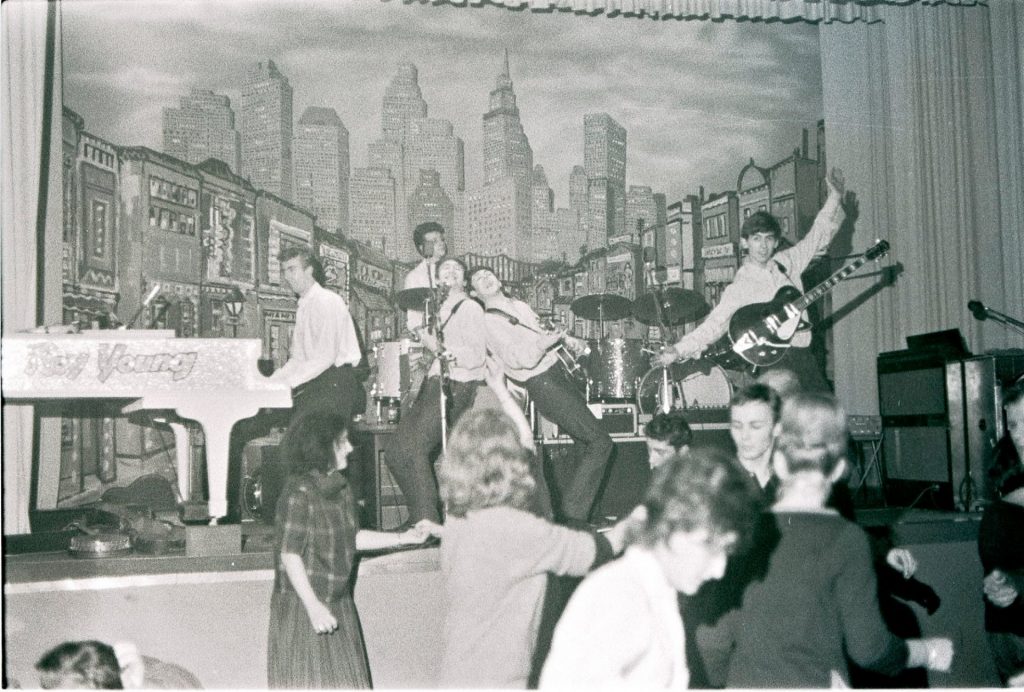
Evolver:62 shows photographs taken at the Cavern the first night the Beatles wore suits. They are utterly joyous, helping disprove another myth that Epstein “sanitised” them. Lewisohn also tracks down the gents’ outfitters in Birkenhead where the Beatles bought and enthusiastically helped design their suits.
By summer they had a record contract with EMI’s Parlophone label – and the previously little-known figure Kim Bennett emerges as a real hero – one uncovered by Lewisohn’s work for Tune In and explored in Evolver:62.
While Parlophone boss Martin originally passed on the Beatles, they came to the attention of EMI’s publishing arm Ardmore and Beechwood based in HMV Oxford Street where Epstein had the Decca audition cut as an acetate. Bennett, a record plugger – described by Lewisohn as possessing “a dogged persistence greater than anyone else in the business” – was keen for EMI to sign the band in hopes of gaining the rights to publish the Lennon & McCartney songbook. He and his boss Sid Colman lobbied for the Beatles to be given a recording contract which led to Martin taking them on.
“Bennett was then determined to justify his belief by making sure Love Me Do, their first record, was a success. He did everything he possibly could. Since the record kept going up the charts… it was really down to Kim Bennett that was happening, getting them precious radio airplays on important programmes.”
He even flew to Cologne to persuade presenter Bill Crozier to play Love Me Do on Two-Way Family Favourites – ratings uncovered by Lewisohn show that 17.8 million people listened to that broadcast.
However circuitous the path to Martin’s door, he was the perfect fit. The sheer variety of his pre-Beatles work made him the only producer for a band constantly expanding their horizons. Lewisohn shows off a collection of singles in his archive, compiled for the box set he assembled covering Martin’s career. “The breadth of his work was extraordinary,” he says. “There was no musical strand he hadn’t worked with.”
In an evocative sequence, Evolver:62 recreates the Beatles’ first-ever radio interview recorded backstage at Hulme Hall in Port Sunlight, Wirral in October 1962. Conducted by broadcaster Monty Lister for hospital radio, this charming conversation was only heard by a small number of patients at Cleaver and Clatterbridge hospitals. Lister, though, saved the original tape for posterity and later sold it to Lewisohn, who included flexidisc copies with his 1986 book The Beatles Live!
For the documentary, Lewisohn returns to Hulme Hall with the original spool of tape and, using a photograph taken that night, locates the very room where the interview was recorded and plays it back. It’s a special moment.
Another rare recording forms the basis of an event at the British Library on April 4, hosted by BBC Radio 4 Front Row presenter Samira Ahmed. It’s the earliest-known full recording of the Beatles playing a live concert in the UK at Stowe School, Buckinghamshire in April 1963. Pupil John Bloomfield captured the performance on a quarter-inch tape, which he recently donated to the library for the nation.
Suggested Reading
Will the Beatles industry ever let it be?
Lewisohn is compiling a wealth of material for the event – correspondence, photographs and now a live recording, plus a second recording made during dinner. There’s also a live radio session earlier that day and film of them coming out of the BBC.
“People say, why is your book [Volume 2] taking so long? Well, this is one day and look what I’ve got to contend with!” he laughs, adding that he plans to make his archive available for future researchers and students.
“I’m working on it all the time. It’s a very, very big job and difficult and complicated, and progress is slow, but I am progressing it.
“I don’t know when it’s going to be finished. I wish it could be a lot sooner than it’s going to be. For my own life, I would like to be free of it really, but I’m committed to doing it, and I’ll see it through. But it’s going to see me into old age, this project.
“Ultimately, it won’t matter when it came out, but I recognise people are disappointed it’s taking so long, and I wish I had better news for them and for myself, but the scope of the job is just immense.”
Evolver:62 is streaming on Amazon Prime
Jeremy Blackmore is a freelance journalist who writes about music, arts, culture and sport