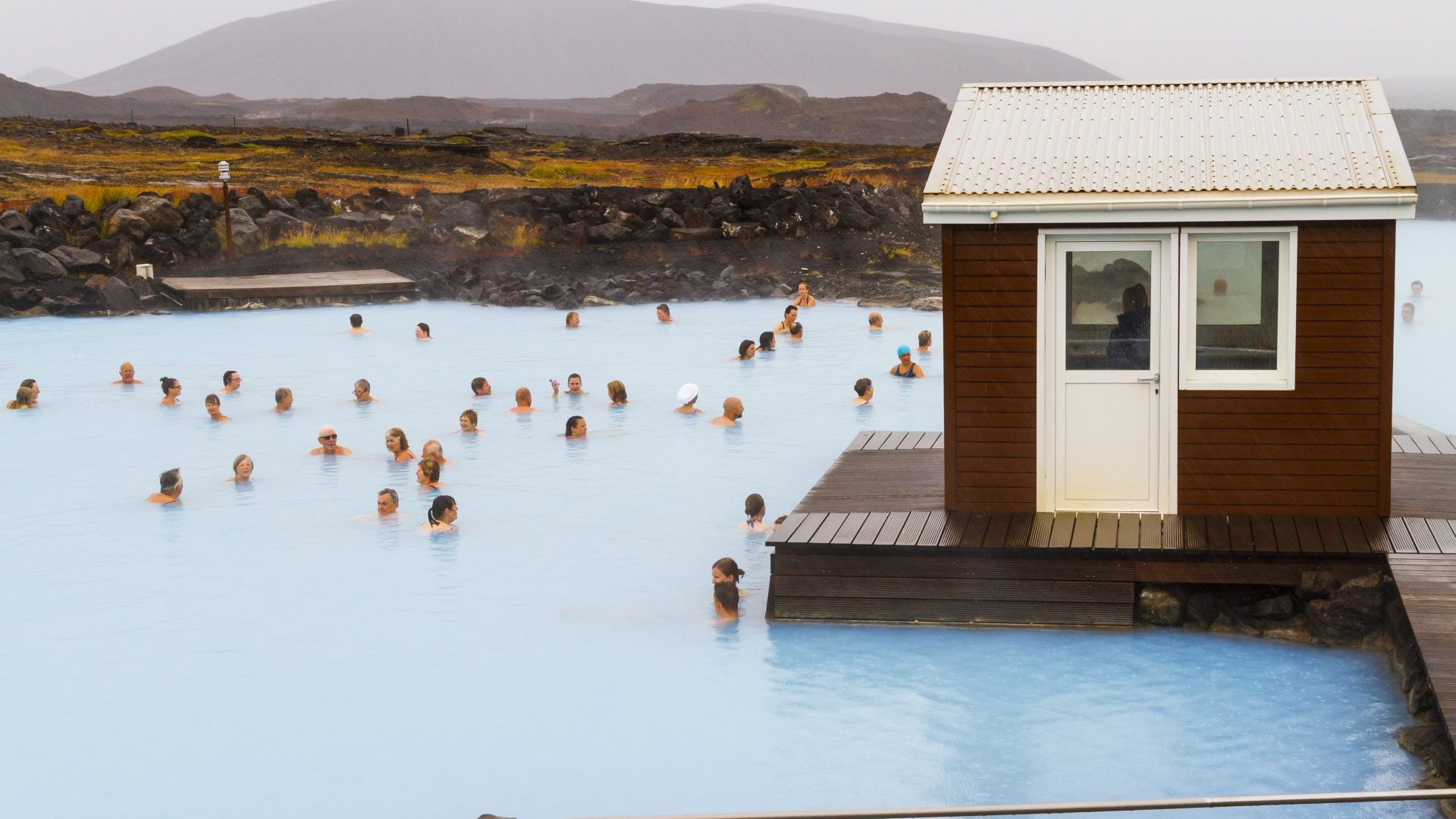
I pull on a swimsuit while sleet taps the windows, step outside into air that smells faintly of sulphur and sea, and walk towards a cloud of steam rising into the wintry grey sky. Snowflakes hit the railings. Somewhere, people are talking. I lower myself into warm water while the temperature hovers just above freezing, my breath visible as it leaves my mouth. This is one of the most popular things to do in Iceland, no matter the season. The cold air stings my face while my body stays warm.
Many of Iceland’s pools are outdoor and filled with geothermally heated water, which helps the deep midwinter feel manageable. Icelanders treat these pools as more than places in which to swim. They are like living rooms. Every neighbourhood has one.
Parents arrive with infants bundled in towels, easing them into the shallow water. Toddlers cling to foam noodles, teenagers huddle along the pool edges after school, hair slicked back. Adults settle into the hot tubs, where the water is hottest, and where the conversations run longest.
These hot tubs are where the people of Iceland seem to think out loud. They lean back with their arms stretched along the rim, steam curling around their faces. Chats move easily from weather to politics to the price of fish to last night’s handball match.
In December 2025, Unesco added Iceland’s swimming pool culture to its Intangible Heritage list. It joined 76 other global traditions, standing alongside Italian food, yodelling, and kohl makeup. It was the first time Iceland has been honoured on its own. For a country that sees the pool as part of daily life, the recognition was less a surprise and more like a formal nod to something everyone already knew.
There are ramps into the water and flotation aids stacked against the wall. There are lanes for serious swimmers and shallow areas for those who just want to soak. The price is modest, and the rules are clear. You shower first, sans swimsuit. After that, the water is yours.
Suggested Reading

Sounds of isolation – why musicians flock to Iceland
I learned to read the rhythm of a pool day by watching the families. A grandfather teaching a child to kick, a mother floating on her back while her daughter counts clouds overhead. Friends meeting at the same hot tub week after week, marking milestones or simply checking in. Older swimmers pass the culture forward without instruction. You watch, you participate, you belong.
There is something grounding about being half-submerged while the world carries on. In winter the light is limited, but perhaps you will see the northern lights at night. In summer, the sun stretches late into the evening, and the pools fill with golden light.
When I asked people what the Unesco recognition meant to them, most people shrugged. Some of them were pleased, of course, and proud to see Iceland on a list for something positive. But the pools would still be there tomorrow, steaming in the cold, the culture unchanged, no matter which international body had given its stamp of recognition.
For a small country, this shared habit does a lot of quiet work. It keeps bodies moving. It gives minds a place to rest and reset. It creates a space where people of different ages and opinions sit shoulder to shoulder, in the same water.
As I leave the pool, my hair freezes almost instantly and my skin is still warm. The world looks a little sharper.
Jenna Gottlieb is a freelance journalist and the author of Moon Iceland