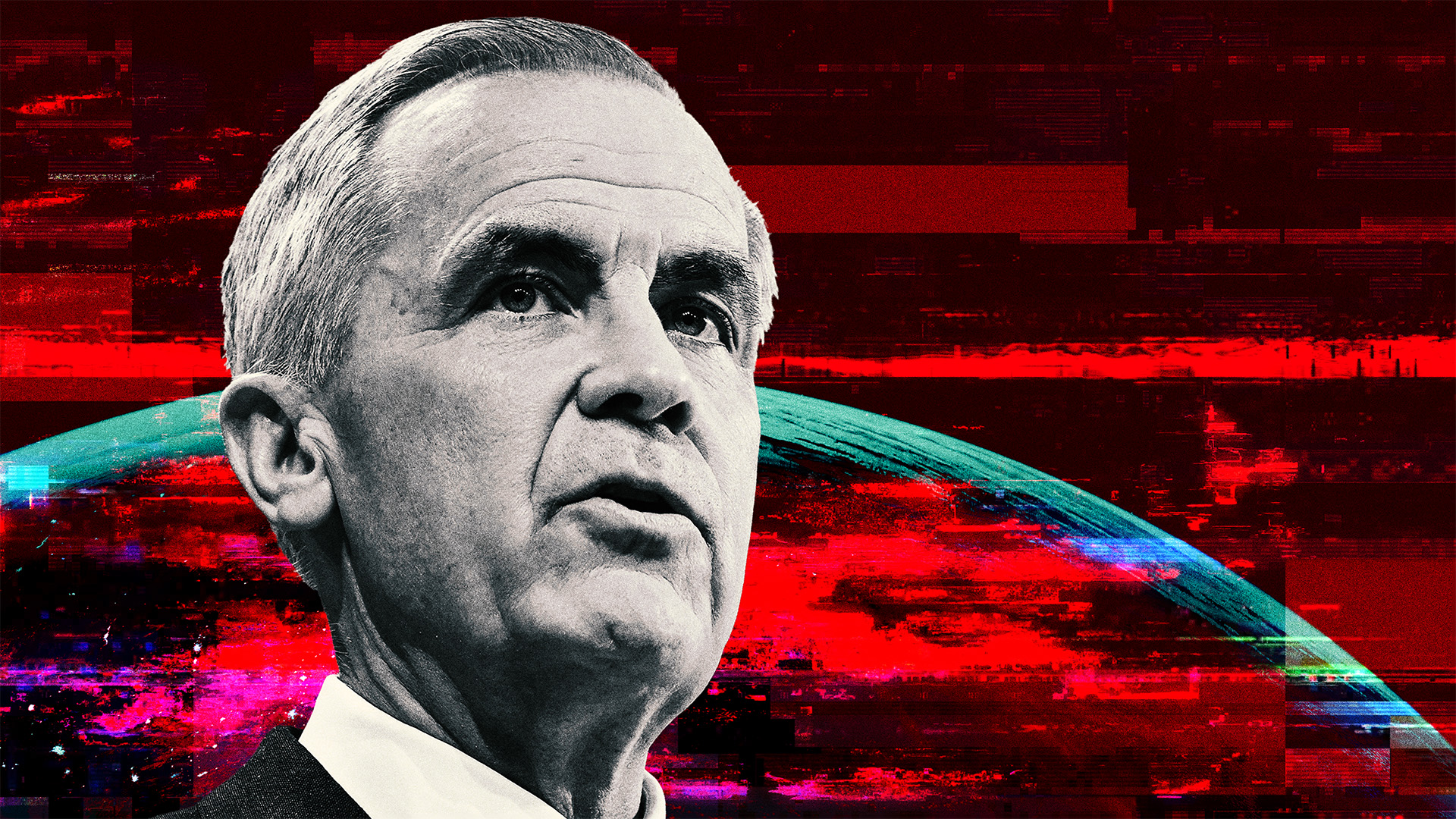
Yesterday at Davos, Canada’s prime minister Mark Carney stood up and told the world what it needed to hear. There has been, Carney said, “a rupture in the world order”. It has brought about “the end of a pleasant fiction and the beginning of a harsh reality, where… the large main power… is submitted to no limits, no constraints.”
Carney did not name Donald Trump in his speech. But then he did not have to. It was obvious who he was talking about.
“Other countries, especially intermediate powers, like Canada, are not powerless,” said the former Bank of England governor. “They have the capacity to build a new order that encompasses our values.”
What made Carney’s speech so jarring was the clear-eyed, perhaps even cynical view of the old “rules-based order” that Trump has done so much to destroy. This was the point at which Carney stepped into new, uncomfortable political territory.
“For decades,” Carney said, “countries like Canada prospered under what we called the rules-based international order. We joined its institutions, we praised its principles, we benefited from its predictability. And because of that, we could pursue values-based foreign policies.”
And then came the most startling moment. “We knew the story of the international rules-based order was partially false,” said Carney. “That the strongest would exempt themselves when convenient, that trade rules were enforced asymmetrically.
“The fiction was useful, and American hegemony, in particular, helped provide public goods, open sea lanes, a stable financial system, collective security…
“This bargain no longer works.”
No other world leader has been able to articulate such an uncomfortable truth – that the post-second world war order was uneven, unfair and riddled with hypocrisy: that “international law applied with varying vigour depending on the identity of the accused or the victim”.
Perhaps it needed a banker like Carney to finally come out with it. All those years at Goldman Sachs would have imprinted firmly in his mind that the point of rules and laws is not the rules and laws themselves, but the outcome they produce. A lawyer like Starmer would see it very differently. In that profession, the law is everything. Carney’s outlook is much colder, more pragmatic.
“We actively take on the world as it is,” said Carney, “not wait around for a world we wish it to be.” The lesson is that “the middle powers must act together, because if we’re not on the table, we’re on the menu.”
“When we negotiate bilaterally, with a hegemon, we negotiate from weakness,” he said. The result is that “we compete with one another to be the most accommodating.
“This is not sovereignty. It’s the performance of sovereignty.”
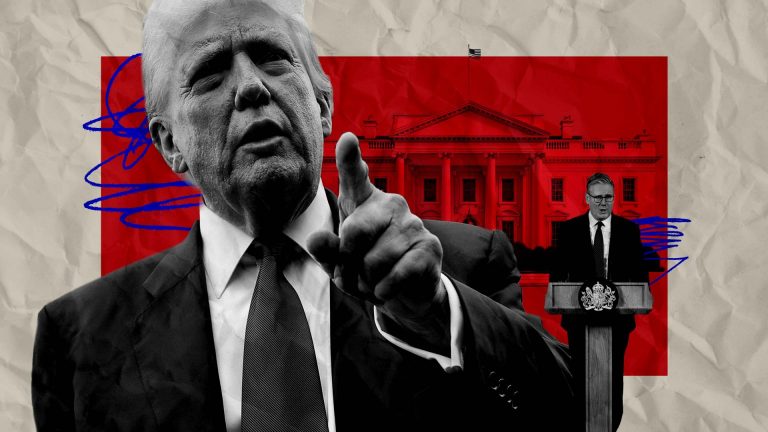
That comment was a rebuke to every European and western leader who has stood up and spoken gravely about the importance of preserving the “rules based order”, while inviting the US president to dinner in Paris, as Macron recently did by text message, or presenting him with letter from the king, inviting him to a state visit, as Starmer did so subserviently.
And the idea of cosying up to Trump in order to gradually charm him back to the righteous path of international cooperation is a fiction. “Stop invoking rules-based international order as though it still functions as advertised,” Carney said. “Call it what it is – a system of intensifying great power rivalry where the most powerful pursue their interests, using economic integration as coercion.”
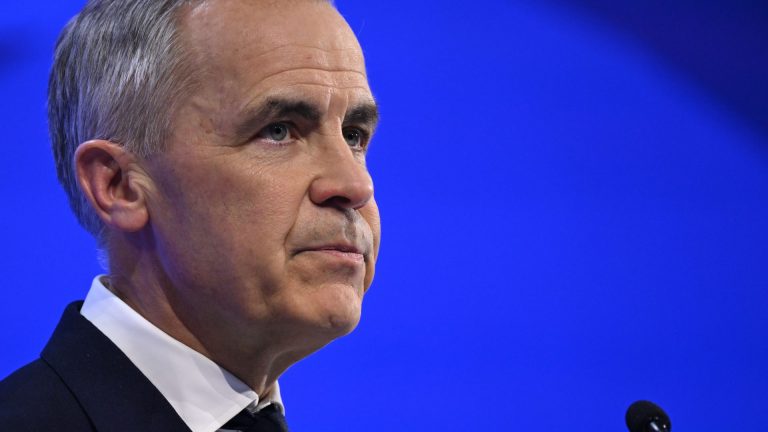
“Nostalgia is not a strategy.”
The only answer, Carney said, was for mid-sized countries to reduce the ability of large nations to threaten them. That means building a strong economy at home: “Countries earn the right to principled stands by reducing their vulnerability to retaliation.”
And the best way to build a strong economy is for mid-sized nations to group together. As Carney noted, Canada is working to “build a bridge between the Trans Pacific Partnership and the European Union, which would create a trading bloc of 1.5 billion people.”
In a particularly striking moment, he talked about Canada’s commitment to Nato, and when it came to Greenland, his nation’s willingness to put “boots on the ice”. The mention of “ice” would no doubt have had a double resonance for many listeners.
Another moment of deep significance came with his reference to Vaclav Havel, the Czech dissident who became president. Havel described the way in which the communist system sustained itself, by imagining a shopkeeper who puts a pro-regime sign in his window. Soon, everyone in the street has a sign in their window “not through violence alone, but through the participation of ordinary people in rituals they privately know to be false.”
Carney offered this as a description of how countries end up bending the knee to global superpowers. But it could just as easily be read as a direct appeal to the people of America to remember Havel’s message: do not go along with tyranny. Without your compliance, authoritarian rule will fail.
This was a speech of enormous subtlety, ambition and scope. It was also the most powerful speech given by any world leader since the beginning of the Trump crisis, and the first to give a definitive plan for how to deal with the threat that the president of the US now poses.
But it was also a warning, most obviously to liberals who cling to the notion of the old rules-based order. That order is gone, is not coming back and was, in part, a fiction.
That message was aimed at the deer-in-the-headlights rulers of western democracies who think that by playing nice, by flattery, by staying predictable they can deflect Trump’s worst impulses. But everything we see of Trump tells us that’s just flat wrong.
But it also contains a warning for the new wave of European nationalists, including Farage, who see Trump as their leader, their likeness and their ally. The idea that you can throw off international agreements and alliances and negotiate directly with Trump is delusional. You cannot do it, Carney says, because that would be to misunderstand the central fact of international relations, which is now power.
Suggested Reading
Trump’s supersized Suez moment
A mid-sized nation, such as Canada, or Britain, going up against a Trumpist US in any negotiation, doesn’t have a chance. The only option is to roll over. And so the question for the nationalist is: where’s your sovereignty now?
Carney has ripped off the plaster to reveal the wound beneath, and now it has been exposed, there can be no going back. You cannot negotiate with Trump. You cannot play nice. You cannot wave the old rulebook and say, “this is how things ought to be.”
The central message contained in his speech is of world historical significance. The old order is gone. Trump has killed it. Now we must build a new one in order to contain him.
If we do, then we will thrive. If we do not – well…
 Most popular
‘Operation Epic Fury – as it happened’

Is Star Wars dead?

Morrissey returns.. and heaven knows he’s mythical now

Iran War: Trump has now sealed his own fate