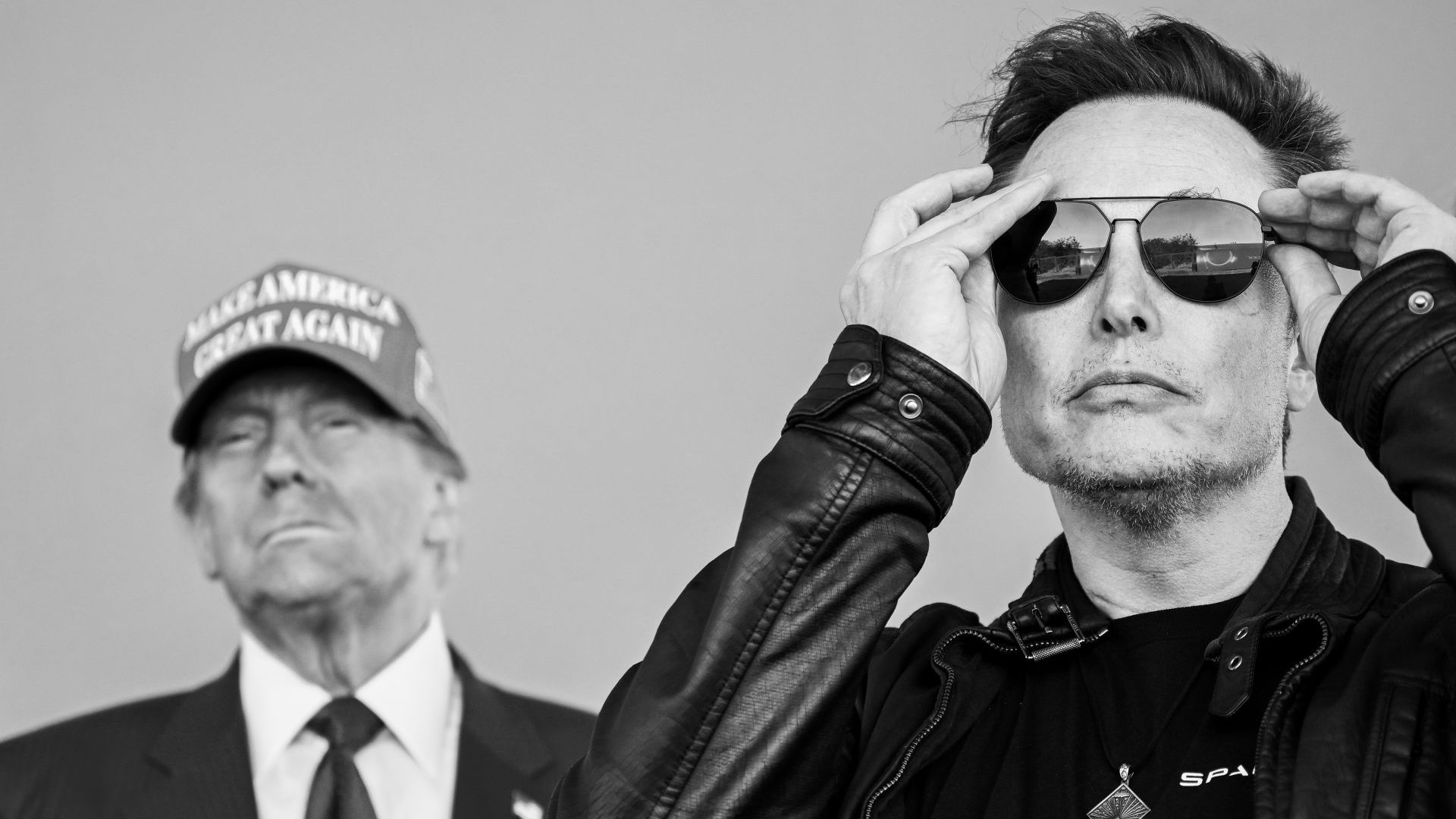
One of the dominating figures of 2025 was Elon Musk, a man who likes to drape himself in the garb of the new-age tech genius. It was fortunate then that Helen Lewis was on hand to write a scorching essay on the idea of the “genius”, and to point out that the myth of the great brainbox hero often obscures a much grubbier truth. The “genius” tag is often used as an excuse for vile behaviour, and that is certainly the case with Musk. You can read Helen’s brilliant piece here.
Musk is perhaps the embodiment of the twenty-first century sociopath, and one of the characteristics of such people is that they seem quite unaware of their own ridiculousness. That means we can laugh at them as they terrorise us, a small consolation.
In some cases that unawareness can drift into outright delusion and beyond, as it did with Fred Trump Sr, father of the current US president. In “When Fred Trump lost his mind”, Nicky Woolf recalls how employees of the New York property magnate dealt with Fred Trump’s mental decline. You can read that piece here – the resonances are fairly self-evident, and very alarming.
Also alarming is the number of people who are swept up in the new irrational style of politics (a style that I attempted to define in an essay you can read here). Back in the summer, Marie Le Conte came face-to-face with a supporter of the new style of politics on the Piccadilly Line, and you can read her startling report of that encounter here.
The allure of the new authoritarianism is partly down to the recent wave of charismatic, hard right political figures who have appeared in recent years, and perhaps the most intriguing this year in Europe has been Giorgia Meloni. The Italian prime minister came from a political background that was firmly post-fascist, but has now developed into something far more compelling and nuanced, as Marie Le Conte made clear in her intriguing examination of Meloni. Read it here.
Meloni represents the overt face of the new hard right, but there are more covert individuals who are also worthy of attention, not least Paul Marshall, the hyper-wealthy financier and owner of GB News who this year managed to buy the Spectator, and has been in the running to acquire the Telegraph.
But, as James Ball made clear in his extraordinary piece “Paul Marshall: The man who controls the right”, Marshall’s influence and ambitions go much further than media ownership. If Reform wins the next election, he could end up as one of the most powerful people in the country. The US experiment with putting the ultra-wealthy in positions of political power suggests that this might not be a good thing. You can read James’s piece here
One of the consequences for the US of voting for plutocracy seems to be the return of fascistic levels of brutality, as Matthew D’Ancona described in his piece on Trump’s policy of mass deportations. In “The choreography of fascism” Matt considered the horrifying growth of the new El Salvadorian gulag and the message it sends to the rest of the world about the changes under way in the US.
In that article he recalls Susan Sontag’s famous line that: “10% of any population is cruel, no matter what, and 10% is merciful, no matter what, and the remaining 80% can be moved in either direction.” It is quite clear which direction Trump has moved America – you can read the full piece here.
And throughout it all, there remains one central mystery at the heart of global diplomacy – the relationship between Trump and Putin. Just what is it with those two? And why is it that, despite Putin’s depraved assault on Ukraine, Trump seems determined to negotiate a settlement overwhelmingly in Russia’s favour? Alastair Campbell had some thoughts about that, which you can read here.
Another mystery is how Kemi Badenoch has managed to cling on as leader of the Conservative party for so long. Patience Wheatcroft looked at her remarkable defiance of political gravity in “Badenoch is a dud. How long does she have left?” In short, the outlook for the Tory leader is not good and you can read Patience’s crushing diagnosis here.
So far, so daunting. But if we don’t want to live under the new authoritarian yoke, what can we do about it? Peter Hyman had some recommendations at the very beginning of 2025, in his bracing essay “How you can beat populism”. Read it here, and perhaps, as 2025 becomes 2026, we can have faith that all is not lost.
 Most popular

Iran war: It’s time for Europe to become a superpower

Yet another Brexit prediction turns to dust

Attacks on Iran: this is going to spread

Dear Matt Goodwin, why are you such a bad loser?