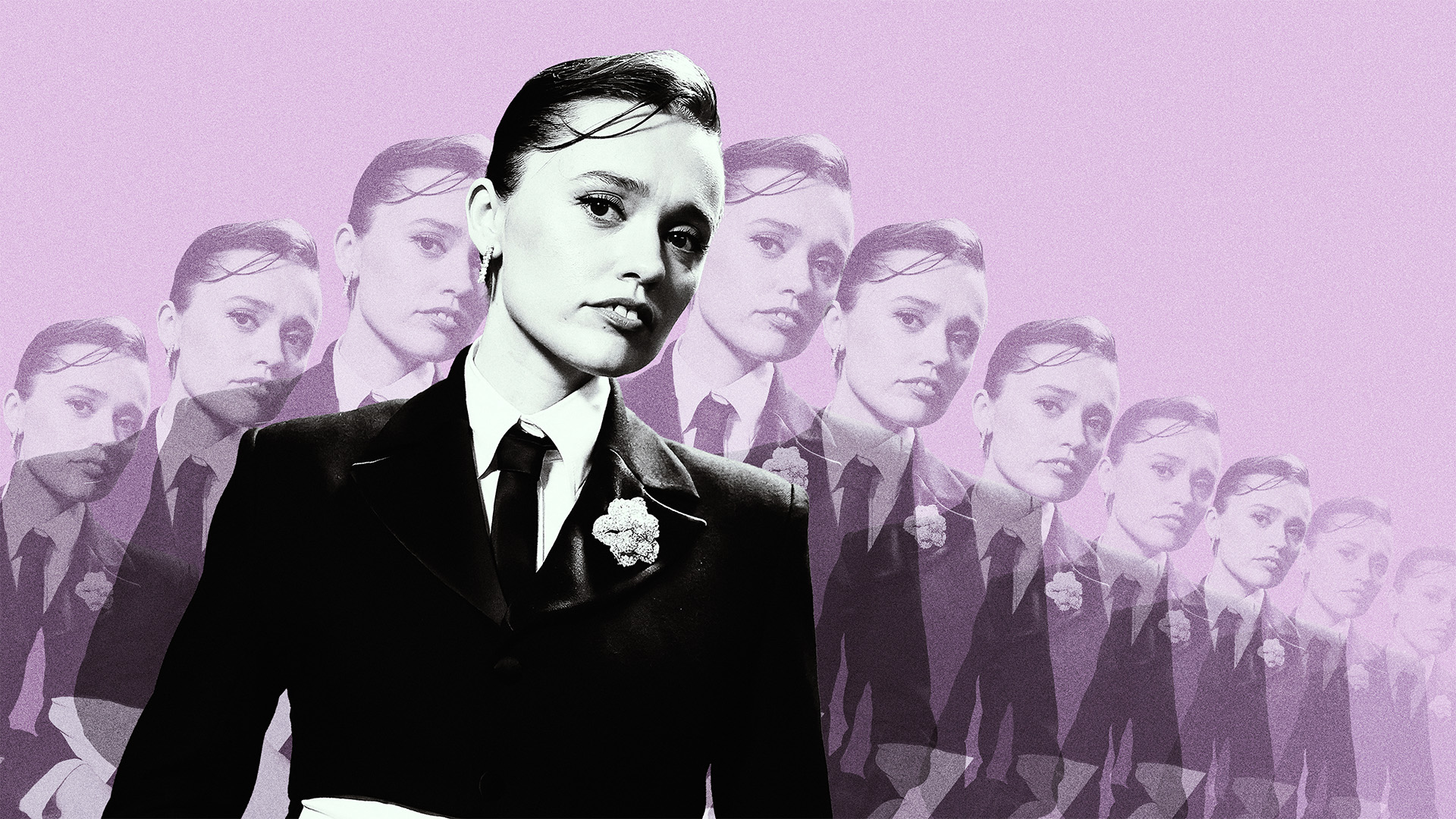
When Aimee Lou Wood first arrived on our screens in 2019 in Sex Education, she was playing a character also named Aimee. Of course, she had the eyes as wide as Bambi and the pronounced overbite, and was the first of Wood’s characters to seem inseparable from the actress herself. Her every expression made me want to protect her, to experience more of the world through her eyes.
Wood’s many standout moments in the show included Aimee relaying the after-effects of being sexually assaulted on a bus to school, and later her friends helping her reclaim her right to use the bus. It helped her win a BAFTA for best female comedy performance and now it has led to 2025, the year of Aimee Lou Wood, as much as it was the year of Adolescence, Chappell Roan or Oasis. In early December, IMDb named her its breakout star of the year.
The 31-year-old from Stockport appeared in four major TV shows, of which the most notable was The White Lotus, the HBO satire of the richest of people behaving in the most hideous ways possible at five-star resorts the world over.
As spiritual, kind Chelsea in season three, she was the partner of, and the antithesis of Rick played by Walter Loggins. In a series featuring big hitters like Parker Posey, Leslie Bibb and Carrie Coon; Aimee had fewer lines, but drew huge audience attention and affection. And her teeth became an international incident.
On the Jonathan Ross chat show, Wood said that her Instagram algorithm had been feeding her scores of American orthodontists dissecting her buck teeth, explaining what work would need to be done to fix her smile. Next, the American sketch show Saturday Night Live featured “The White Potus”, a Trump skit featuring a character with huge prosthetic teeth. It mentioned RFK Jr’s opposition to fluoride.
Suggested Reading


Prisoner 951 is another drama that shames Britain
Wood was not amused. “I have big gap teeth, not bad teeth,” she wrote on Instagram. “The rest of the skit was punching up, and I/Chelsea was the only one punched down on”.
This was audacious stuff in a time where actresses are told that any press is good press, and that they should smile, nod and be pretty. Wood has been honest about being neurodivergent, and about using her physical characteristics to stand out from the pack.
After The White Lotus, Wood was everywhere and yet I still couldn’t get enough. She starred in Toxic Town, written by Jack Thorne for Netflix, as one of three Corby mothers affected by a toxic waste scandal. Aimee was excellent as Tracey Taylor, who tragically lost her baby at only four days old but was eventually left out of a whistleblowing lawsuit against the town. A follow-up feature for Elle magazine in which Aimee met Tracey for the first time demonstrated an ongoing commitment to amplifying the damage suffered by these women.
There was also season two of Daddy Issues, Wood returning opposite David Morrissey as the hilarious dad/daughter flatsharing duo. He’s helpless and beaten down, while she is a young single mother figuring out how to cope with a newborn infant. The charm, comedic timing and variety of stupid situations that they are placed in with a lovely cast of hapless friends makes for one of the most endearing on-screen pairings we’ve had in years.
Wood puts so much of her persona into all these roles but in Film Club, we get to see her as Evie, a part created by Aimee herself. It is a triumph. Evie is an agoraphobic dreamer, stuck in her mother’s home, dreaming up magical Secret Cinema-esque fantastical sets for her very own When Harry Met Sally-inspired romantic comedy. It is the perfect holiday watch.
Wood says Evie was informed by her own diagnosis of ADHD with autistic traits, and the effect being neurodivergent has had on her life and career. We get to see her as Aimee sees herself, rather than being the focus of a male gaze or as a plus one. Aimee as Evie is nuanced, complex and beautiful in the kid gloves that her mother and sister and friends all take care to wear while adoring her for her eccentricities.
They say like recognises like; and every time Wood appears on my screen, there is an empathy and bewilderment in her performances that brings me back to being a bit of an outcast and being bullied in school. I find myself wanting the world to treasure her talent and skill. Now, at the end of the year of Aimee Lou Wood, perhaps we can all be a little more Aimee with how we see and treat one another.