
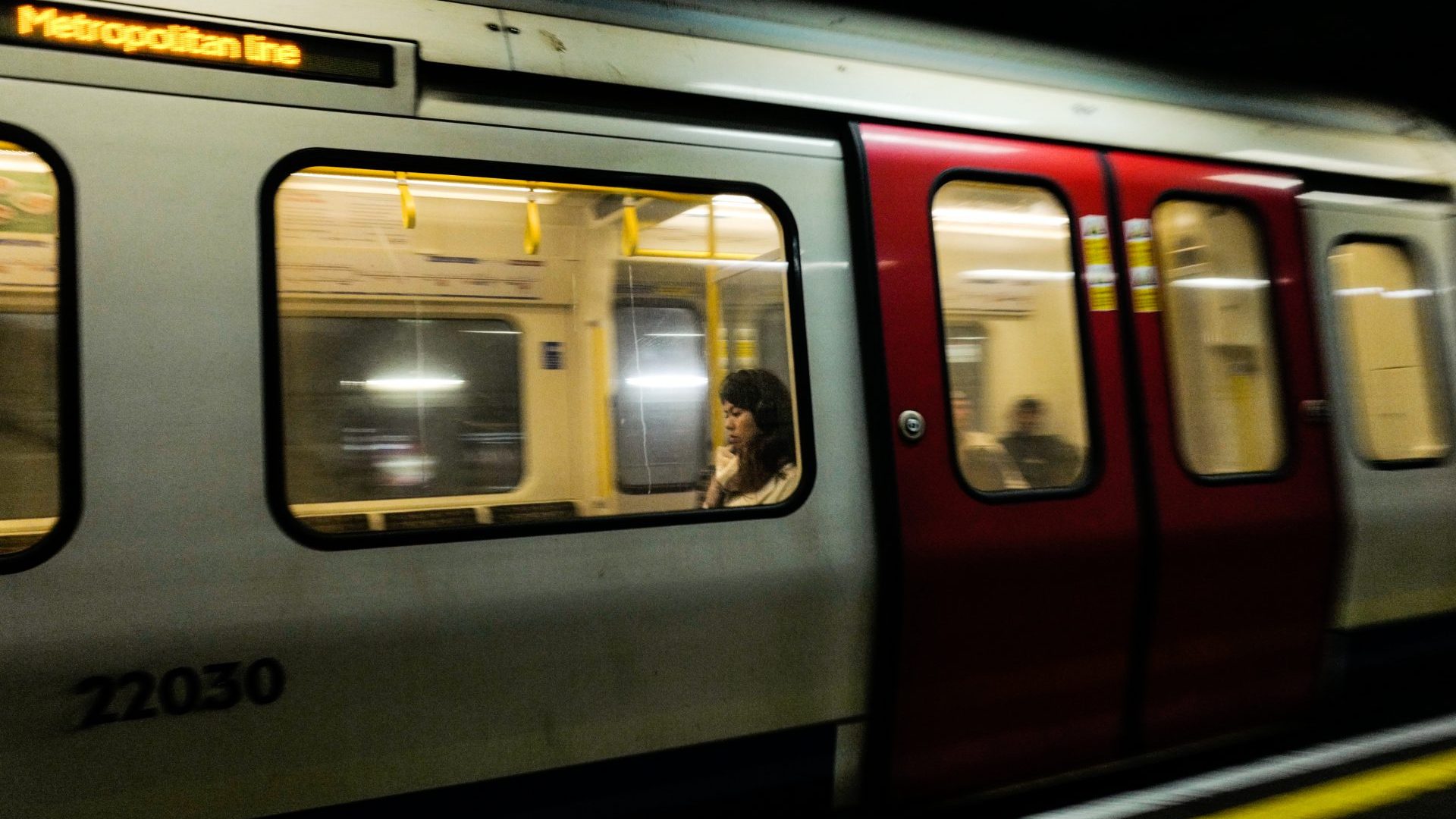
For the last month or so, a petition arguing for women-only carriages on London’s underground, started by 21-year-old student Camille Brown has been gaining momentum, press coverage and, at the time of writing, 14,000-plus signatures. But however well-meaning, spaces designated for women only can not and will never be the solution to male-perpetrated violence against women and girls.
If women could solve male violence against us, it would have been solved a long time ago. The answer is not making our lives smaller and segregating women from public shared spaces.
Let’s play this scenario out logistically. If there is one designated tube carriage per train that is women-only, how exactly do you know which carriage it is? How do you get down a busy platform at rush hour to find said carriage?
How long do you have to wait for one with room in it? Who will have to add precious morning minutes to their commute to wrestle down the platform to get to the designated carriage?
How do we stop harassment and inappropriate touching or approaches on the platforms and escalators? And once I find the designated carriage, how do I prove that I am a woman? Who gets to check?
Who is allowed to police who is permitted on the women-only carriage? And in the event of an intended femicide, is that placing a massive target on that specified carriage?
Let’s say a woman then gets attacked on a tube in a non gender specified carriage, is it her fault as she didn’t take the necessary precautions to seek out the female only space?
Funding to have more staff on the platforms, tubes and indeed at overground stations has been drastically reduced. Unmanned stations, Transport for London and British Transport Police staffing cuts play a bigger role in putting commuters’ lives in jeopardy than any kettling of potential victims could help with peace of mind.
Whenever “solutions” are presented to male-perpetrated violence against women that don’t address the men committing the violence, I push back. Who would be inconvenienced most by the proposal? If the answer is the women who are keen to keep themselves safe, we are not addressing the right sector of the population.
Suggested Reading


Keeping misogyny in business
It sounds very similar to when the head of British Telecom proposed a new 888 service because 999 was not fit for purpose when it came to reacting quickly to protect women under direct threat of violence. The solution of a new phone service that gave more people access to your route or handed them the ability to locate you was quickly discredited as a waste of money that could be used against the very women it was trying to help.
Or like when the Met Police (yes, THAT Met Police) created a “Safer Space” for women on New Year’s Eve, during the fireworks. This consisted of a gazebo manned by Met officers, down a side street.
Play that one out. I’m among the million or so people near Trafalgar Square to watch the display and feel intimidated – or I have been groped or harassed by someone. What I’m supposed to do is leave the people I am with to try to find a gazebo near the police station, where I will be protected by Met officers from Charing Cross station, home of the misogynistic police that were exposed in the IOPC investigation of WhatsApp groups three years ago and by a recent Panorama expose a month ago?
At the advertising conference Cannes Lions in June, the Croisette had similar safe zone gazebos, manned by professionals. For next year, I would like to propose that they should have four gazebos for designated sexual predators and the rest of the festival should be a safe space for women.
Instead of women having to exit conversations or negotiations or events that could benefit their future careers and upward mobility, “the Creep Cabanas” could act as a sin bin for the men behaving inappropriately. Bouncers or other men could flag inappropriate or aggressive male behaviour, and men making women uncomfortable or unsafe would have an hour on a public naughty step before being able to continue their evenings.
As Gisele Pelicot said, “shame must switch sides”. So let’s shame and kettle those violent and badly behaved men who are committing the offences, not the women trying to protect themselves.
How small and contained do our lives have to become to make the violence against us not our fault or responsibility? If only staying in our own private spaces and homes was enough to keep us alive and well – yet every day 137 women and girls are killed by their intimate partners or family members.
The UN Women’s UNITE campaign to end violence against women and girls runs until December 10. Please join in efforts that recognise that male-perpetrated violence against women is a male issue, and that isolating women and making our lives smaller is not our route to safer lives.
Jamie Klingler is co-founder of Reclaim These Streets
 Most popular

‘Operation Epic Fury – as it happened’

Is Star Wars dead?

Morrissey returns.. and heaven knows he’s mythical now


Iran War: Trump has now sealed his own fate