
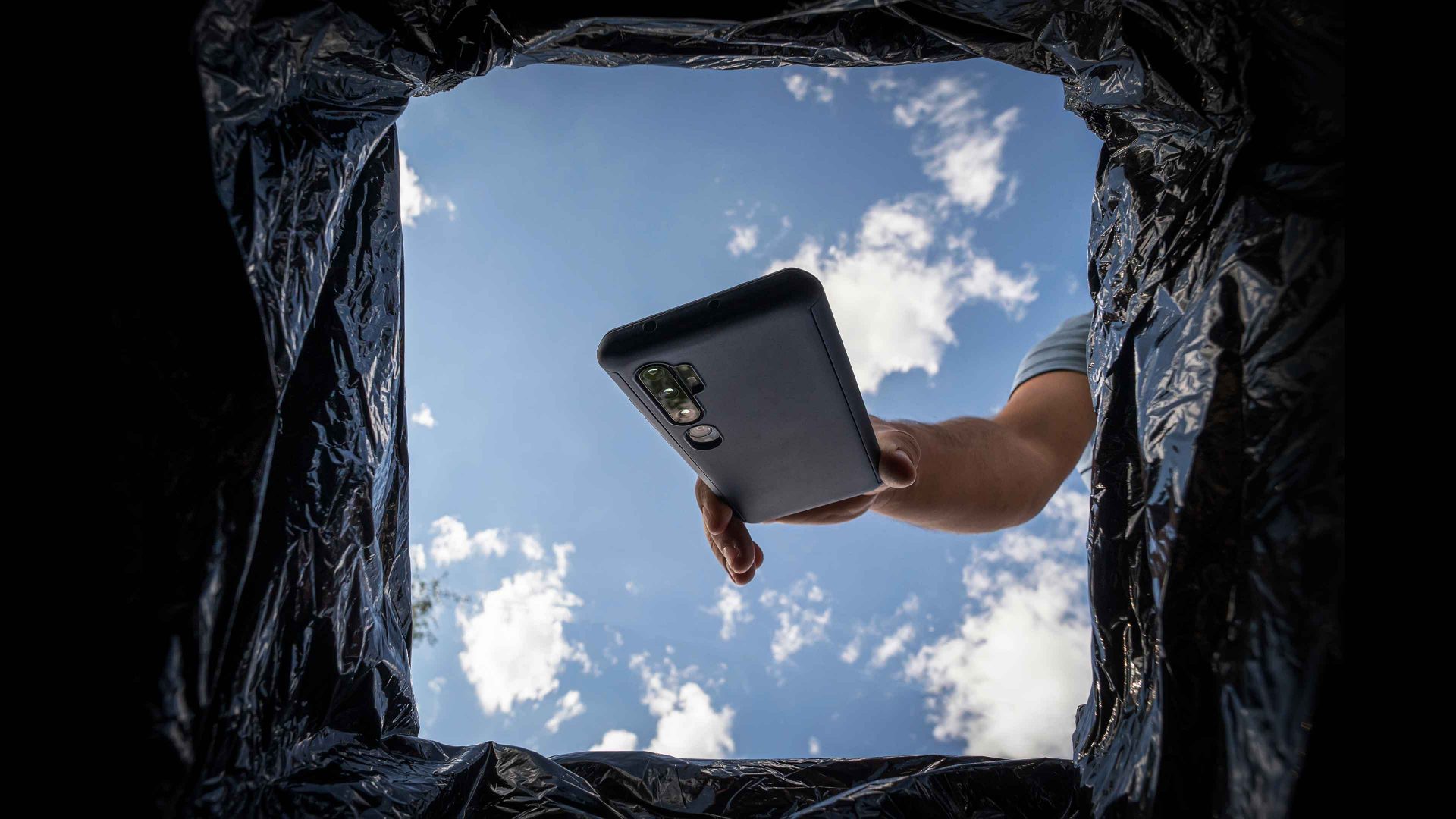
It’s a new year and you want a new you, so of course you’ll do a digital detox. But how exactly are you going to do it?
Are you going to lock all your devices away for a week like on The White Lotus? Or for a weekend, or maybe just a Sunday? Are you going to limit your own screen time like you are your own child, using tools like Brick, Opal and Fogos to stop the doomscrolling and to force more consistent offline breaks?
Some people mute all notifications of their WhatsApp groups’ messages, others just want to moderate the constant dopamine chase of online dating. But when our lives are hyper-connected and our smartwatches are connected to our smart scales and our sleep-monitoring rings, turning it all off seems at best a challenge, and at worst reckless behaviour.
We have used the state of being constantly reachable to overemphasise our self-importance. Paul Thomas, a former head of device marketing for EE who has worked in telco since the birth of smartphones, has put two digital detoxing changes into his normal routine. One is leaving all devices on charge overnight in another room, the other is putting his “work” phone in a drawer at weekends/during holidays. Setting boundaries like these may seem like a return to a normal work/life balance, but they are significant.
Ten years ago, I quit social media for two weeks for Stylist magazine. A decade on, I started thinking about my digital life then compared with now, and what a digital detox would look like for me in 2026. In the last decade, I have become something of an expert of what makes personal transformations stick. During the pandemic, I quit drinking (cold turkey), took up running, lost seven stone and became a national campaigner for women’s safety. Six years on, the shocking transformations are now just my norm.
I am a proponent of an annual MOT of your digital footprint and behaviour and learning from the takeaways to benefit your family, sleep and mental health. Spend a week calculating how you spend your time. Your phone will tell you how much you spend on specific apps/exercise/sleep, but look at interpersonal time, too.
How much time do you spend with your dogs? Your kids? Without the noise of a podcast or guided meditation? If the electricity was off for two hours a day, how would you cope? Really measuring how you spend your time on and offline is a hugely valuable exercise, exposing bad habits and behaviours that have silently become second nature.
Ask yourself: if I cut back on A, B or C, what are the benefits and what are the ramifications? How many times do I fall off the wagon? What am I actually missing out on?
Is it being the first to know news? How often is my phone dominating my thoughts, to the point where I am not enjoying the here and now because I’m pining to play a game or doomscroll?
Suggested Reading


The year of Aimee Lou Wood
Detoxing gives you a chance to assess how much time you are actually spending on certain activities. Arm yourself with data, determine how you want to spend your time, and then look for the trigger that causes you to enact beneficial behavioural change.
Making transformational change stick is arduous but possible. I needed to define myself as someone who did not drink and would not drink again. I needed to see myself as a person who exercised and ran regularly.
Today, my own ongoing digital detoxing involves weekly curveball challenges, like not using my phone for a full 24 hours. These stunts are more like juice cleanses and aren’t realistic in the long term, but are eye-opening in terms of how attached you are to your device.
It is not realistic for all of us to lock our phones in a sin bin for a week. They have become so much of an extension of us that we don’t know how to get anywhere, pay for anything or communicate without them. Calypso Rolph, co-founder of the Offscript Generation summit that focuses on life for 16-to-25s, told me how society is “asking young people to make life-defining decisions while their attention is under constant attack. A digital detox isn’t a luxury, it’s a requirement for clear thinking. Building in intentional space to go offline and digital detoxing gives young people’s nervous systems a break and can help rebuild confidence.”
Look at digital detoxing as intentional space to own your time and critically assess how you spend it and indeed what it is worth. Detoxing is not about banning smartphones, it is about being aware of how often you use your phone as an excuse to disengage rather than foster collaboration and conversation with other humans.
Use the opportunity of a digital detox to adopt some new best practices, like talking to other dog-walkers. Stop playing Wordle or Words with Friends daily, and play Scrabble in person once a week with your friends, with your phones off. Engage with your kids, your pets, your neighbours. And see if you feel better for it.
Jamie Klingler is the co-founder of Reclaim These Streets and founder of London Book Club