Generally, when a studio is releasing a movie they’re excited for the world to see, they’re keen to make sure as many journalists and critics as possible see it before its release. That’s how newspapers, TV shows, influencers and more have their reviews lined up before a film hits the theatres.
It was probably not the best of omens, then, when Amazon Studios declined to offer any press preview screenings anywhere in the world for its new documentary Melania, which follows America’s first lady for the 20 days before the inauguration last January.
Early reports on Melania suggested very few tickets had sold for its screenings, but that didn’t seem to be the case at Friday’s 3:10pm screening in Vue Islington, which had nearly 20 cinemagoers – almost all of whom turned out to be journalists. One, from CNN, had been sent to interview members of the public watching the film, but struggled to find more than two.
Things continued to go great for Melania when, at the time it was supposed to go to air, the manager of the cinema had to apologise that the movie would start at least 15 minutes late – because even though this was supposed to be the second screening of the day, the film had been delivered so late that it still wasn’t loaded up on the projector. What a rollout.
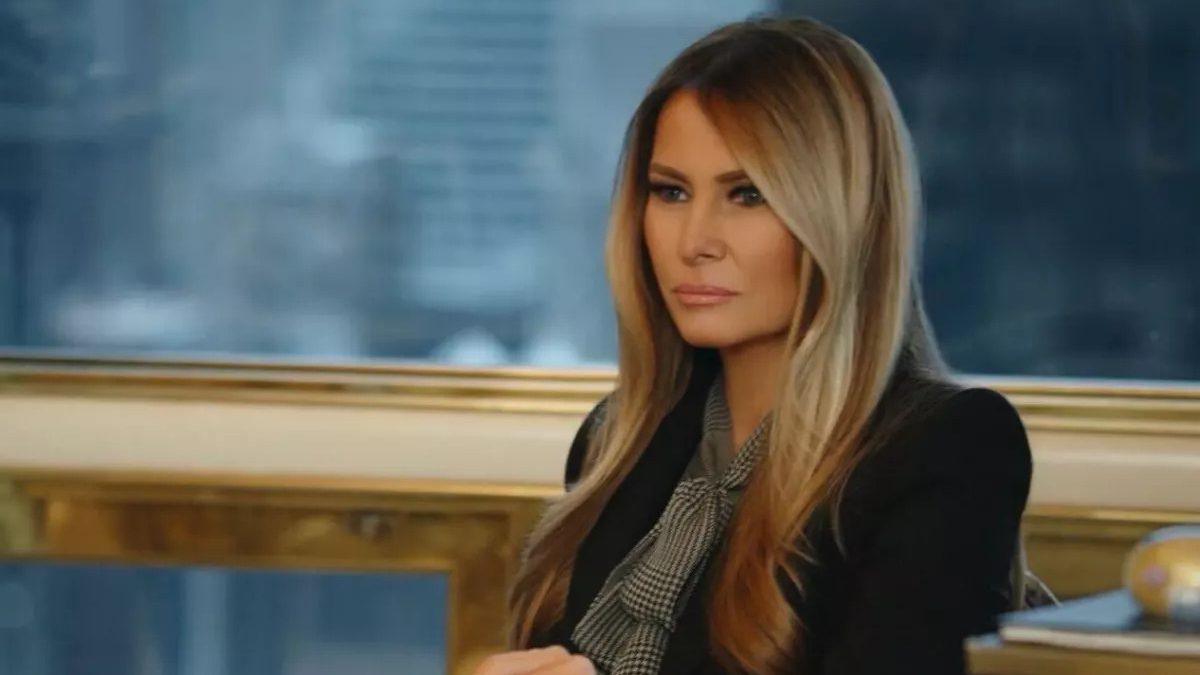
Still, all of this was at least mildly diverting, which is more than can be said for the movie itself. Melania is a great documentary for anyone who is a big fan of watching someone sit in the back of cars, attend dress fittings, sit in the back of planes, and stage awkward conversations about youth initiatives with Princess Rania of Jordan and Brigitte Macron. The documentary occasionally shows off its impressive budget by adding sweeping aerial shots of Mar-a-Lago and motorcades to the mix.
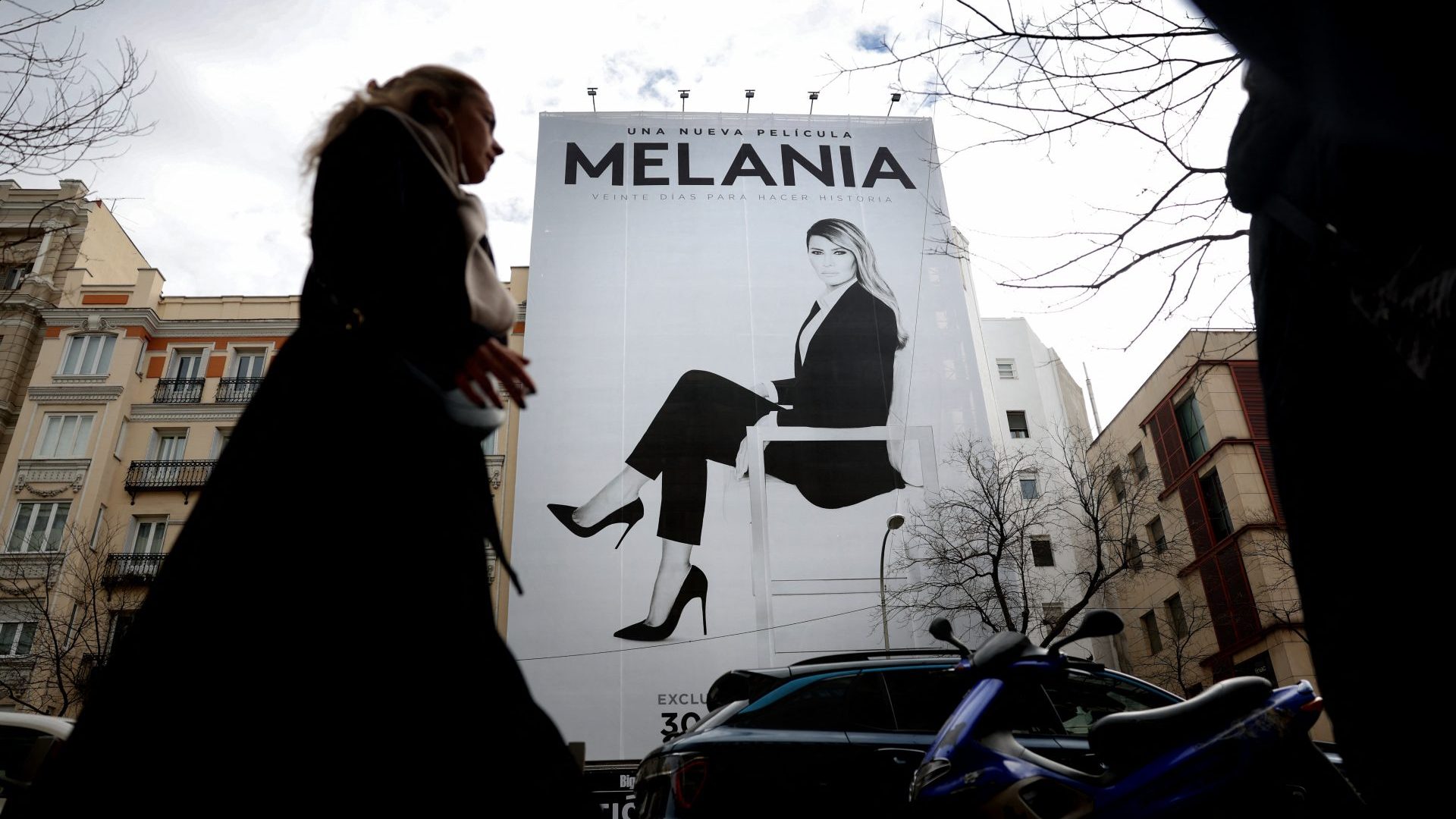
About that budget – Amazon Studios paid $40m to licence this authorised documentary, of which $28m reportedly went directly to Melania Trump, who has a producer credit for the film, herself. The studio is spending a further $35m to market the documentary – staggering figures for the genre (coincidentally, Amazon has recently laid off 30,000 workers worldwide).
As the New York Times noted, a feature-length documentary biography of Ruth Bader Ginsburg, which netted two Oscar nominations, was made for a production budget of $1m and just $3m for marketing. The astronomical sums paid by Amazon Studios for a film that seems unlikely to make anything like that back at the box office raised eyebrows across the industry, but a spokesman for the company was happy to provide reassurance: “We licensed the film for one reason and one reason only,” the statement said, “because we think customers are going to love it.”
It would take a very particular kind of “customer” to love this movie. A viewer who knew nothing about Melania’s marriage to Donald Trump might find it mildly diverting, at least for a time. Melania is rarely in the same state as her husband, let alone the same building. She occasionally talks about her son Barron, but there isn’t a single scene showing the two of them alone. Melania’s roles as a wife and a mother seem like just that – roles to be played, just like the rest of her public positions.
The documentary is narrated throughout by a deadpan Melania, who talks about the death of her mother a year before the events being shown in the same tone with which she talks about choosing table settings for the pre-inaugural dinner.
There are moments that make you wonder whether Melania is sending a message with this delivery. When she hopes that Barron has “a fulfilled life with his own beautiful family”, is she deliberately contrasting that with her own arrangement? When she remarks that as first lady “you need to manage the White House operation, starting with the East Wing”, is she making a vague dig at her husband’s decision to demolish the entire thing?
Suggested Reading

Melania’s Leni Riefenstahl: The queasy resurrection of Brett Ratner
That hope there may be a deeper meaning here cannot, alas, survive the inanity of Melania’s broader narration. The documentary spends the entirety of a section at President Carter’s funeral talking about the loss of Melania’s mother. The first lady looks forward to spending a “private moment” in St Patrick’s Cathedral in New York that evening to light a candle for her – which is then shown in full. It is punishingly dull stuff.
Most of the rest of the narration is simply mind-numbingly inane. “For me it’s important that timeless elegance shines through every element of the inauguration’s style, decor, and design,” says Melania-as-narrator at one point. “As first lady I honour the importance of the White House and its place in our nation’s history,” she adds later. It’s a bold directorial choice to add such riveting narration to a documentary you want people to pay to watch.
We should probably talk about the director, here, too. Melania is directed by Brett Ratner, the creative vision behind X-Men: The Last Stand, who hadn’t made a major movie since multiple allegations of sexual assault were made against him during #MeToo in 2017.
Ratner seemed determined to make his return to filmmaking distinctive, and he certainly succeeded on that front. Usually, documentaries try to have narrative arcs, themes, and characters. Melania discards all that frippery to show Melania being chauffeured from meeting to meeting preparing for the inauguration, all in chronological order.
After an hour, Ratner mixes things up. Instead of showing Melania being driven around events preparing for the inauguration, we watch her spending 22 hours walking between official inauguration events. As if anticipating that the audience might be bored by now, shots from this point occasionally appear through an old-timey camera filter, for no obvious reason.
“We spent much of the day walking through the Capitol from one event to the next” narrator Melania tells us, entirely superfluously, since it feels like we’ve been following her in real time.
Ratner manages to personally ruin the two occasions at which the documentary comes close to delivering an actual human moment. The first follows Melania being asked her favourite artist and song – the only time she’s asked a direct camera in the whole film – and she says Michael Jackson’s Billie Jean. As Ratner plays it for her in the car, she dances to it a little, and even sings along; a heretofore unprecedented crack in her composure. An excited Ratner exclaims “Are we doing carpool karaoke with Melania now?!” – at which she immediately returned to her usual composed and distant demeanour
He manages to similarly step on what might otherwise be the final shot of the film. Donald and Melania have finally arrived in the White House, at 2am, on what will be the documentary’s final day of filming. Donald says goodnight to Melania and the film crew, making it obvious he is heading to a separate room from the first lady even on this momentous night.
We don’t see Melania’s on camera reaction to this moment, because Ratner answers for her instead: “sweet dreams, mister president!”
If Ratner was trying to create a study of the existential agony of 90 minutes of near-unremitting boredom, then Melania is a triumph. If he was trying to make a documentary, it’s a disaster.
At one stage, the movie breaks the fourth wall, as a publicist relays to Melania’s assistant that journalists have found out she’s signed a deal with Amazon. “He’s asking if there’s anything that’s interesting about the documentary,” he says.
It’s a very good question.