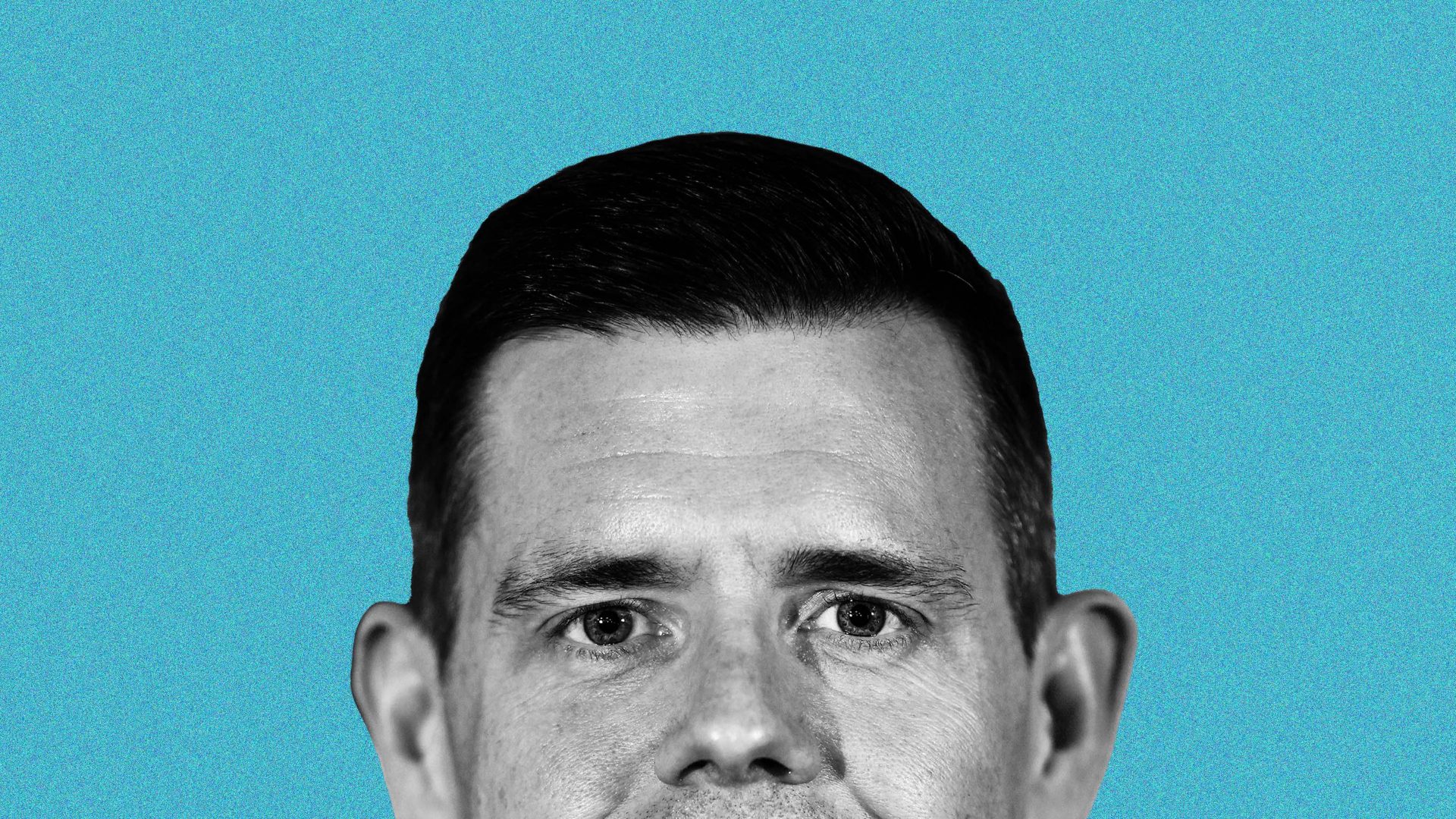
The first months of 2026 cannot be going as Matt Goodwin might have hoped. If things had gone his way, he would be the newly elected MP for Gorton & Denton, and his newly published book Suicide of a Nation: Immigration, Islam, Identity would be alternately hailed or decried as the intellectual underpinning for Reform’s political project as it heads towards government.
Instead, he’s a failed parliamentary candidate who, after spending weeks falsely blaming his defeat on “sectarianism” and “family voting”, is now having to explain why his book cites ChatGPT and seems to contain multiple quotes from famous historical figures that there’s no record they ever said.
This would be an embarrassing state of affairs for any author, but a particularly awkward one for a longstanding academic who firmly grounded himself in his successes in that world – particularly as the youngest full professor of politics in the UK. With Suicide of a Nation, Goodwin set out to write a book about the identity crisis facing a nation. He may have revealed more about the identity crisis he’s going through himself.
When The New World last profiled Goodwin in 2024, he had just quit academia, resigning from his post as professor of politics at the University of Kent, claiming he had been ostracised by his academic colleagues for backing Brexit, among other disagreements with left wing orthodoxy. Untethered from the career he’d pursued for the last two decades, his one-time associates wondered what he would do next, and what he was looking for.
Since then, when asked what motivates him, those who’ve known Goodwin come up with very similar answers: “validation”, “vindication”, “affirmation”. But from whom?
Goodwin insists he no longer cares what the academic world thinks of him, and it’s certainly true that his new book can’t have been written to win over their acclaim of approval. But the frontispiece of Suicide of a Nation shows he can’t quite jettison the status that goes with that identity, either. He describes himself as a “writer, academic and media commentator” and notes he “is Honorary Professor at the University of Kent”.
Goodwin’s use of the title in this context implies the status involves some kind of ongoing relationship or affiliation with his old university. The reality is different: honorary status is awarded to any departing staff (academic or administrative) who asks for it, and grants ongoing access to library facilities.
A university spokesman stressed “those with honorary status act independently and in no way speak for or represent the university”. Why, almost two years after leaving Kent, is Goodwin still flaunting a meaningless title?
Much of the conversation around Goodwin’s book centres around whether or not it was written with AI. The smoking gun is that three of its references include “?utm_source=chatgpt.com” at the end of their web addresses. This only gets appended to a URL if it’s been generated by ChatGPT, so it is a smoking gun that, at a minimum, Goodwin used AI to research his book, even if he did not use it to write it.
Some people might dismiss any book containing AI research, but others may not have a problem with it. By including the ChatGPT suffix in his references, whether deliberately or through laziness, Goodwin can honestly say he hasn’t tried to hide using AI in his research. But while criticism of his research has focused on AI, it is surely telling just how few references there are.
Suicide of a Nation is 208 pages long, and contains just 12 references. Three of these are ChatGPT, three are to the Telegraph, and four are to Matt Goodwin’s own blog. Revolt on the Right, the acclaimed book Goodwin co-authored in 2013 with professor Rob Ford of the University of Manchester, had 345 references for 288 pages of text.
Goodwin has claimed it is unfair to compare the sourcing of an academic book to his new, popular prose. So, how about we compare Douglas Murray’s 2017 book The Strange Death of Europe: Immigration, Identity, Islam (that subtitle looks very familiar, doesn’t it?) to Goodwin’s instead. Murray’s book is beloved by the hard right, was written for the popular market, and has 256 references, including Pope Benedict XVI, Salman Rushdie, Ta-Nehisi Coates and Richard Dawkins.
A more honest title for Goodwin’s new book would be “Will This Do?” For all that he tries to frame the backlash as the reaction of left wingers unable to handle the hard truths he is dropping, Goodwin is facing ridicule and derision far more than he is facing fury. Yes, his book borrows heavily from the far right Great Replacement conspiracy theory. But anyone wanting to read these ideas can see them just as clearly, if not more so, in threads on X, YouTube videos, podcasts, or Substack posts. Nothing in here is new, challenging or even very interesting.
The most noteworthy feature of Goodwin’s book is its jaw-dropping laziness, which is all-encompassing. The book’s publisher is apparently “Northstar”, which doesn’t seem to meaningfully exist or have published any previous books. Perhaps it was intended as a reference to the “North Star”, often used for navigation – but without a space, it is instead a callback to the first gay character in the X-Men comics. Perhaps Goodwin is a comic book fan?
Even Goodwin’s excuses seem dashed off. He had faced repeated criticism for misunderstanding what “English as an Additional Language” means in British schools. In the book, Goodwin treats it as synonymous with pupils who don’t speak English well, or as a first language.
In his defences, he has doubled down on that definition. In reality, a single Google search shows it just means pupils from a household where more than one language is spoken. By repeating his error, Goodwin hands his political opponents effortless slam dunks.
Suggested Reading
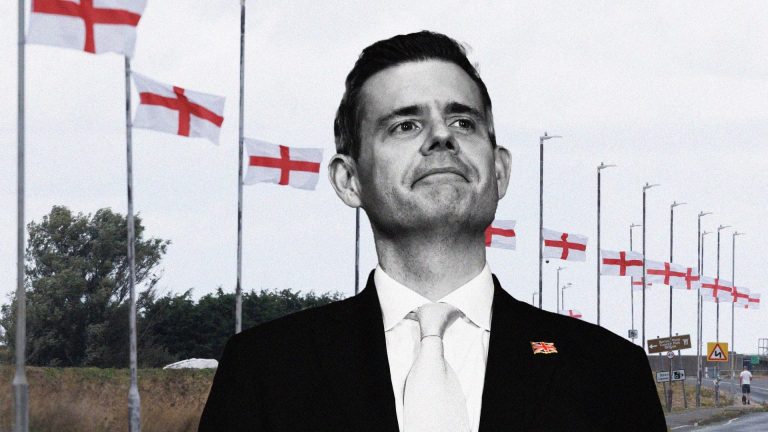
Matt Goodwin’s new book: The missing chapter
Suicide of a Nation contains misquotes or fabricated quotes from classical figures including Cicero, Livy, as well as more contemporary figures like Friedrich Hayek and Roger Scruton. In a defence of his book published on the Daily Mail website, Goodwin acknowledged “a small number of historical references” from “2,000 years ago… turned out to be imperfect” – having seemingly not realised this might explain misquoting Cicero, but doesn’t easily explain printing a non-existent quote from Roger Scruton, who wrote in English and died in 2020.
With this book, Goodwin seems to have fundamentally misunderstood what his new political allies want from him, and what they look to him for. Reform has accepted the defections of former Conservative cabinet ministers because Nigel Farage is aware he needs figures with experience of government if he is to look ready to take power. Defections from academics – figures like Douglas Murray, Jordan Peterson, and the like – are there to provide intellectual heft and credibility. By publishing a book so easy for critics to take pot shots at, Goodwin risks showing up the whole project as one populated by lightweights.
Were he a different man, Goodwin could simply ignore or shrug off the criticism he’s received. Suicide of a Nation is selling well for a political book: it’s in the top 10 list for all books on Amazon. Even if the reviews are terrible, people are buying it. By reacting so regularly and so angrily to the book’s critics, Goodwin shows how much he still cares what they think.
He has, though, always been sensitive to feedback, from almost any source. In a recent interview with the Sunday Times, Goodwin said he would rather shoot himself in the head than sit next to academic Mary Beard, because most of his critics “are nerds”.
Yet the same Goodwin had complained vociferously in public about not being invited to dinner in 2023 by Alan Rusbridger and David Aaronovitch – neither notable for being a jock – after a Prospect debate. Years before he had suggested hosting dinner parties with figures like Mehdi Hasan and Owen Jones to discuss the rise of the far right.
Such is Goodwin’s sensitivity to feedback that a former associate once recalled Goodwin accidentally “letting slip” at a social event once that when he’d collated student feedback on paper while at Kent, he would sometimes mislay those containing negative comments. The remarks may have been intended as a joke, the associate recalls, but they didn’t think so at the time – especially when Goodwin hastily moved the conversation on.
Those who have encountered Goodwin in his various incarnations through his career suggest that his desire for status and recognition might be the best explanation of his apparent ideological journey from an avowed enemy of right wing radicalisation to a living avatar of the phenomenon. Goodwin’s actual journey, it turns out, might have been even longer.
The most significant answer for anyone looking to explain Goodwin’s political journey comes when he is asked why he got interested in extremism as a research field. After noting it was a “sexy” field that got a lot of media attention, he asked, “Do you want the ‘official’ answer or the honest one?” Then he told a startling story.
He said: “When I was around 20, I spent some time in Detroit, living downtown next to a liquor store. It was really hardcore, living in a hard, scary, crime-ridden neighbourhood, and I got mugged at gunpoint and basically lived in fear a lot. I developed some really hardcore views about the city and the people who lived there – you know, the African-Americans in Detroit.
“I didn’t think that the blacks in Detroit were the way they were because of socioeconomic reasons, deprivation, lack of resources, whatever; I thought it was an issue of race and ethnicity, that blacks were maybe just genetically inferior.”
The Goodwin of 2013 said he did not believe those things any more, and the shock of realising what had happened, even temporarily, to his own attitudes that had made him want to research right wing radicalisation. “Obviously the phase passed, but it was definitely enough to jolt me,” the interview quotes him as saying. “Looking back on it, I realised how close my views came to those of neo-Nazis, and I also realised how easy it was for people to develop these nasty views.”
Suggested Reading

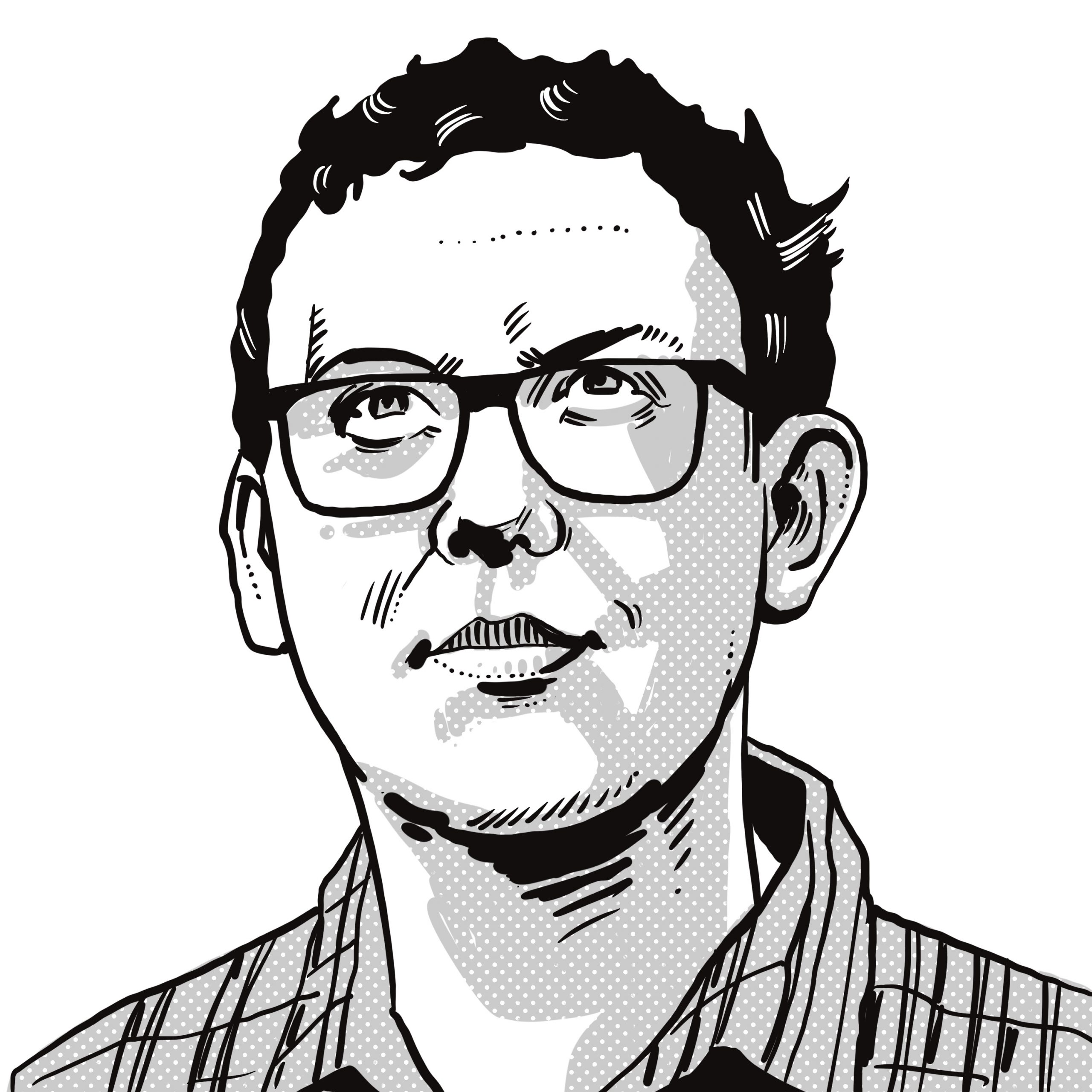
Matt Goodwin’s fall into the abyss
The end of that story does Goodwin – at the time still a rising star of the UK’s left-wing academic scene – credit. But in the decade or more since, his personal politics have shifted once again, significantly.
In addition to a hardening of his views, Matt Goodwin now seems addicted to the status game. Once you’re looking out for it, you see it everywhere.
He routinely boasts not just about how many subscribers his Substack has, but across how many countries, and where that ranks in the top charts. He continues to use “honorary” titles even after they are meaningless. He responds furiously to critics he could otherwise easily ignore.
For someone with those priorities, Goodwin must be aware that he is in a precarious position. He is not at Reform’s top table. He’s not a longtime friend or associate of Nigel Farage. He’s not a former cabinet minister. He’s not even an MP. He took a long-shot bid at a difficult seat for Reform to win, and it didn’t pay off. His political prospects are not that clear.
Suicide of a Nation is so dashed off that Goodwin is even catching flak from his own side. He has been in a furious spat on X with Reform defector Tim Montgomerie, has been ridiculed by familiar figures of the far right, including Rupert Lowe and Laurence Fox, and has seen his book ridiculed in both the Spectator and Unherd, bedrock publications of the modern British right.
Even Goodwin’s own employer, GB News, has been sharing viral clips of him being savaged by a critic on one of its shows – despite an aggrieved Goodwin continuing to claim his work is “a major book”, “the most systematic, sophisticated look at the demographic revolution unfolding in Britain that we have to date” and “the most important book I have written — and the most urgent.”
He’s got his paid subscribers, and he’s got his book sales, but that’s not enough for him, and it shows. Matt Goodwin needs status. Where will he go next to find it?
Given a right to reply to this article, Matt Goodwin wrote: “A typically lazy piece. We are number 2 on Amazon books not top 10. You also miss out I am Senior Research Fellow at the University of Buckingham. I have no idea what interview you are referring to. Wait, do I have more subscribers than your insignificant magazine? It’s very possible.”
 Most popular
GB News Scandal: How Ofcom let GB News corrupt British media
My late friend’s final message: Never work for the Daily Mail
James O’Brien says the press have gone mad – and it’s worse than you think

Trump is losing his mind .. and losing America too