
Few visitors to Manchester come for the weather, especially in February. The Green Party, then, was surely feeling ambitious when it opted for Granada Park as its muster point for a by-election day of action in the constituency of Gorton and Denton.
The ground is already soft – the grass will soon become a quagmire – and the ominous sky suggests the current break in the rain will not last. Nonetheless, from 10am on this Saturday morning, the park fills with volunteers from across the UK, first as a trickle and then as a flood.
Activists make polite small talk as they wait for the leader of the Green Party, Zack Polanski, and their by-election candidate Hannah Spencer to arrive. “I think I recognise your dog,” one man says to another. “Yes, Lucifer! Yeah, he’s gone viral a few times online,” says the proud owner of a tiny black Pomeranian, as someone nearby mumbles that he hopes the dog’s name gets shortened to “Lucy” when meeting on the doorstep.
The mood is good as the crowd grows, and grows, first to 100, then to twice that, reaching a comfortable 300-400 by the time Polanski and Spencer arrive from some early morning media interviews. The mass of activists cheer as they see the pair coming. “I love it, you just get used to this,” an obviously delighted Polanski says quietly to Spencer.
Polanski greets the crowd, then almost immediately turns his back to them (after a quick apology for “how weird this looks”) to give a speech to a small huddle of cameras instead, using them as a backdrop.
His anger is mostly focused on the “rot” of Labour, condemning Keir Starmer for bringing Peter Mandelson “into the heart of government” despite knowing “he was friends with a notorious paedophile”. Wes Streeting is condemned for signing new contracts with Palantir to increase their involvement with NHS data. “The Labour government came in and promised change,” Polanski sums up. “I don’t know if you’ve noticed but there’s not been much change.”
He frames the election – which is taking place in what was, less than two years ago, one of Labour’s safest seats in the nation – as a two-way fight between the Green Party and Reform. “It’s hate versus hope, and we know who’s gonna win,” he says, trying to rouse up the crowd. “Who’s gonna win?”
After a false start in which one man accidentally seems to shout “hate” – not everyone is fully awake yet – the crowd shouts “hope”, Spencer says a few words, and the assembled party activists are given their assignments.
The campaign manager, whose name is Miles, tells them that speaking to voters is the most valuable thing people can do, if they’re willing – especially if they can persuade people to “paint the constituency green” by putting up posters in their yards and windows. If they’d rather not do that, then they can help by delivering leaflets.
The energy and the mood is obviously with the Greens, even if success brings its own problems. Miles is relentlessly upbeat when talking to the group, but is obviously fretting when addressing his small core team, as long lines of activists are standing around waiting to be told what to do. “We should never have queues of activists who can’t do work, it should never exist,” he fusses. “We’re having teething problems.”
The ambition is palpable: the Green Party feel that they can win this seat, and they are absolutely determined to do it. But despite Polanski’s claim that Gorton and Denton is a two-way race, they have two opponents – telling two different stories – to overcome.
Labour are not about to let this constituency go without a fight, and Manchester Labour – a strong brand in its own right – is throwing everything it has at the seat. Andy Burnham, despite being blocked from standing as the candidate himself, has campaigned in the seat three times in a week. On the day I visit, Labour has managed to muster hundreds of its own activists to the seat.
The campaign’s organisers say everyone in the Cabinet – barring Keir Starmer himself – has been to visit. Asked if they’d like a visit from the PM himself, they politely deflect. He is very busy, they note. It wouldn’t be unusual if he didn’t come.
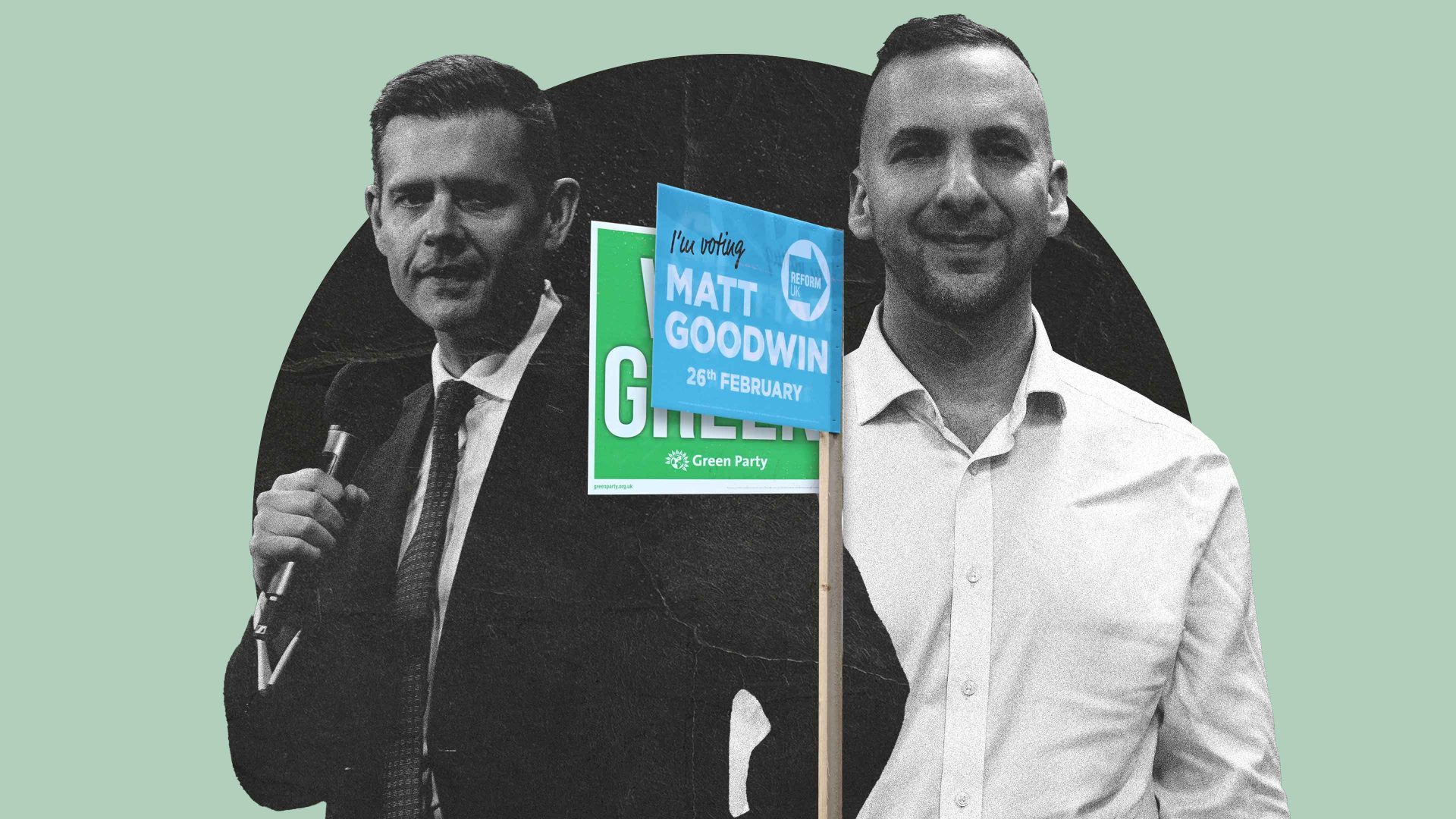
Labour insists that the contest is between them and Reform, and that a vote for the Greens only risks handing the seat to the Reform candidate, the Substacker Matt Goodwin. They argue that the Greens have no real grounding in Gorton and Denton, with no local councillors in the constituency.
Labour is also trying to ground the argument in terms of what the winning candidate can do for Manchester. The new MP will represent the seat until the next general election. That means, for the next few years at least, working with a Labour government, a Labour mayor, Labour councils, and neighbouring Labour MPs. Who, they ask rhetorically, will do that best?
As I criss-cross the constituency, I run into chatty, cheerful groups of Greens seemingly everywhere I go – but on at least three occasions, I also run into slightly warier but friendly enough Labour canvassers. The Greens have the zest of the challenger, while Labour has the infrastructure and local knowledge of the incumbent.
Suggested Reading


Keir Starmer fights to the bitter end
Given the noise around Reform, the party feels less of a presence in the constituency itself. It is certainly less friendly – or at least to this journalist. On the main street of Levenshulme, which is the more diverse and more hipster end of the constituency, I bump into a group of seven Asian women all carrying large stacks of leaflets for Reform.
After taking a quick picture on my phone, I try to say hello, only to be abruptly shouted down. “Delete that. You can’t take a photo of this,” one tells me. I note it’s a public street, and start trying to introduce myself as a journalist, but she mutters something inaudible and turns sharply away, making it clear the conversation – such as it is – is over.
Reform’s campaign headquarters is located over on the other side of the constituency, on an industrial estate near Denton – the older, whiter, more working-class end of the seat. If Levenshulme is the kind of Labour heartland where they might worry about a challenge from the left, Denton is where they would worry about Reform. Reality is messier than that, of course. Levenshulme still has plenty of older white residents, and Denton is far from uniformly white.
The Reform HQ is, frankly, weird. Usually parties set up shop on or near the high street in the constituency, making it easy for volunteers to wander in and out, and keeping the campaign visible in the community.
Reform has rented an entire warehouse, a huge red shed set well back from the street and separated from almost everything else in the seat by both the M60 and the M67. The trickle of activists entering and leaving Reform’s HQ are all doing so by car. A security guard in the car park peers suspiciously as I look in from the street side.
Reform are certainly managing to blanket the constituency in leaflets, but many of these have been sent by post, paid for rather than delivered by volunteers. One contentious mailing, a letter written in the voice of a 74-year-old woman who has switched her vote from Labour to Reform, was posted out without the legally-required imprints saying which campaign sent it – an apparent breach of election law.
Even in Denton, I struggle to find Reform canvassers out in the wild. Eventually, I find a man leafleting a run-down row of two up, two down terraced houses on his own – except it turns out he’s another Green volunteer. They are, he insists, campaigning for every vote in the seat.
The Reform narrative, from its online materials and its leaflets, is a mirror image of the Greens. The seat, Reform insists, is a two-way contest between the Greens and Reform, so anyone wanting to stop a radical green activist becoming their MP should vote Reform. Both parties claim a victory for them would be the biggest embarrassment for Starmer.
Later in the day, I catch up with the Green candidate, Hannah Spencer, as she continues doorknocking. As I find her group, she is offering Kendal mint cake to anyone who will take it – including me – and hugging her goodbyes to Polanski’s boyfriend Ritchie, who has been canvassing with her all morning.
Spencer runs me through her biography: she is a plumber – she is clearly furious at allegations from GB News presenters and right-wing influencers claiming otherwise – and a Manchester lifer and local councillor. She has four rescue greyhounds (Forrest, Will, Olive and Judy), and is currently door knocking in the area she used to live when she got her first greyhound.
She knew campaigning would be an all-out thing, she says, but even so she has been shocked by all the “lies” spreading about her. “People hate you, right? It’s weird,” she notes. The oddest story going around, she says, is a claim that she is married to the chief executive of AstraZeneca (she is not). “It’s just one of those bonkers … what has happened on the internet is things have just escalated.”
In the 2024 general election, more than three-quarters of voters cast their ballot for a left-wing or centre-left candidate – Labour, the Greens, the Workers Party or the Liberal Democrats. Reform and the Conservatives managed less than 25% between them.
Suggested Reading


Polanski’s nuclear misfire
This is, I suggest, a seat that Reform can only win if the left-wing vote splits very evenly, letting Reform scrape ahead. Does she worry that her energetic campaign in a Labour stronghold might create the perfect storm to do just that?
“I just think we’re past that,” she says. “Now, I think ours and Labor’s politics aren’t the same. I don’t think it’s a case of splitting the vote. I don’t think they’re what people would say is left wing. I think they are so far beyond that… I think we’re three very different parties.”
Spencer has one focus other than Gorton and Denton on her mind for the next few weeks: she has been taking a course in plastering, and she is determined to complete it – her final exam is a few days away when we speak. Given plumbers are hardly short of work, she acknowledges it may not be essential, but says she had always wanted to learn it, and in her current circumstances “it keeps you grounded a little”. It is, she says, the nearest she gets to downtime.
Should she win the election, Spencer plans to campaign on the issue of fuel poverty – one she says affects a lot of people in the seat.
“The frustration [for] someone like me from a background of plumbing, like working in the building industry, all of us as experts, all of us tradespeople can see what the problems are, but no one’s ever been listening to us for decades,” she says. “We have been saying, this is broken, let’s fix it. And no one cares, because we’re not part of the elite that gets a seat at the table.”
Might that expertise also be useful for the renovations of the Palace of Westminster – now expected to cost tens of billions and take decades, if parliament doesn’t burn down first – I ask.
“Get us down there,” she laughs. “We’d have that fixed in months.”
 Most popular


Yes, it's a genocide
The race to save the Beatles

Matt Goodwin’s road to derision

How Jon Stewart told me the brutal truth about Trump and Hegseth