There are two things people tend to note about Keir Starmer when they discuss his premiership, even if they often come after a long list of his failings and the word “but”.
The first is that people tend to see Starmer as a man of apparently deep personal integrity. They say: whatever his failings, he is generally considered to be a decent man. The other trait people note is more ambiguous. People will often draw attention to Starmer’s background as a lawyer, saying it gives him a ferocious drive and ability to absorb information, but that it means he can take a legalistic approach to political problems.
If these are the two known and agreed traits about how Keir Starmer approaches the job of prime minister, we should bear these in mind when we look at how he tackled the question of first hiring and then firing Peter Mandelson as the UK’s ambassador to Washington.
The first flurry of headlines from the initial batch of what the media is determined not to call “The Peter Files” reasonably focused on Mandelson’s diva-like demands for a £500k payout deal. But what they say about Starmer might be even more telling, if not quite so blatant. So, to borrow another term often applied (perhaps scathingly) to Starmer, let’s be forensic.
When the civil service learned that Keir Starmer was considering a political appointment to the ambassador role, it prepared a variety of documents for the prime minister on his options. The most striking is a lengthy memo detailing all the various risks that hiring Peter Mandelson brought – a document that ran to several pages – noting he had previously been sacked from government twice, that he had extensive business and lobbying interests, and the like.
But the single longest section in that risks document was, of course, about Jeffrey Epstein. This document did not need to rely on any material from the UK’s intelligence agencies or secretive vetting: it could simply crib what was in the public domain. The precis presented to Starmer was stark: “After Epstein was first convicted of procuring an underage girl in 2008, their relationship continued across 2009-2011… Mandelson reportedly stayed in Epstein’s house while he was in jail in June 2009”.
The vetting document, citing a JPMorgan report, called Epstein’s relationship with Mandelson “particularly close” and even noted that Mandelson had arranged a meeting between Epstein and Tony Blair, records of which were “likely to be released by the National Archives early next year”.
The memo did include Mandelson’s denials of ever having a “professional or business relationship with Epstein” – which, it later emerged, were untrue – but extensive personal ties were right there in the document. For Starmer to claim to be unaware of concerns, or unable to ask further questions, simply does not hold up.
This is where Keir Starmer’s personal integrity and his history as a lawyer – as a former director of public prosecutions, no less – comes into play. Starmer knows better than almost anyone that there are two types of investigation in British public life.
As prime minister, vetting a critically sensitive appointment, Starmer had the capacity of the British state at his disposal. He could have asked for a classified briefing report or advice on Mandelson. He could have personally interviewed and vetted Mandelson himself. He could have asked the Cabinet Office to carry out a further vetting process. He did none of these things.
Instead, he asked two of his own political staff to check Mandelson out. These were his chief of staff Morgan McSweeney and his communications director Matthew Doyle. Both men were friends and, to an extent, proteges of Mandelson. McSweeney was one of the key advocates for the appointment.
Suggested Reading

Shameless Mandelson could still finish Starmer
This is not what you do when you want a thorough check and independent advice. This is what you do when you want to hire someone and cover yourself. As a prosecutor and long-time public servant, Keir Starmer knew what he was doing here – this was not a naive PM being caught out by his staff. This was a man working the process to get the outcome he’d decided he wanted.
These decisions become significant given Starmer’s rationale for firing Mandelson. Starmer has repeatedly claimed he was misled during the hiring process, and he has repeatedly claimed to be outraged by this during the process. But the facts simply don’t support that narrative.
The prime minister was deliberately incurious during Mandelson’s appointment, and as a result, formal security and civil service vetting only happened after the decision was made and publicly announced. Onboarding documents for Mandelson as ambassador show that his security clearance for STRAP documents – the UK’s above-top-secret classification – happened after his appointment, not before.
The result is something of a farce: the UK’s security services were required to vet a candidate whose appointment was already a given. That forces them, in essence, to say “yes”. In those circumstances, the idea that they would kick up a fuss is ridiculous. Everyone involved knew the assignment. To blame the vetting process for the scandal when it has already been bypassed by politicians is meaningless.
This is only the first small tranche of what will eventually be thousands of pages of documents, and it is already enough to suggest that the idea Starmer was lied to over the appointment is less of an explanation for the firing and more of an excuse. As Jeffrey Epstein became a major story across the globe, the government was coming under fire for hiring one of his close friends. The documents show No 10 was facing fury from its backbenchers.
Mandelson had to go, and No 10 needed to find a reason. Dishonesty covered that. But Keir Starmer’s fury looks less like that of a man wronged, as a man furious that he got caught. Peter Mandelson was hired because Starmer and others thought he was the kind of man Donald Trump and his circle would like, and could do business with. His friendship with Epstein counted in his favour, not against him, for that purpose. But Starmer could hardly say that.
This doesn’t look like the process of a legalistic, stodgy prime minister whose personal integrity is compromised by the duplicity of his advisers. This looks like a prime minister trying to play clever games, disregarding integrity entirely, and grabbing on to excuses he thinks the public will buy when they backfire. To paraphrase Theresa May – does that remind you of anybody?
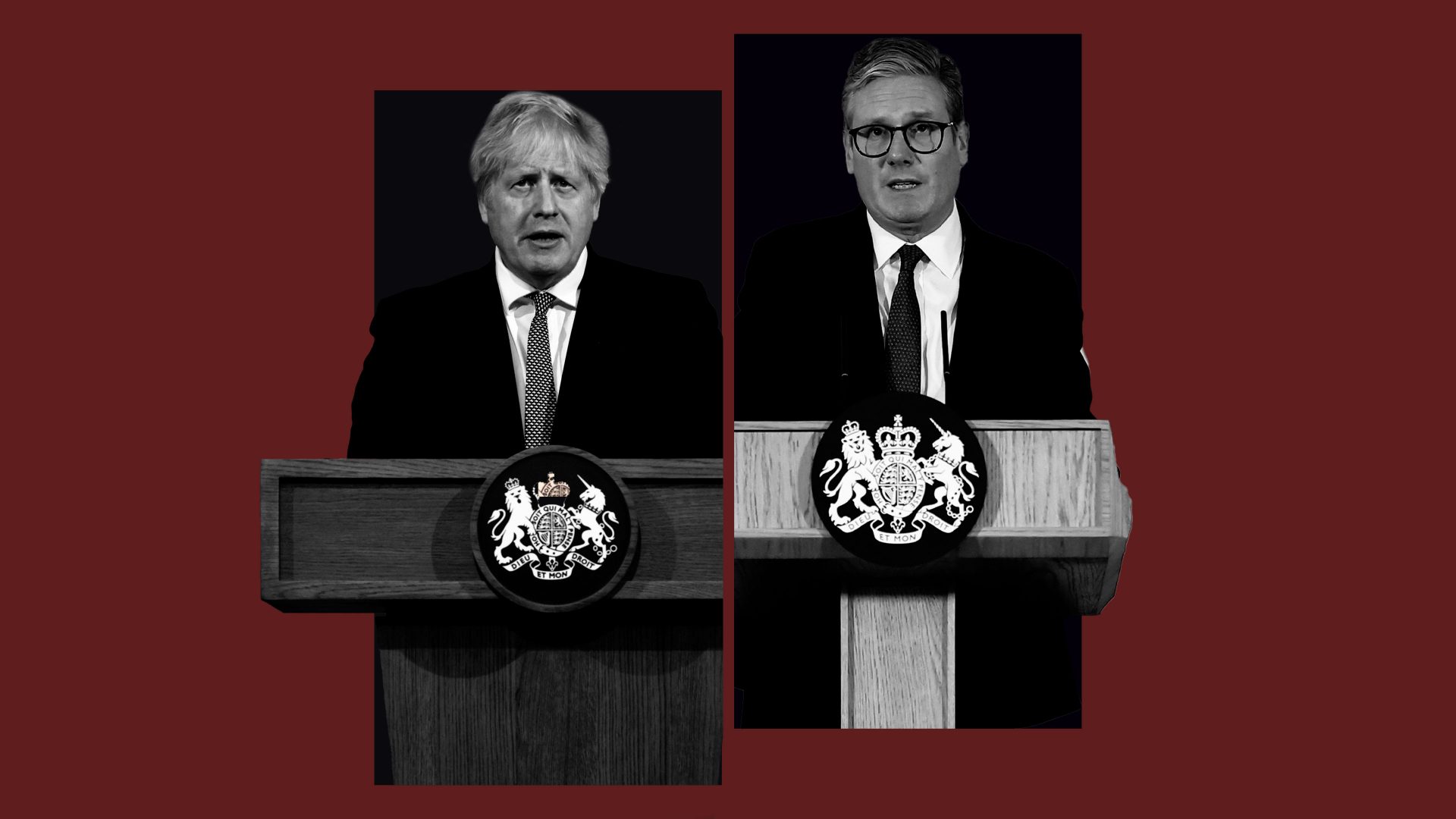
Neither man would like the comparison, but Keir Starmer is governing more like Boris Johnson than he is any of his Labour predecessors. Johnson entered No 10 and was mired in scandals over lavish gold wallpaper and a refurbishment paid for by donors.
Starmer, having seen the public fury at these integrity scandals, entered No 10 with a wealthy donor buying his designer suits and glasses, accepting hospitality for VIP seats at football matches and gigs.
The public got sick of Johnson making ethically dubious appointments. Starmer didn’t just appoint Peter Mandelson, but made some other blatantly unsuitable hires. His friend Tulip Siddiq, for example, was given a ministerial brief tackling international corruption – even as her own aunt faced corruption allegations over her time as the autocratic ruler of Bangladesh.
Johnson faced a backlash for appointing staffers from his team to the House of Lords for life, after spending only short periods working in No 10. Keir Starmer has already had to strip the Labour whip from Matthew Doyle, given a peerage after just over a year as No 10 comms director, for campaigning for a sex offender to be elected as a councillor.
Keir Starmer’s predecessor as Labour leader, Jeremy Corbyn, became known as Britain’s unluckiest anti-racist. Corbyn, who styled himself as a lifelong campaigner against racism, seemed to find himself on stages and platforms time and again alongside people with an uncomfortable history of antisemitism. Starmer risks becoming Britain’s unluckiest decent man. These scandals just keep following him.
Keir Starmer is not Boris Johnson, of course. But history doesn’t repeat itself – it rhymes, and Starmer’s premiership has a resonance with that of Johnson, in ways that should deeply alarm the PM and those around him.
While there is space to argue over the relative severity of the scandals, this Labour government is mired in crises of just the sort that hit the Johnson administration. Worse, the reasons seem to be the same. Keir Starmer’s stodgy style and lack of personal charisma masks the comparison with the rumpled but somehow charming Johnson, but once you start seeing the parallels, they are everywhere.
It is a comparison No 10 should take seriously, if only to avoid facing the same fate. Johnson, after all, was elected by a landslide in 2019, and his personal ratings were in the gutter less than two years later. His premiership lasted less than three years, before he was ousted by his own MPs.
Starmer was elected by an even larger landslide in 2024, but his personal fall from grace with the public has been even more brutal. Less than two years after his election, he has the worst personal ratings of any prime minister in UK history. His MPs are mutinous and devastating elections are coming.
The Starmer premiership is mirroring Johnson’s in ways that border on the uncanny. Can the PM change course in time?
 Most popular

It’s official: Reform has slumped in the polls
Pedro Sánchez is outclassing Trump with the president’s own tactics
Trump’s dark legacy: The world now sees America as worse than China
The bombs and the bombshell: At home in Dubai with Isabel Oakeshott