Labour genuinely did not expect to lose the Gorton and Denton by-election. For all that governing parties play down such losses, this Manchester seat in the Labour heartland was one that Keir Starmer’s operation thought they would hold – wrongly.
Perhaps, if they had seen the defeat coming, Keir Starmer wouldn’t have reacted so weirdly to the loss. In a bizarre statement, Starmer echoed complaints from Nigel Farage that the vote had been “sectarian” and condemned the Greens for a divisive campaign.
Starmer might struggle to explain what, exactly, is “sectarian” about a coalition of young white liberals, traditional Labour voters, and British Muslims banding together to elect a working-class woman as their MP, representing a party led by a gay Jewish man. Starmer’s response not only blamed his party’s usual core voters for its defeat, but did so in a nonsensical manner.
Perhaps he was just thrown by the gravity of the loss. Gorton and Denton was not just, until Thursday, one of Labour’s safest seats. It also neatly encapsulated Labour’s exact challenge at the next general election – seeing off a threat from the Greens on the left, and Reform on the right.
Winning it even relied on building a winning coalition in a seat containing a significant ethnic minority population, lots of liberal students and young professionals, and a sizeable grouping of older white working-class voters. In other words, the seat genuinely served as a test of Labour’s entire philosophy for holding on to power at the next general election.
To say they failed would be a dramatic understatement. Gorton and Denton was – depending how you count it – either Labour’s 38th or 57th safest seat. The party thought it was winnable right until the last days of the campaign. Keir Starmer even visited it just days before polls opened.
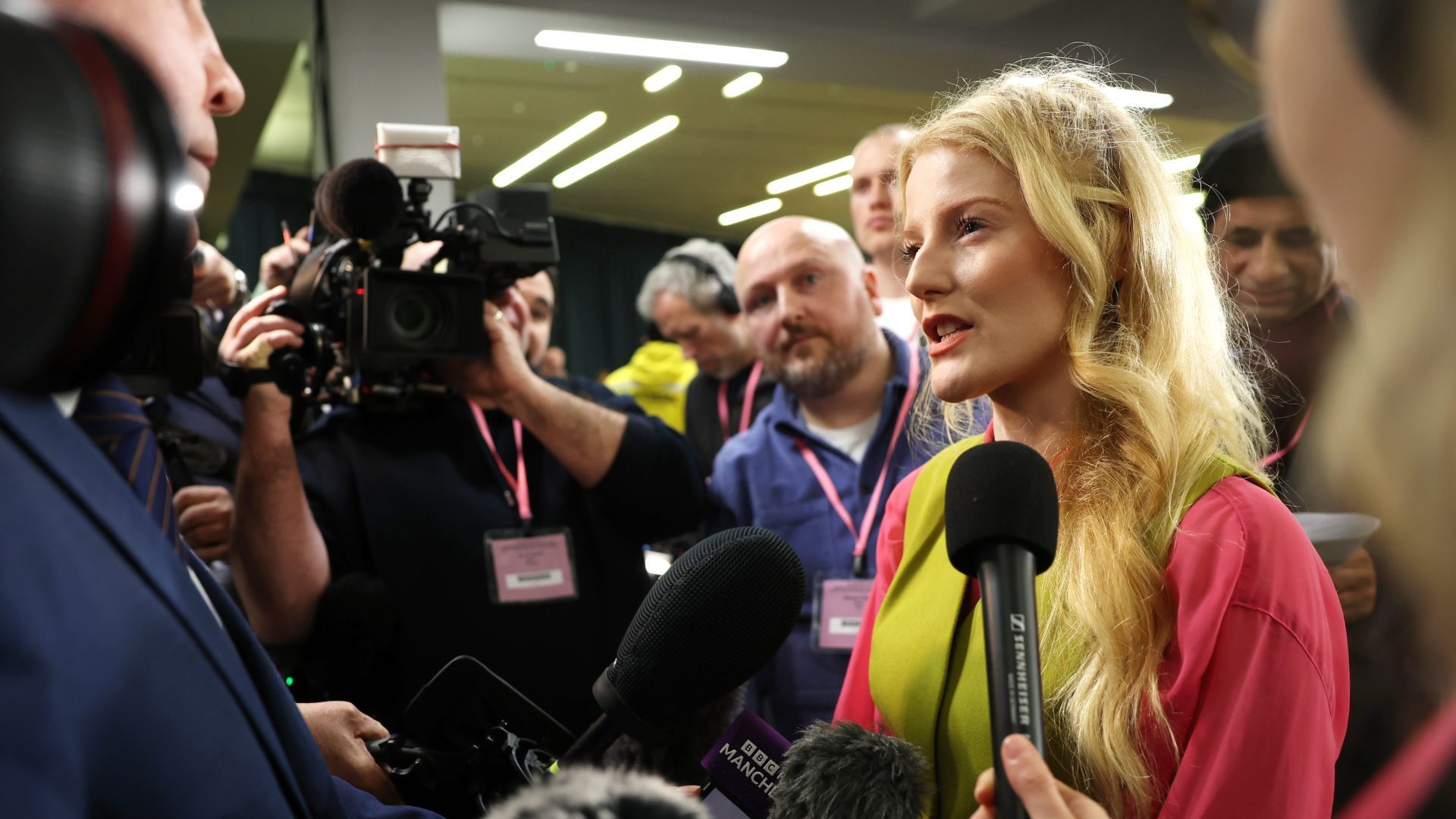
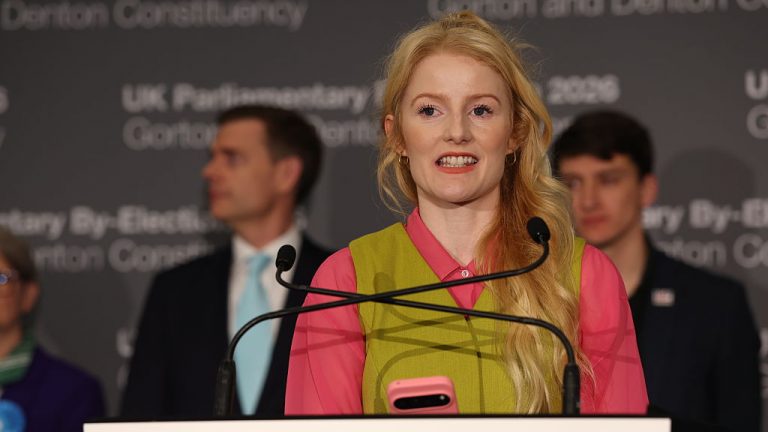
Instead, the Green Party won, and won convincingly. The Greens have a majority of 4,402, pushing Reform into a distant second place. Labour was a further 1,000 votes behind them in third. At the last general election, just 19 months ago, Labour won a majority of more than 13,000 in this seat. This time, they didn’t even manage to get 10,000 votes total. This is what a collapse looks like.
The aftermath of a by-election can feel a little unfair. The Greens might rightly feel that the biggest story of the contest is their victory. After all, it’s the first time they have ever won a by-election (or even got more than 10.2% of the vote in one), and it’s they who are sending a new MP, Hannah Spencer, to Westminster. It’s certainly a fantastic result for them, but Spencer is now just one MP among 650. Labour is the government, and its future is in existential doubt.
Similarly, Reform is not the story. Gorton and Denton was never as good a target seat for the party as some of its supporters – and perhaps its candidate, the blogger Matt Goodwin – imagined.
When Reform is trying to portray itself as a party heading towards being the next government, a defeat always risks making them look like they’re running out of steam. Perhaps they are. But in reality, Goodwin was a particularly polarising candidate who seemed to mobilise the anti-Reform vote far better than he roused Reform’s actual supporters.
For all that Goodwin’s complaints that he was blocked by “a coalition of Islamists and woke progressives”, the reality is he just wasn’t popular enough to win. If Labour and the Greens had split the vote exactly evenly – the worst result for the progressive bloc, and Reform’s best chance of winning – he would have finished third, not second. Maths has never been Goodwin’s strong suit.
That leaves Labour. The odd reality of this election is that its single biggest loser has already lost his job, because that man is Morgan McSweeney, who until recently served as Number 10 chief of staff.
McSweeney was Labour’s campaign chief before he took that job. Elections were supposed to be his thing. And his entire theory of the case for Labour’s re-election was that Labour could afford to ignore or even kick around left-wing voters, because they would return to the fold to stop Reform.
The result was 19 months in which Labour has relentlessly tried and failed to out-nasty the Reform party on immigration, while insulting its own members and voters, acting supremely unconcerned as the polling tanked, membership plummeted, and MPs became increasingly miserable. None of it would matter, Number 10 said, because the voters would return rather than risk a Reform win.
Gorton and Denton was the first real test of that message. There was a clear and present danger of a Reform victory, and for a particularly polarising and unpleasant candidate at that. Labour was by far the most obvious “stop Reform” choice – it was a very safe Labour seat. The party had a good candidate and huge support from the national and regional party. It cannot even blame Andy Burnham, who rather than sulking when he was blocked from standing, fought relentlessly to hold the seat.
Suggested Reading

Gorton and Denton: Starmer’s worst nightmare
Labour comprehensively failed to rally the “stop Reform” vote here. That means it cannot rely on doing so anywhere else, and its MPs will know that. Even worse for McSweeney, the party didn’t see it coming – its voter tracking systems and “get out the vote” operation did not work as they should. That will alarm Labour MPs even more: they now know not to trust any reassuring numbers party HQ could show them.
McSweeney was never a policy expert. He had never run anything before in government, which always made him a bizarre choice to become Number 10 chief of staff. Elections were supposed to be his thing, and now his strategy there has failed spectacularly, too.
Friday morning would have been a very good time for Keir Starmer to sack McSweeney and promise changes. The problem for the prime minister is that he had already fired McSweeney over a different scandal several weeks ago. That leaves him with no one else to take the blame.
The challenge facing Labour is, at least, now clear. It has to abandon its current strategy or else face total wipeout at the next general election. Trying to compete with Reform on immigration six days a week, then half-heartedly condemning them on the seventh and hoping that’ll do has just pissed off anyone voting for either of the alternatives.
In reality, it is probably too late for Keir Starmer. Labour’s MPs know it’s too late to avert a disaster in May’s elections, so they might wait a few months before making a move to depose him.
In that time, they will be looking for a candidate to articulate a new plan for Labour – not just to put a new, more articulate, face on the existing party. Over the weekend, some of them started to do just this: Wes Streeting, who would challenge from the party’s right, said the loss didn’t mean Labour should shift left. Convenient, that. Shabana Mahmood made headlines throughout the weekend doubling down on her aggressive anti-immigrant positions – allegedly against the wishes of Number 10.
Neither approach is likely to win back any of the friends and voters Labour is shedding. Can anyone articulate an alternative vision in time, before their support is lost forever?
This article was updated on 2 March