As Donald Trump took to the stage at the World Economic Forum in Davos, the president of the United States looked more tired and fed-up than anything else.
For the first ten minutes or so of his speaking time, delegates were treated to autocue-Trump: a monotonously-delivered set of statistics about how fantastically America is doing under his leadership.
It was never going to last, and it didn’t. Inevitably, Trump went off script – and way over time – in a rambling speech that touched on American credit card interest rates, why wind farms don’t work, gas prices, and how terrible Jerome Powell was as chair of the Federal Reserve.
Trump badly impersonated the accents of Emmanuel Macron and Switzerland’s economic minister when boasting of how he’d bested them in negotiations, before returning to rambling about nuclear power, artificial intelligence, and any other topic that crossed his mind. This included an uncomfortable and unignorable diversion into overt racism against Somalians, including congresswoman Ilhan Omar, a bête noire of the president’s.
It sounds strange to call a speech by the most powerful man on the planet boring or irrelevant, but most of Trump’s meandering monologue was exactly that, especially for an audience of international diplomats and business leaders. It was the kind of time-wasting nonsense Trump regularly comes out with at political rallies on US soil. It was not something he needed to fly thousands of miles to deliver.
There was some substance. Trump complained at length about how America “got nothing in return” out of the NATO alliance, words sure to land badly with allied nations – including Denmark – who sent soldiers to fight and die in the US’s wars in Afghanistan and Iraq, in the wake of the 9/11 attack.
Trump raised the theme repeatedly as he explained why he believed Denmark should simply hand over Greenland – which he appeared to confuse with Iceland more than once – for the benefit of the US and the world. If there was a headline from the speech, it was that Trump ruled out the use of force to seize the territory, albeit only after saying several times how easy it would be for him to do.
A few hours later came news that Trump had reached a deal with Nato secretary-general Marl Rutte over Greenland’s security that felt like a climbdown. Threats of extra tariffs against the UK, Denmark and others have been dropped too – for now.
Trump’s delivery resembled nothing so much as a mafioso saying how straightforward it would be for someone to vandalise a beautiful restaurant, and how he would never do that, before demanding protection money. But his sulking and tired demeanour suggested that wiser heads around him – even if only in relative terms – had convinced him, for now at least, that taking Greenland by force was not a viable option. World leaders at Davos can now decide how long they believe Trump’s promises can hold.
Simply put, Trump’s speech was not that of a world leader. It had no clear purpose, no message and contained no strategy. There was no sense of why he was saying it in Switzerland, to that audience. There was no obvious reason why he had felt the need to travel to Davos at all. The president’s time is supposed to be at a premium, with dozens of demands on every second. This felt like an old man indulging a whim, and being indulged in return.
Perhaps that’s all it was. But Donald Trump is, in theory at least, still the guarantor of Europe’s independence and its security – a position the continent’s leaders have continued to pay lip service to regularly, flattering and indulging Trump as he grows ever more belligerent and ever less coherent, until finally this week he took things too far in Greenland.
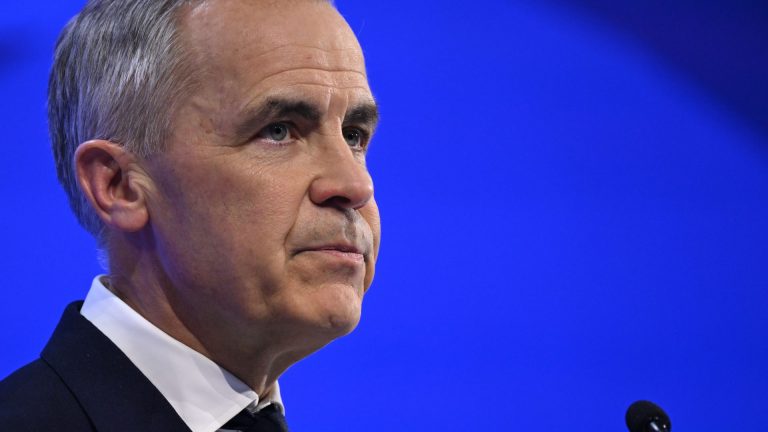
It is impossible not to compare Trump’s speech to the other significant address made at Davos: that of Canadian prime minister Mark Carney. Canada rarely plays a major role on the world stage. It is, as Carney admitted, a middling power. Carney didn’t flatter his audience, nor did he simply tell people what they wanted to hear. The strength of his speech was, in fact, that he did neither of those things.
The reason Carney’s speech cut through – and has the potential to be remembered by history – is that finally a Western leader has levelled with the public that times have changed. The “rules-based international order” built by America in the wake of the second world war is dead, he admitted, and it’s largely the US that has killed it.
Suggested Reading

Carney gets it. Starmer doesn’t. The world has changed utterly
Whatever happens now over Greenland, the US is no longer a reliable trade partner, nor a reliable ally. The prospect of it being an adversary to European and other western democracies is no longer impossible, nor even distant. And the problems run deeper than Trump: the lack of domestic outcry to Trump’s excesses is impossible to ignore.
Republican complicity with Trump is all but expected at this stage, but Democrats’ willingness to mostly ignore Trump’s threats to invade an ally and bring down the western alliance, as if it were a second-order issue to the cost of living, stung.
There is just no sign that there is a “normal” for the US to return to once Trump is gone. Something new must be built. Carney, unlike Keir Starmer and most European leaders, broke ranks and gave voice to what everyone has been thinking.
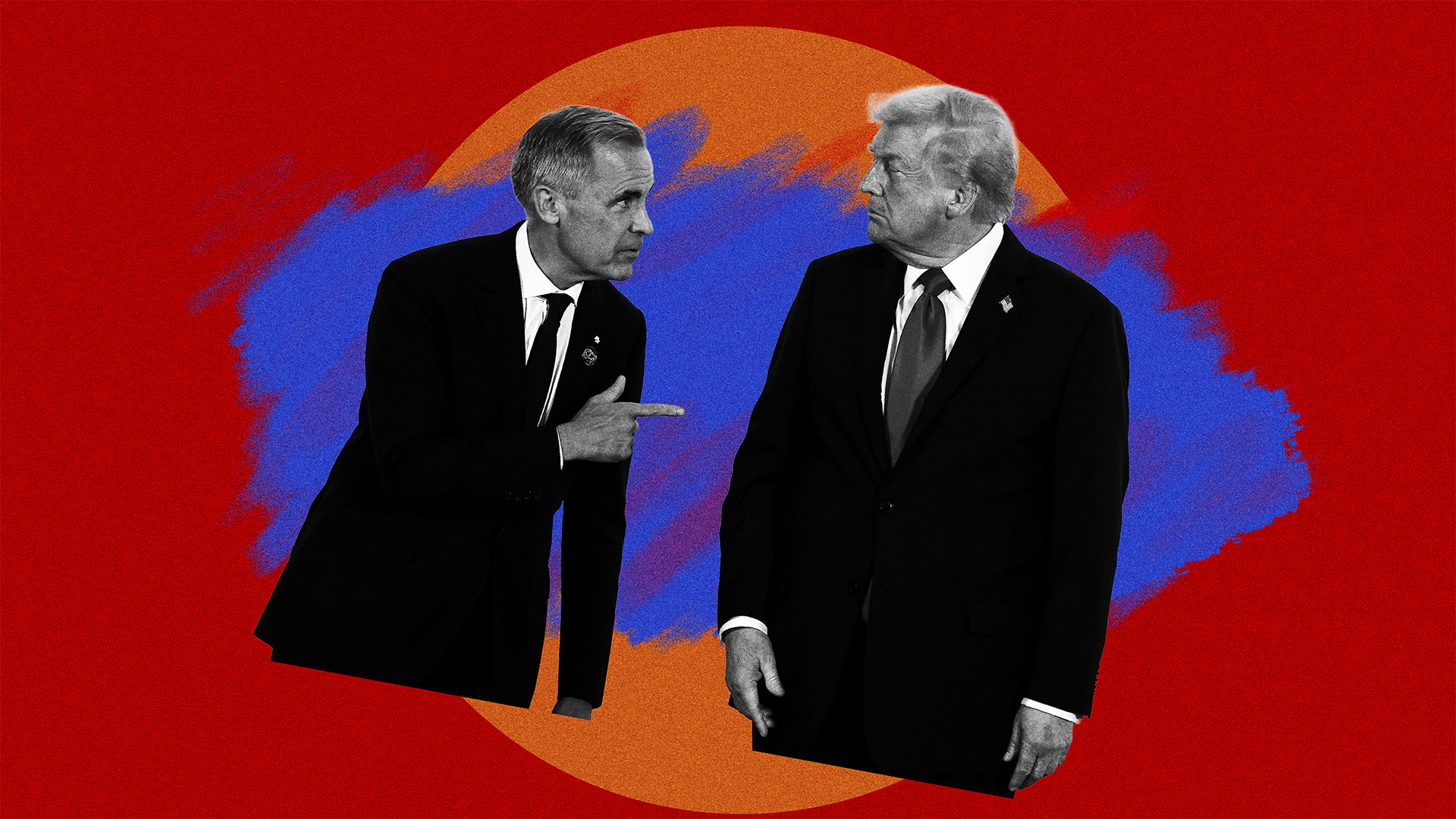
Trump and Carney are drastically different men, and they gave radically different speeches. But the two worked in tandem to deliver one message: times have changed, and we must change with them.
The US era is ending – Donald Trump has either killed it, or accelerated its demise. European leaders must now decide what to do about that.
 Most popular
‘Operation Epic Fury – as it happened’

Is Star Wars dead?
Morrissey returns.. and heaven knows he’s mythical now
Iran War: Trump has now sealed his own fate