I spent the night of the New York mayoral election in Singers Bar, an iconic melting pot of Brooklyn’s young liberals and progressives in Bedford-Stuyvesant, a neighbourhood where Zohran Mamdani won 77% of the votes.
“This is how I imagine 2008 felt like,” someone said at our table, recalling the Obama era, while trying to build a tower from the dozens of bottlecaps lying around. It was a testament to people’s hopeful anticipation. For most people in that bar, and a lot of people across the city, it was the first time they’d headed to the polls not to vote for a “lesser evil”, but for someone who looked and sounded like them.
As the election was called for Mamdani – a mere 45 minutes after the polls closed – the place exploded, and this hodgepodge of twenty- and thirty-somethings flocked to the patio, awaiting the victory speech on a giant screen. “I’m libbing out,” exclaimed a friend. “Woke is back.”
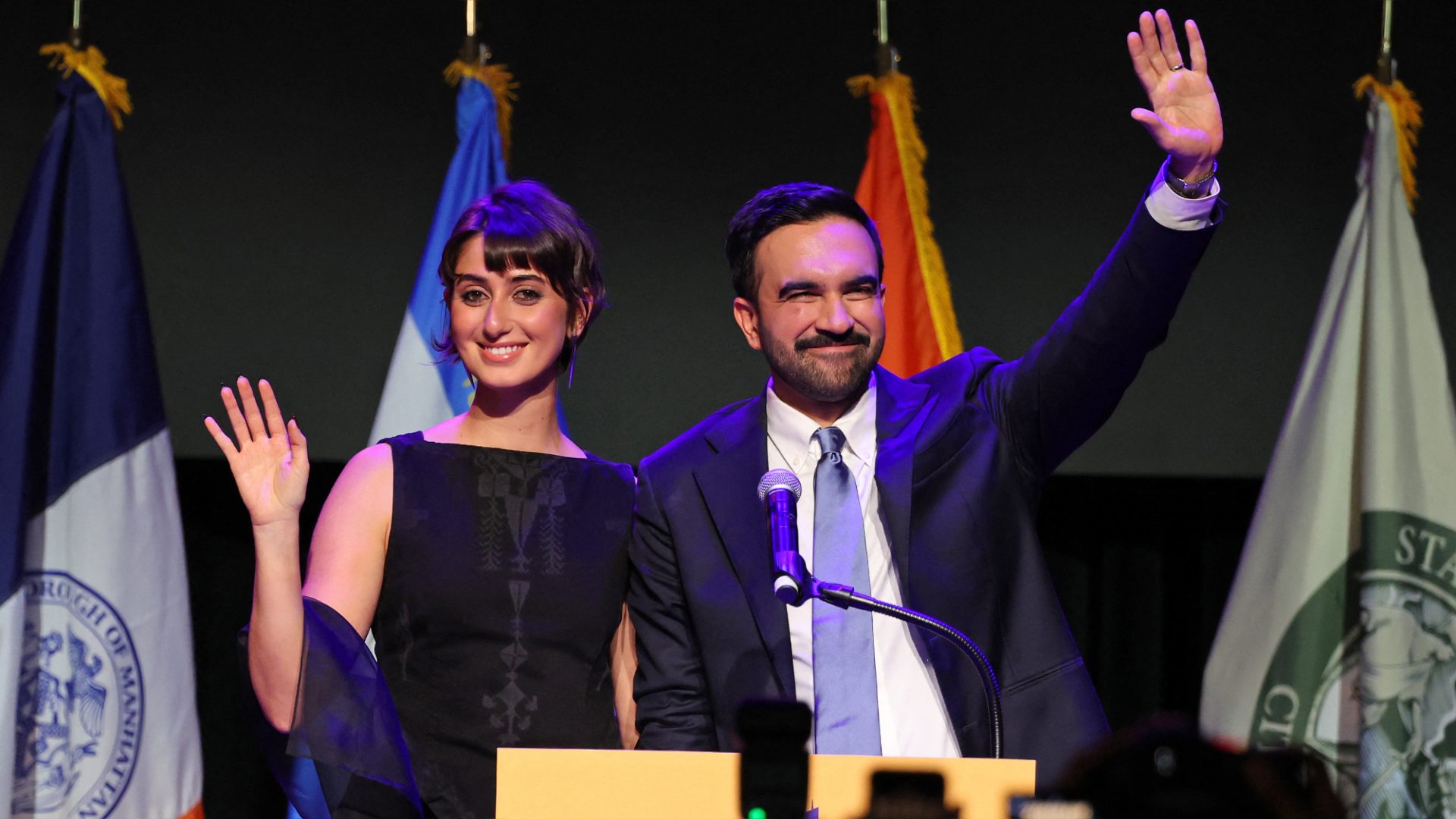
Mamdani, on the stage of the Brooklyn Paramount theatre, delivered a powerful monologue. As he finished, people erupted in cheers, and a few seconds later the volume went up a notch: that was when Rama Duwaji, Mamdani’s wife, appeared on stage. Mamdani tapped into the political anxieties of young New Yorkers with his progressive platform, yet there was hardly anything more relatable to them than seeing a young millennial mayor and a Gen Z first lady in an era of gerontocracy.
Mamdani’s charisma and “Golden Retriever boyfriend energy”, as a friend of mine described him, had a lot to do with his appeal among young people. Duwaji is the textbook example of an edgy Brooklynite, with a “bixie” haircut, hoop earrings and winged eyeliners. The 28-year-old illustrator whose work has appeared in the pages of the New Yorker, is a very cool addition to the political scene.
Suggested Reading
Zohran Mamdani and the coming battle for New York
Out of all the photos taken that night, none had popped up on my social media feed as often as portrait photographer Sinna Nasseri’s shot of the mayor elect and his wife sharing a tender moment behind the scenes. In it, Mamdani is sitting on a sofa with his phone in his hand as Duwaji, standing above him and pictured from the side, gently lifts his chin up in her hand, and the pair share a loving glance at each other.
They made politics for my generation look hot for the first time. It seemed as if Zohran and Rama represent us – especially as their love story started the same way most search for theirs: on Hinge.
Put any group of New Yorkers between the ages of 20 and 35 in a bar, and within 15 minutes, they will be talking about Hinge, the ubiquitous dating app. I’ve sat at many of those tables, swapping phones with friends to review profiles and swapping stories of dates that went horribly wrong. Hinge has become synonymous with the quest to find love in the world’s biggest dating pool.
Mamdani and Duwaji matched in 2021 during the pandemic, met for coffee and walked in a park in Brooklyn for their first date. Then, for their second date, they toured Mamdani’s legislative district in Queens. By October 2024, they were engaged, and last February, the two took the subway to the city clerk’s office in Lower Manhattan to say their vows.
They are hardly going to change dating culture, though. As life sped up after the pandemic, so did dating: since they met, the number of Hinge users is estimated to have grown by 50%, and for lack of a better alternative, there’s no end in sight. It is, nevertheless, an historic moment for Gen Z to realise that they might be one match away from becoming a household name.
No wonder that, after election night, people started sharing their memories of that time when they saw, or even talked to, Mamdani and Duwaji on Hinge, while others added pictures of “the first couple” to their profiles with the prompt “this could be us.”
Iván L Nagy is a Hungarian political journalist and podcaster based in New York