

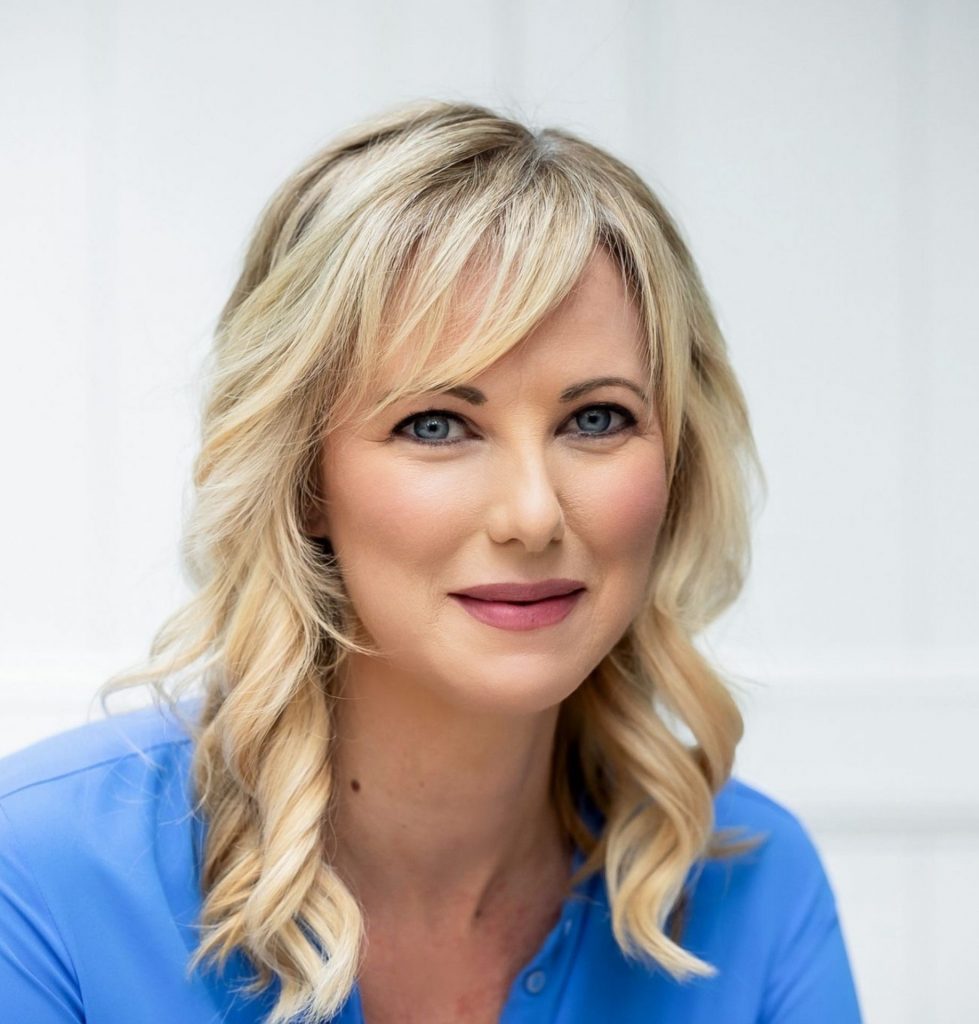
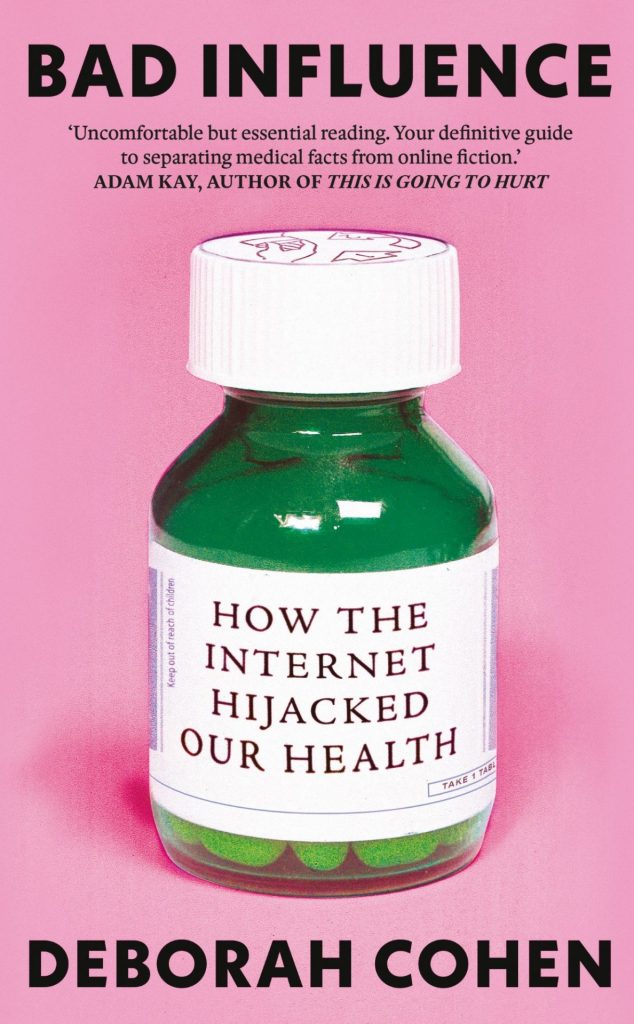
In her book Bad Influence: How the Internet Hijacked Our Health, Dr Deborah Cohen examines the dangers of shopping on the internet for products promising physical and mental wellbeing.
“Some of what’s out there is genuinely helpful,” she writes of a trend that is becoming increasingly prevalent. “But some of it is not only a waste of money but harmful too. The issue is, it’s hard to know which is which.”
Her book is the first serious attempt to navigate a new wild west in which universal healthcare is being supplanted by the privatised apothecaries of Doctor Facebook and Professor Instagram. “I interviewed about 200 people,” Cohen, a former science editor for ITV News and the founder of the British Medical Journal’s investigation unit, tells me. “I wanted to get different perspectives, so I spoke to influencers, marketing agencies, advertising specialists, doctors, academics, psychologists [and] professors.”
Presently, she’s speaking to the staff at a pub in Camden Town. On a mild Monday evening, a dozen days into the new year, Deborah Cohen is in the Earl of Camden to watch her beloved Liverpool beat Barnsley in the third round of the FA Cup.
Displeased at the lack of commentary emanating from televisions affixed to the walls, she strides to the pumps to see if we can have a bit of volume. No problem. Precisely 15 minutes after the barkeeps had rejected my own request for the very same thing, at a stroke, the room fills with the sound of pundits and presenters.
“I told them we were doing a newspaper interview,” she announces, as if this was the most obvious thing in the world. “I said it was important that we had the commentary.”
As a reporter, this persuasive streak has served her well. Employed by the BBC as the health correspondent on Newsnight, Cohen corralled sources deep and wide to provide viewers with hard news and serious analysis during the Covid-19 crisis.
“I really felt the pressure during the pandemic,” she tells me, “I had to get stuff right.” A producer explained the stakes in plain English: “‘If you fuck up,’ she said, ‘you’ve got much further to fall.’”
This bald truth helps explain why Bad Influence is an important piece of work. On the health and science beat, writers and reporters have a duty of accuracy that might just be the difference between life and death.
Over the course of 320 comprehensive and compellingly readable pages, Cohen acts as navigator and envoy for a public understandably befogged by the untamed world of online quackery.
“My premise is what happens when you put health on shopping and entertainment platforms that have opaque algorithms,” she tells me.
“I realised that loads of my mates – men, women, various ages, various political persuasions – were looking online for their health information,” she adds. “Coupled with that was a real negativity around the medical profession… [yet] they were looking for serious health information. And they didn’t know how to unpick or unpack that information.
“They didn’t know who or what to believe… [They were] asking, ‘What are the benefits? Do these benefits outweigh the harms? Who’s making the money?’ Because a lot of it is about following the money.”
It usually is. Nescient Brits largely unfamiliar with the culture of for-profit healthcare are perhaps more hampered than most in an online world where half of the stuff for sale is pharmaceutical flapdoodle.
Marketers cater to people who want to be told they’re ill; the gamut of razzle-dazzle remedies runs from ADHD to the removal of earwax. Despite a covetable head of hair, just this week the internet tried to flog me a packet of chews it promised would stop me going bald.
Inevitably, the market has space, too, for clientele who fancy living forever. Out on the fringes one will find the longevity movement, an often very rich and usually male crowd who aim to live for 130 years with the help of microchip implants, toothpaste made of modified bacteria, and booster injections. The scene is particularly active in Montana, a state which last year passed a law allowing unlimited access to drugs after only one clinical trial.
“I guess if you want examples of the extreme kinds of quackery, you look no further than the longevity movement,” Cohen says. “In that sphere you’ll find people who do… some truly bonkers stuff, like gene therapies that have been banned and things like that. They have these protocols and routines; they spend their time measuring everything without thinking, ‘When are we actually going to do some living?’
At its most exalted, the longevity movement rubs shoulders with a libertarian crowd whose business portfolios include the funding and building of privatised cities. Founded by investors and ideologues such as Peter Thiel and Sam Altman, the Honduran island of Roatan is a paradise for anyone hoping not to share air with hoi polloi. As well as offering its own low-tax government, the tropical refuge provides drastic healthcare options with minimum regulatory oversight.
With half a chuckle, Cohen recalls the time a hereditary peer gave her GBH of the earhole in a parliamentary tearoom for claiming that wearables and activity trackers are snake oil for the 21st century. Looking up his Lordship in the register of members’ interests when she got home, it turned out he was on the board of half of the companies that made them.
“One of the big ones at the moment is the sleep-wearable,” she says. “It tells you how much sleep you’ve had.
“Well, they’re not particularly accurate in the first place, but the best indicator of how well you’ve slept is how you feel. You might be feeling perfectly awake, but your sleep-wearable is telling you that you haven’t had a great night’s sleep, so suddenly you’re questioning how you feel because the numbers are telling you that you haven’t slept well.”
In other words, we’re in danger of turning into automata. I’m reminded of my brother-in-law, an otherwise sharp lad who gets annoyed that the tracker on his wrist fails to register his movements when his arms are pushing his perambulated son rather than swinging by his side.
“What the hell difference does it make?” I asked. “You’ve taken the walk. You’ve done the steps.” Apparently, I was missing the point.
Suggested Reading
Ricky Gervais is swinging at thin air
But as well as pointing out that some of the emperors of modern health are naked save for a fluorescent Fitbit and a glucose monitor, Bad Influence shines a light on more ruthless hustles. With her surfeit of Scouse scepticism, Deborah Cohen is especially good at exposing wellness scams that leave assailable people bruised and bereft.
She writes of a family friend, Anna, who responded to an advert on Instagram by a clinic offering an Anti-Mullerian Hormone [AMH] test that she hoped would tell her if she could bear children. Inevitably, the procedure turned out to be a gateway for more expensive and evasive treatments; more than a year later, stubborn online algorithms continued to clog her feed with pitches for “miracle supplements promising to decipher her body”.
These constant reminders of the possibility of infertility are intended to manipulate the heartstrings and overall happiness of customers desperate to realise the sometimes-unattainable dream of motherhood. Although Anna managed to fall pregnant by conventional means, her experience at the roll-up-roll-up health bazaar gave her pause all the same.
“I’m going to ask a few more questions next time and not just click ‘buy now,’” she tells Deborah Cohen. “I’m always going to go for the latest beauty treatments though,” she added. “I’m not that sceptical.”
Bad Influence: How the Internet Hijacked Our Health by Deborah Cohen is published by Oneworld Publications.
Ian Winwood is the bestselling author of Bodies: Life and Death in Music