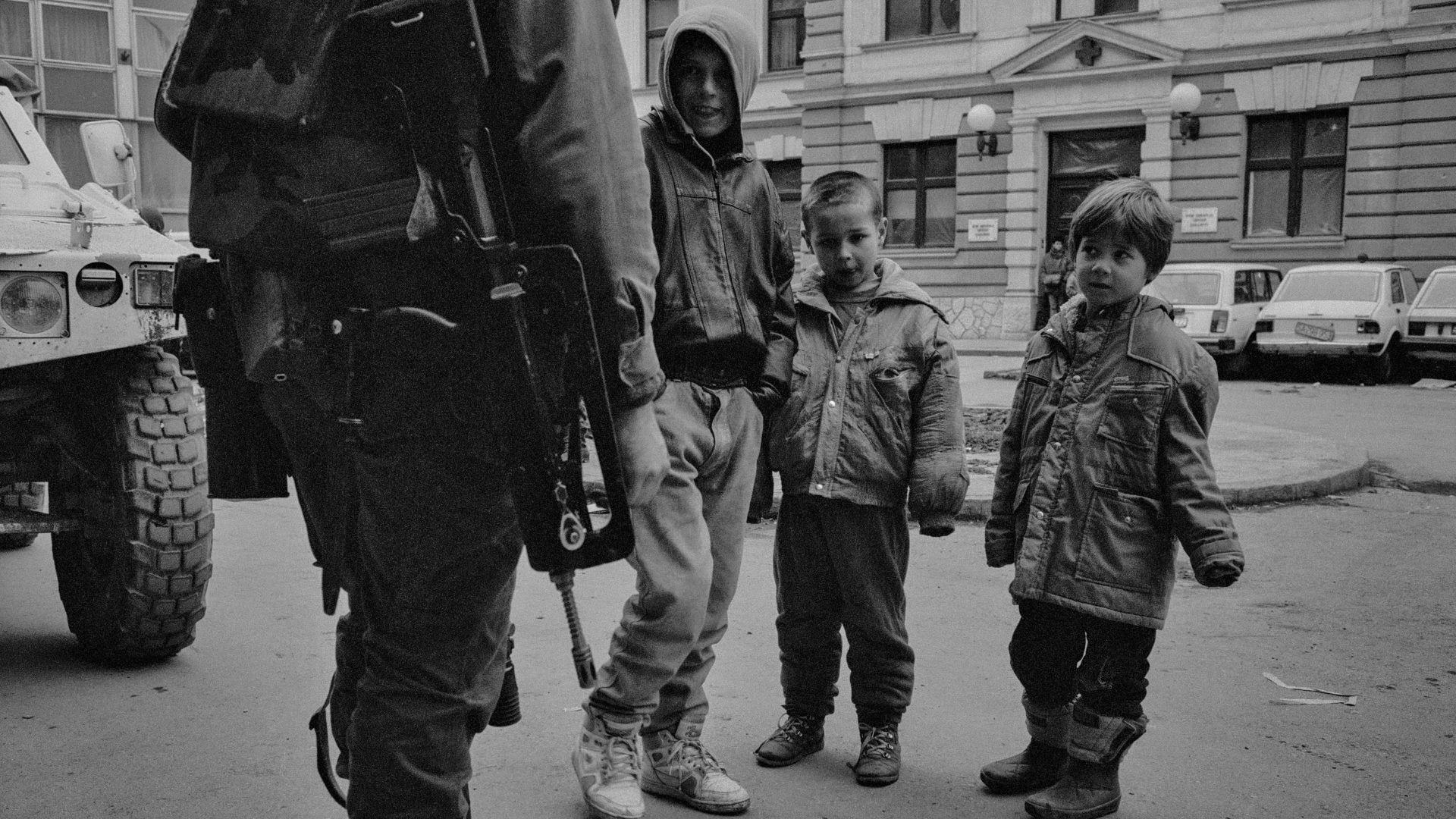
How do children experience and remember war? It is a question I’ve often pondered, having met countless survivors during my time in the former Yugoslavia. At the War Childhood Museum in Sarajevo, the distinctiveness of each perspective is captured through artefacts and the testimonies of those who lived through the war in Bosnia-Herzegovina, which ended 30 years ago this year.
Through a room of questions, we are asked to recall our childhoods. Scents commonly associated with youth – chocolate, pastries, mown grass, the seaside – are wafted from glass perfume bottles with black rubber pumps. I close my eyes and imagine the Irish Sea on a stormy morning.
There are questions about role models and dream jobs, plus cards on which to describe one’s happiest childhood memories. I think of good times with my family and friends, and feel fortunate to have a dilemma about what to list. There is an innocence to these contemplations, a focus on the positives of a prized past.
The tranquility of my youth means I’ve never seriously contemplated specific moments or mementos from my early days. Yet for those whose lives were torn apart by people intent on sowing the seeds of destruction, there is a trauma and a sense of helplessness that intensifies or magnifies such considerations.
The artefacts collected and displayed here have assorted meanings, conveying the plethora of significances young people attach to a world collapsing around them. I feel guilty for studying some more than others, as if each deserves equal treatment – but some appeal more than others at first glance.
Suggested Reading
Bosnia, the land that can’t heal
For Adana, born in 1983, it is a transistor radio, which was “an important source of information and entertainment”. It constitutes a connection with the outside world and a unifying conveyor of alternative voices. I imagine her family and neighbours huddled around this cumbersome contraption, eagerly trying to find a decent signal or straining their ears to hear more clearly.
Amila, born in 1984, offers an English language dictionary that enabled her to “talk to UN soldiers and maybe get a chocolate bar or some other candy”. It was another way of communicating with the outside world, an outside world that was largely turning a blind eye.
For Alen, born in 1988, it is an X-ray image of the severe shrapnel wounds he suffered on May 5, 1993 during the shelling of Tuzla, one of several towns in Bosnia-Herzegovina where I have lived. It was an attack that killed his parents, but these scans were imperative for surgeons to save his life.
Lejla from Cazin (born in 1983), a town in north-west Bosnia-Herzegovina, received a humanitarian aid package sent by Astrid from Chester containing crayons, sweets, a comb, and other items. She tried to contact her, but the address was incomplete.
Local media recently covered the story in Chester, but there will sadly be no happy ending. Lejla, who was a researcher at the museum, died in 2020. To honour her memory, the Lejla Hairlahović-Hušić Scholarship aims to support PhD candidates and their research.
Other items are more practical – water canisters (Amina, born 1980) or UNHCR foil (Amina, 1982) used to cover broken windows. A “Spiritusa” (Boris, 1988) was a lamp that was often the only light source. There are wartime treats such as powdered milk – Hana, born in 1992, the youngest exhibitor. They remind me how these young people were forced to grow up much more quickly than would otherwise have been the case.
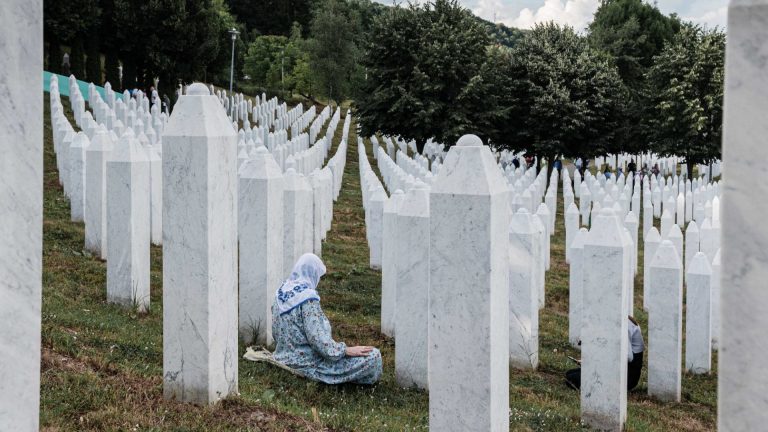
There are sentimental mementos of relationships. Emir, born in 1979, presents the razor of his father, who was a victim of the Srebrenica genocide in July 1995. He was “always clean-shaven and neatly dressed”, he recalls. There is a birthday gift made of old clothing and other materials given to Amina (1980) by her friend Jelena, and a watch belonging to Elma’s father that “symbolises the period of our painful separation”.
A pair of skis is Džanina’s (born 1977) “totem” to her father, who was killed in Zuc Hill “as a part of a human shield made up of concentration camp prisoners”. Edita’s mother had a solitary bullet lodged inside her ear in 1993. It was a miracle that she didn’t die. Edita (born 1987) recalls the psychological impact on her mother: “For some reason, it seemed like I was the only one that she couldn’t recognise.”
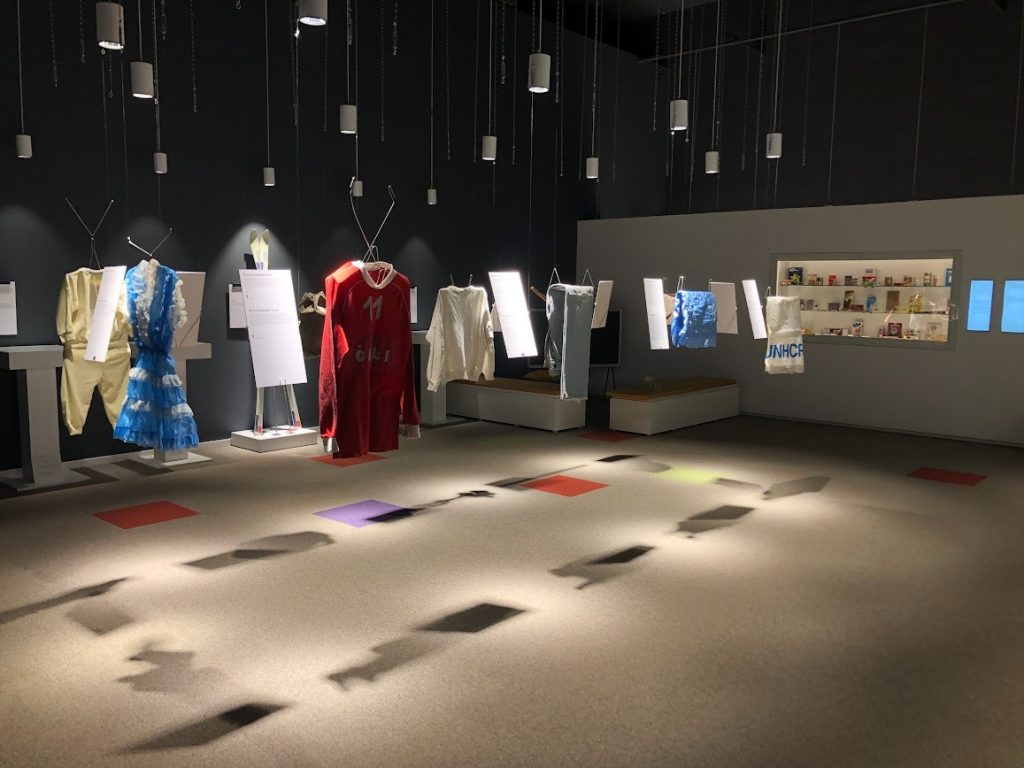
A ball belonging to Emina (born 1984) was gifted to her by her father. “There were days when I couldn’t go outside so I would toss the ball through my window to my friends so that they could play without me,” she says. “My brother was killed a year later,” she adds, a powerful reminder of the tragedy that envelops each story.
Reflecting the hope of previous ages, there is an American emblem, a gift to Damir (1981) who collected pellets American and British soldiers used for target practice. Džemil (born 1983) presented a wooden rifle. “Even though the war had taken our freedom, sweets, and cartoons from us, it couldn’t take away our imagination.”
I wonder what items I would have treasured. Maybe a tennis racket, a book, or a painting by my grandfather. But these are futile thoughts. The meaning attached has been bestowed by circumstance or chance, loss and longing, hope and escapism; by a multitude of emotions and associations arising in the chaos of war. They are uniquely personal and contingent.
The fundamental questions that the museum seeks to explore have taken on a greater pertinence after the destruction of Ukraine and Gaza. To date, the museum has over 6,000 objects from 21 conflicts in its collection. Capturing the contemporary reality of children under fire, there are three stories from Gaza and Ukraine.
Reem (born in 2008) presents a “dress for Eid” from 2014, a day when she was awoken at 7am. “Just three hours later, I heard the sounds of an explosion coming from outside,” she recalls, with Gaza “being bombed even though they announced a truce. It was Eid but there was no celebration,” she continues, adding that “I took off my dress and I never wore it again.”
Maida Salkanović, the museum’s communications specialist, says: “We believe the museum’s mission is essential not only in times of war but also in times of peace,” adding that “in an ideal world, our work in peacebuilding and in nurturing empathy and understanding would serve as a form of prevention.
“Sadly, at this very moment, children around the world are experiencing hardships, suffering, and tragedies that mirror the stories preserved in our museum,” Salkanović adds. “These stories should not only move us, they should serve as a call to action, a wake-up call that urges us to overcome apathy and take action, in whatever capacity we can.”
It is a powerful and enduring collection. It is a vital reminder of those who bear the brunt of war; those least capable of defending themselves, yet capable of articulating their pain in profound ways. The museum is a call to the future and for solidarity; to preserve peace by reminding us of how the most vulnerable suffer most. In an age where war is made to appear distant and detached, it is a wholesome and necessary reminder.
Ian Bancroft is a writer and former diplomat based in the Western Balkans. He is the author of a novel, Luka, and a work of non-fiction, Dragon’s teeth: tales from north Kosovo.
 Most popular
Screen scandal: How Ofcom lets GB News get away with it
Keir Starmer’s fate – to become Boris Johnson
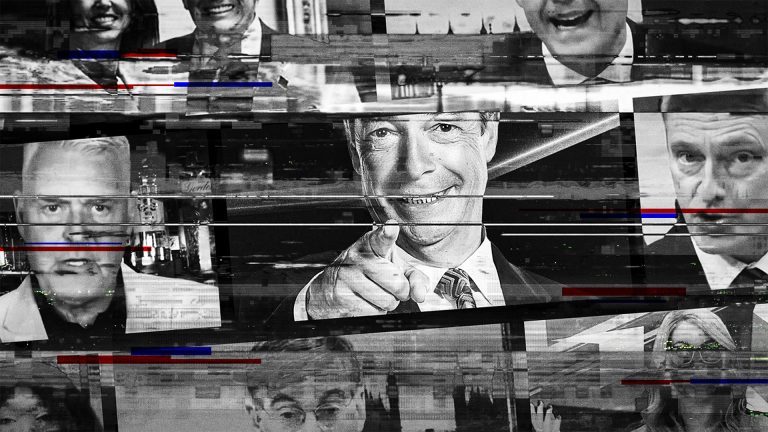
GB News Scandal: The dossier
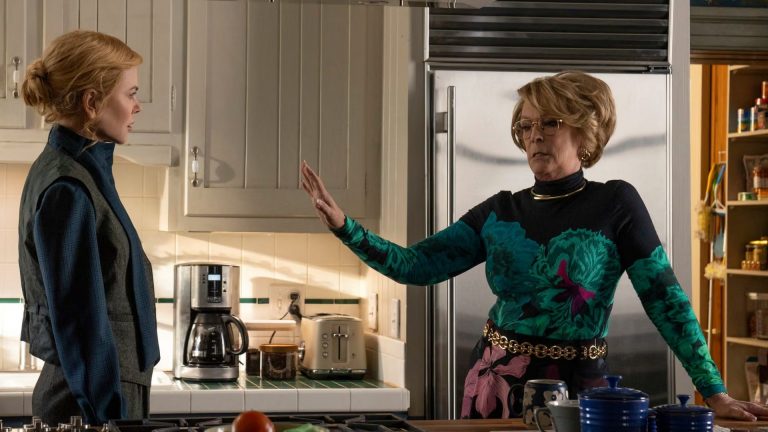
Corpses, spacelabs and gravy: The utter disaster of Nicole Kidman’s Scarpetta