Is it the beginning of the end, the end of the beginning or, somehow, something else entirely? Having only just exhaled after Iran, Europe is once again holding its breath as it looks eastward. This time, it is waiting for Hungary to go to the polls on Sunday.
The right wing, MAGA-aligned populist Viktor Orbán has been the country’s prime minister for 16 years, and involved in its politics for much longer. For the first time in a long, long time, his iron grip on the nation and, as a result, the EU and the war in Ukraine, seem to be loosening. Is it actually going to happen this time?
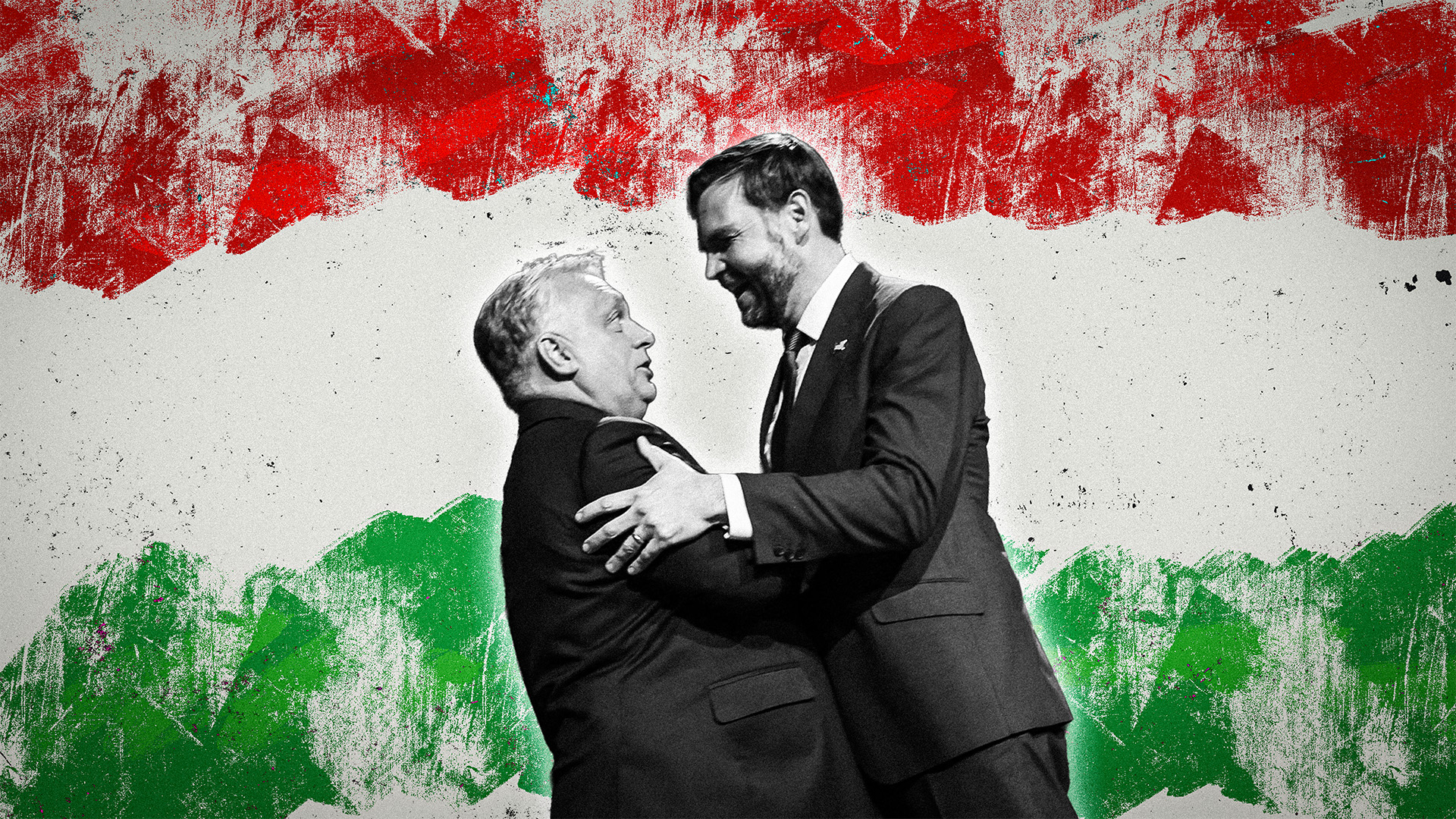
His allies have been so worried that they have used the past few weeks to rally around him. On Tuesday, while Iran was still coming to the boil, US vice-president JD Vance flew to Budapest to appear alongside the beleaguered leader, castigating the EU for supposed electoral interference while telling the crowd: “We have got to get Viktor Orban reelected as prime minister of Hungary, don’t we?”
As the polls refuse to tighten despite Vance’s intervention, Hungarians are starting to believe. But they also believed that maybe, just maybe, the last election would be the one that would lead to Fidesz’s long-awaited ousting from power.
Instead, the governing party not only won in 2022, but managed to keep its supermajority intact. If a party in the Hungarian parliament holds over two-thirds of the seats, then it can pretty much do as it wishes.
This is one of the main concerns the opposition has about this Sunday’s contest. Though Tisza, the party spearheaded by Péter Magyar, has been consistently riding high in the polls for well over a year, a slim parliamentary majority wouldn’t do him or the country much good.
After all, one of Orbán’s greatest tricks has been to successfully reshape much of Hungary in his image. Since 2010, he and his party have passed over 40 “cardinal laws”, aimed at changing everything from electoral law and media ownership to state institutions and, more broadly, the economy. Many of them have been remarkably efficient.
Over several years, Transparency International has found the country to be the most corrupt in the European Union. In 2018 then again in 2025, the European Parliament warned of persistent threats to the rule of law.
Some of it is quite remarkably hypocritical. On the one hand, Orbán has won and kept winning by attacking the allegedly crooked institutions of the EU and liberal democracies, and their corrupt elites. Only this week, Vance used his speech to call out “one of the worst examples of foreign election interference that I have ever seen or ever even read about”.
On the other, and despite everyone involved denying any wrongdoing, it would be hard to ignore that, say, the wealthiest man in the country just happens to be the country’s prime minister’s childhood best friend.
Then there is the war. As with every populist leader, Orbán has always been in search of useful scapegoats. When Russia began its full-scale invasion in 2022, his favourite one became Volodymyr Zelensky. Everywhere in Budapest are posters of the Ukrainian president grinning menacingly, and warning voters that only Fidesz can protect them from the quagmire of war.
Suggested Reading
Viktor Orbán, the man who broke Hungary
Sadly, it isn’t only rhetoric; at the time of writing, there are still 90bn euros of EU funds that ought to be going to Ukraine but are currently on hold, because of Hungary. In fact, the country isn’t merely hostile to Zelensky’s people, but proudly cheering on the other side.
Recently, foreign minister Péter Szijjártó admitted to sharing details of EU meetings in near real time with Sergei Lavrov, his Russian counterpart. And details emerged of a call between Orbán and Vladimir Putin last October, in which the PM told the Russian leader, “In any matter where I can be of assistance, I am at your service.” He also compared Hungary to a “mouse” next to Russia’s “lion”.
It is, in short, more than time for the Orbánistas to enjoy a long, long walk into the wilderness. Again: can Magyar do it? The 45-year-old looks slim, wiry and energetic – the physical opposite of his opponent. He rose through the ranks of Fidesz and even married their justice minister, then ended up leaving the party suddenly in 2024.
In an interview that went wildly viral, he accused the government of being corrupt and cowardly. He then founded Tisza and set out to tour the countryside, again and again, as that is where Orbán has always stashed his votes. Though other candidates before him had tried to do the same before, he was the first politician to manage to draw increasingly large crowds across small towns and villages.
Really, the only problem was that, for a long time, everyone knew what he stood against, but no-one really knew what he stood for. It probably was the right decision, as Fidesz was ready to pounce on just about any perceived weakness of Magyar’s, but building an electoral coalition without truly explaining what you would like to do is no easy feat.
It’s also tough to win an election when the other lot are happy to go as low as humanly possible, time and time again. Over the past few months, Orbán’s party has tried just about anything to taint the image of both Tisza and its leader. Perhaps most brazen was the alleged plot, uncovered by the Fidesz-friendly Serbian government, for Ukraine to blow up a pipeline near the border between the two countries.
This felt especially convenient given that Orbán has kept talking up the prospect of a “Kyiv-Brussels-Berlin” axis hellbent on stopping Hungary from getting cheap Russian gas. It should go without saying, however, that Hungarian security experts had recently warned whoever was listening that the government was likely to engage in some form of false flag attack days before the election, in order to try and shift the result.
Unfortunately, some of this electoral mischief is bound to convince some wavering voters, but the hope in Budapest is that Hungarians have simply had enough of living in, as some have called it, “Orbanistan”. For years, Fidesz survived by keeping the economy afloat, but even that has gone out the window now, and so they have little left to offer. Vance’s visit, at a time when his boss Donald Trump is wildly unpopular across Europe, may prove an own goal. The latest polls show the opposition close to a supermajority of their own.
How optimistic should we be, then? That’s a tough question to answer. It won’t be easy for Péter Magyar to win and, if he does, it won’t be easy for him to rebuild Hungary.
There is a light at the end of the tunnel, but it still seems quite far away, and occasionally flickering. That doesn’t mean you shouldn’t keep your fingers crossed, both for Hungary’s sake and ours.
 Most popular

Exclusive: New Ofcom chair appointed – but will he fix Musk and GB News?

Screen scandal: How Ofcom lets GB News get away with it
Matt Goodwin’s new book: The missing chapter

I worked at BuzzFeed. Here’s the truth about why it’s on its last legs