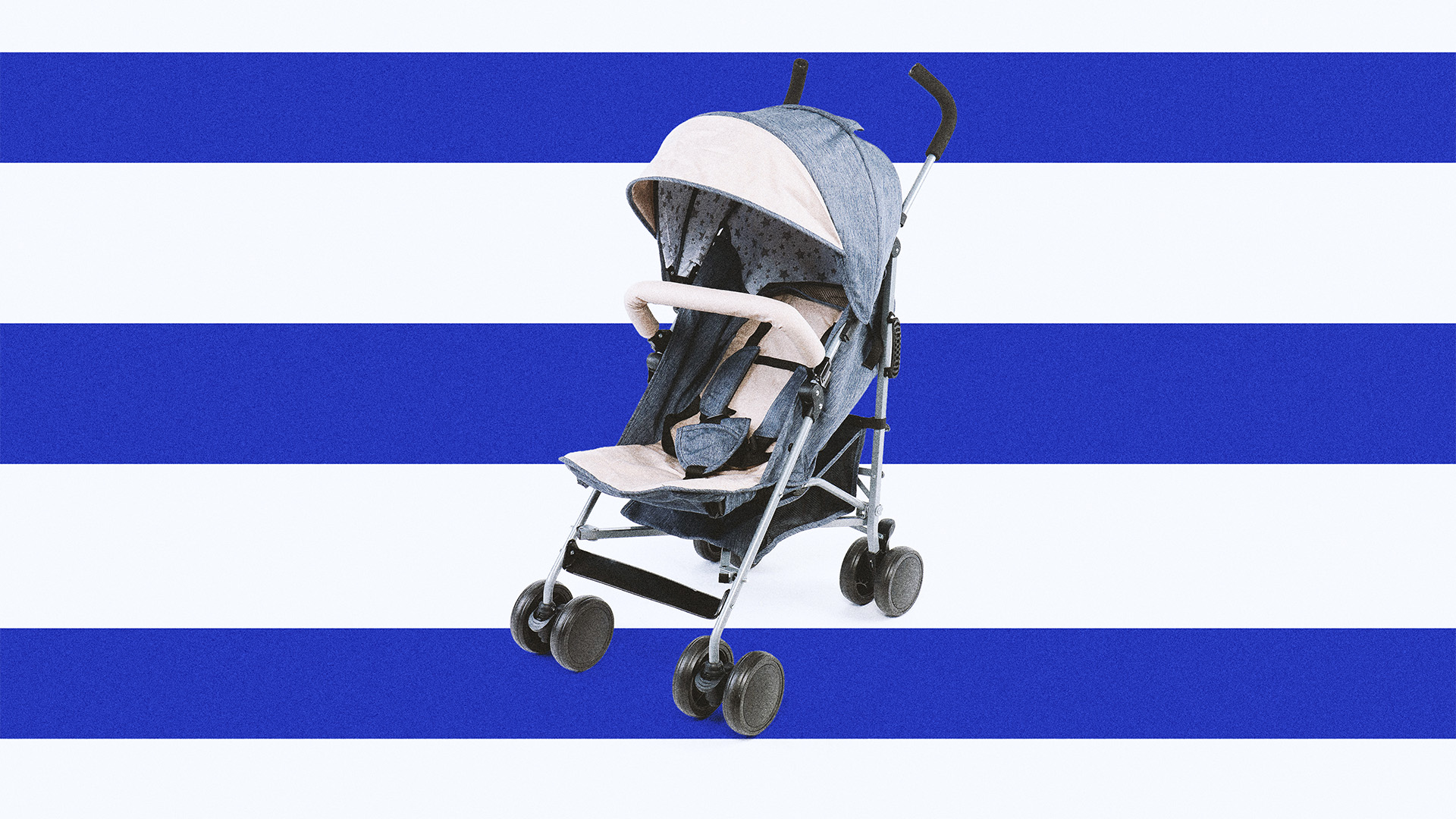
Elon Musk loves telling people to have more children. “The world’s population is accelerating toward collapse and nobody cares,” reads one particularly gloomy tweet from 2017. He’s long been outspoken in his concern over demographic decline and now, it seems, he’s begun using one particular country as a cautionary tale — Greece. The tech billionaire has commented several times on social media about its sinking birthrates and just last month he re-posted an article on X about how a lack of pupils had forced the closure of 700 schools across the country. “The death of Greece,” read his sombre caption.
And Musk isn’t the only one worried about the issue. Greece’s prime minister Kyriakos Mitsotakis has described the country’s shrinking population as an “existential bet for our future.” According to Eurostat, the Greek population is set to drop from the current 10.2 million to well below 8 million by 2050. By that point, more than a third of Greeks will be older than 65.
To help address the problem, Mitsotakis last month unveiled a €1.6bn (£1.4bn) relief package. Describing it as the country’s boldest tax reform in more than 50 years, it included a 2 percentage point reduction for all tax brackets, a zero rate for low-income families with four children and the scrapping of property taxes in rural areas to encourage young people to relocate. He also raised so-called “baby bonuses” to €2,400 for a first child and €3,500 for a fourth, plus monthly allowances up to €140 per child based on income.
“I do want to start a family,” a friend in her mid-thirties told me. “But I have all the same anxieties about sacrificing my freedom as anyone else.” According to her, Mitsotakis’s tax cuts boil down to “pure propaganda” and are a bid to pander to right-wing voters who see family as a “core conservative value.” Like many other young Greeks, she’s wary of the country’s political system, another factor counting against her decision to have children. “It’s always been corrupt. And there’s very little social care. How can you consider bringing new life to this country when there’s so much injustice?”
Fertility rates in Greece are among the lowest in Europe, with each woman having 1.4 children on average (well below the replacement level of 2.1). Hungary and Croatia, which have similarly low birth rates, have introduced similar tax incentives but are yet to see any change. “You can’t convince people to have children by cutting taxes,” Ifigeneia Kokkali, an assistant professor at the University of Thessaly’s department of planning and regional development, tells me. “Sure, you’re given allowances at birth, but what happens afterwards?”
Rather than offering economic incentives to would-be parents, Kokkali believes the only viable way of fixing the issue is by taking a more holistic approach to improving life in Greece. “What’s really going to make a difference is tackling the brain drain. We need more initiatives to encourage young people to come back to Greece and not leave again.”
It’s something my friend also mentioned. “Lots of young people who moved away to find work want to come back to have children, because family is super important to us — we want to be close to our parents,” she told me. “But they now feel trapped. Particularly those who live in countries like Denmark, the Netherlands and Switzerland. They get so many benefits there, they feel like they can’t leave.”
Suggested Reading
Israeli investors get a cold reception in Athens
Between 2010 and 2022, over a million people of working age (more than 10% of the population) left Greece. And for those who stuck around, life hasn’t been easy. A study released earlier this year shows that Greece has the highest housing cost burden in the EU. According to the figures, housing costs (including rent or mortgage payments, utilities and taxes) amount to 35.5% of the average Greek household’s disposable income — far exceeding the EU average of 19.2%.
This financial burden has left many unable to move out of their family home. “More than a third of those aged 18 to 34 are still living with their parents, while also being in full time employment,” says Kokkali. “How do you expect them to start a family?”
And while unemployment levels have been improving (sinking to 8.3% in May, the lowest in 17 years), working conditions have not seen the same improvements. “It’s not just a question of the quantity of jobs available, it’s the quality,” says Kokkali. Not only does Greece have the third lowest wages in the EU, but earlier this autumn parliament approved a labour bill that would allow 13-hour workdays, despite fierce opposition and nationwide strikes.
“It’s a scandal. It’s offensive to common sense. And the labour minister is saying that it’s the workers themselves who asked for this, because they want to make a living. Well, why can’t they just introduce initiatives to improve salaries? It’s really not a surprise that so many young people want to work abroad.” And it’s not just native Greeks who are choosing to build their careers elsewhere in Europe. “In the past, we had higher numbers moving to Greece from Albania and various ex-Soviet nations,” says Kokkali. “But they’re choosing not to come here to find jobs so much anymore, and a big part of that is the working conditions.”
According to Kokkali, migration is a key factor when it comes to mitigating the impacts of population decline. “Many other European countries balance their ageing populations with migration. France, the UK and Sweden, for example. You can’t change fertility and mortality patterns, but you have more control over migration patterns.”
But the appointment of a string of hardline migration ministers, including the incumbent Thanos Plevris, look unlikely to take a progressive approach. At the same event in September where Mitsotakis unveiled his new set of tax cuts, Plevris announced that the government will enforce the strictest immigration policy to date, focusing on returns and stricter penalties for illegal entry.
In the end, Greece’s demographic crisis cannot be solved through tax breaks and baby bonuses alone. While repopulating the countryside and scrapping real estate taxes in remote areas may encourage some movement away from crowded cities, as Kokkali points out, “you need infrastructure, nurseries, schools, shops and good public health” to make those areas truly livable. Closing schools, she argues, only accelerates decline — “you need these schools, even if it’s just two children,” because where there are schools, there is hope for a younger population.
The reality is that life in cities like Athens offers little in terms of quality of life, and the countryside remains too underdeveloped to attract young families. Unless Greece tackles its housing crisis, improves job quality, and invests in sustainable local infrastructure, any attempt to reverse population decline will remain symbolic, a political gesture rather than a lasting solution.
 Most popular

GB News Scandal: How Ofcom let GB News corrupt British media
Matt Goodwin’s new book: The missing chapter


GB News sets its lawyers on to The New World

How I fell in love with K-Pop