When is a Nazi salute not a Nazi salute? It sounds like the opening of the kind of bad joke that my father might have made. But it is in fact a deadly serious question that has been looming over Croatia for some time now.
Debates about Nazism are not a great look for a country that generates more than a fifth of its GDP through tourism. Hooded goons on the prowl in coastal towns and black-shirted hordes throwing Nazi salutes don’t exactly project the sunny Adriatic image.
I find myself wondering what Dad would have made of all this. He served on Royal Navy minesweepers during the war, clearing the path for the D-day landings. Towards the end of the conflict, he de-mined the Adriatic.
I grew up with tales of Dad’s times in Trieste alongside the Yugoslav Partisans. He admired them as the bravest of all fighters, liberating their own country after countless Nazi atrocities. The sight of a prime minister shrugging off the use of a fascist salute would have left him outraged.
The big argument has been stirred by a popular singer called Marko Perković, who peddles grinding, chugging Balkan rock music, heavy on the power chords, light on melody. He would probably have remained obscure, but his first controversial move was his selection of stage name: Thompson. Perkovic claims this is the brand of gun he used as a volunteer fighter during what Croatians call the Homeland War.
Next, he chose to open his signature track – Čavoglave Battalion – with the words “za dom, spremni”. This translates as “for the homeland, ready”. Sounds innocuous enough, until you know it was the salute deployed by the ultranationalist Ustasha movement that ran the Nazi puppet “Independent State of Croatia” during the second world war.
The slogan was revived in the 1990s by the Croatian Defence Forces (HOS), a black-clad, ultranationalist militia who also deployed the straight-armed fascist salute and named their units in honour of Ustasha generals. Croatia’s president, Franjo Tuđman – no shrinking violet as a nationalist – found their views so extreme that he ordered the HOS’s dissolution.
Their veterans group still pops up at events commemorating the Homeland War. They are not hard to spot: their leader sports a Hitler moustache and leads his black-shirted comrades in chants of “za dom, spremni”. The authorities haven’t stopped them.
Suggested Reading
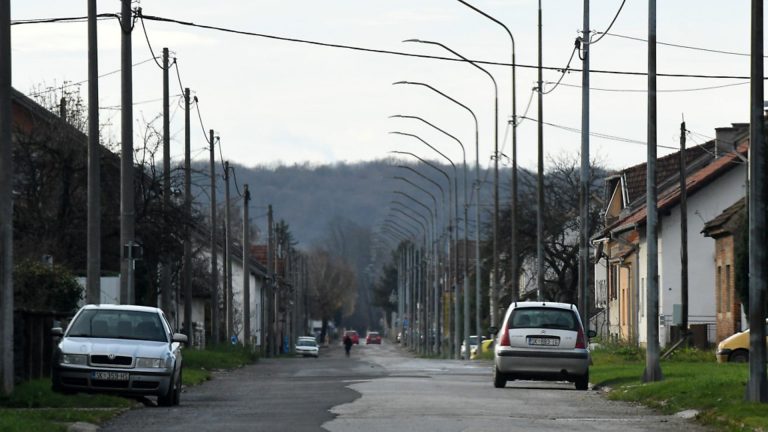
No end in sight for ghost towns haunting Croatia
Thompson likewise continues to play Čavoglave Battalion at his concerts, Nazi salute and all. And it has done no harm to his popularity in Croatia.
His management claims that one of his mega-gigs in Zagreb last year was the biggest ticketed concert ever held, with almost half a million paying punters. That turnout was contested, but there was no doubt many of them wore black T-shirts, some sporting the HOS emblem, and they lustily chanted along. One regional human rights organisation labelled the event “the largest fascist rally held in Europe since World War II”.
Zagreb’s mayor, Tomislav Tomašević, allowed the event to go ahead, wary of dragging his green-left Možemo! (“We Can!”) party into an ideological battle in the run-up to local elections. But he eventually pushed through a regulation blocking the use of municipal facilities for events that might include Nazi salutes.
It seems incredible that such a measure should be necessary. But it scuppered Thompson’s plans for a second seasonal gig at the Zagreb Arena, much to his – and his supporters’ – outrage.
Perhaps the most depressing moment was when prime minister Andrej Plenković posed for photos with Perković and brushed off his use of “za dom, spremni” as “part of Thompson’s repertoire”. Other members of his party have even attempted to portray the slogan as patriotic.
Dad would have felt similar disgust for what is happening now. He celebrated his 90th birthday in Croatia, before we drove up the Adriatic coast towards Italy. I had not told him we were heading to Trieste – and as we approached the city, I could feel him vibrating with excitement. Dad believed the partisans’ bigger victory over Nazism would always be secure. I hope he was right.
Guy De Launey is an award-winning Balkans correspondent