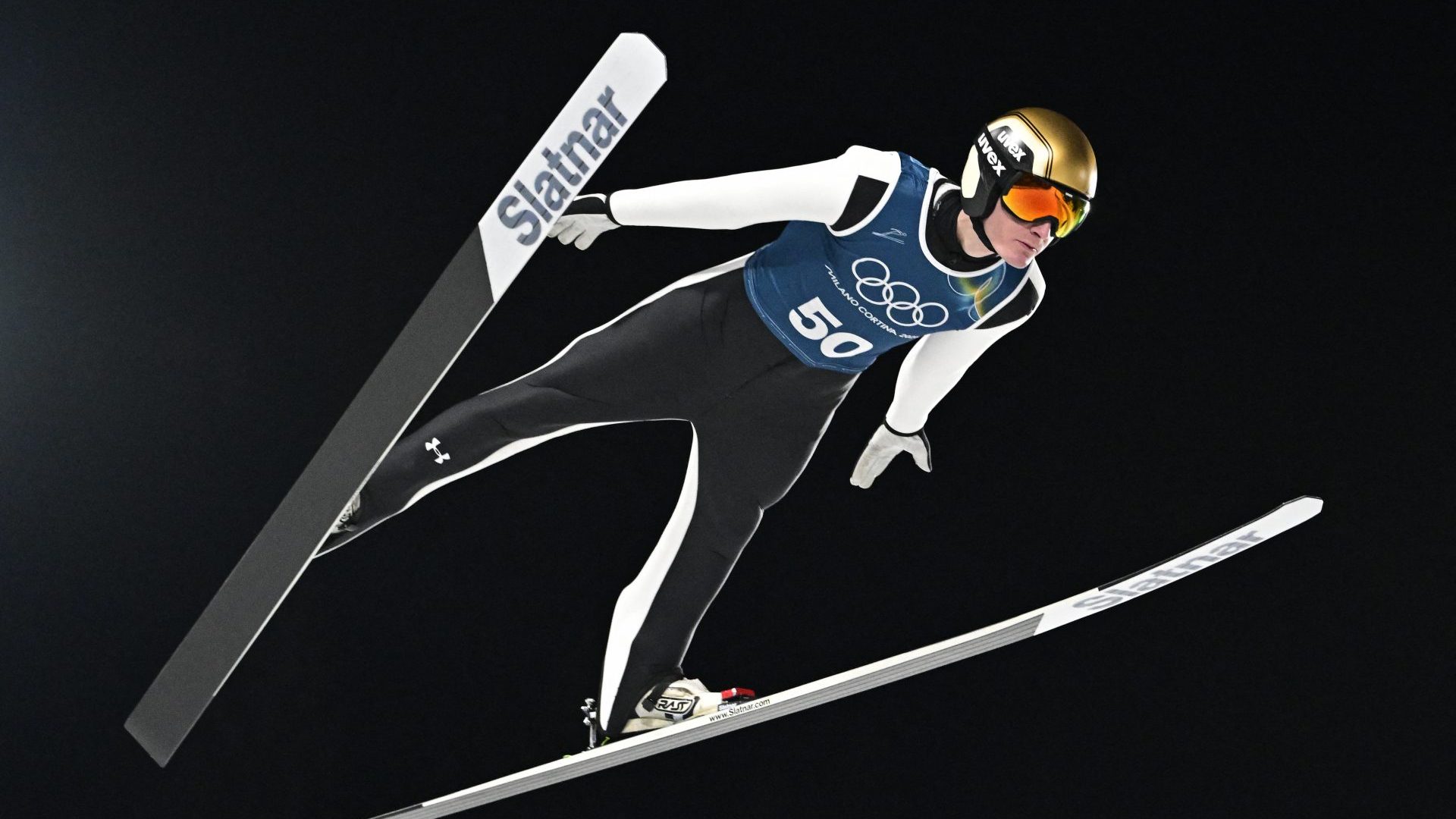
Slovenia’s elite ski-jumpers tell me that for their sport, “70% is the head”. That’s what Robert Hrgota told me. He’s a former junior world champion who called it quits at the age of 25, after one crash too many. He now coaches some of his country’s best Olympic prospects. And given that Slovenia is completely potty about ski-jumping – to the extent that it invented an even more extreme version of the sport, known as ski-flying – that means considerable pressure for all concerned.
In fact, the more I talk to the top ski-jumpers – and the staff supporting them – the more the psychological side comes to the fore. On the face of it, the sport seems brutally simple: just clip on a beefy pair of skis, then hurtle down a vertiginous ramp and launch into the void at speeds of more than 100km/h. The trick is to stay airborne as long as possible, then nail the landing, preferably in the Telemark style – one foot in front of the other, arms spread wide, “ta-dah!” optional.
But in those apparently serene moments when the jumper is defying gravity, everything depends on their state of mind. “It’s just what you feel in the air, how you can process all those feelings,” Anže Lanišek tells me at the start of the season. He is literally the poster boy for Slovenia’s Winter Olympics team, as his image is plastered on billboards across the country, sporting a golden helmet to represent his multiple medals at world championships.
“You just sort all of those feelings out and try to figure out which are great and which are not so great,” he continues. “Then let the outcome be as it should be, as it happens. So, if it’s really good, then just go with the flow, try to be really happy.”
Lanišek was clearly feeling very good indeed in the early events of the World Cup season. He won two competitions and held the lead in the overall standings after six rounds. But after that came a dismal run of results, as he missed out on the podium for 10 competitions in a row.
When I met him again last month, he seemed like a different man – and not just because of the new moustache. The quiet confidence of our first meeting was replaced by a sense of bafflement.
“I was really struggling,” he tells me. “I had a lot of tension in my body, in my movement. When that happens, it’s like a rock, dropping off a bridge – but when you’re relaxed, it’s like a paper plane. That’s the feeling I’m aiming for, to be like a paper plane.”
Suggested Reading
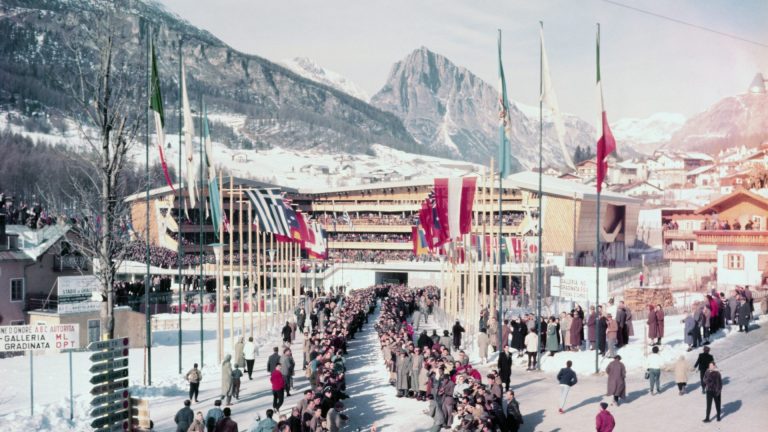
1956: The last innocent Winter Olympics
Luckily for Slovenia, they have not one but two paper planes – the remarkable Domen Prevc and his equally extraordinary younger sister, Nika. They are the reigning world record holders, runaway World Cup leaders and hot favourites to claim at least one Olympic gold each at the Milan-Cortina Winter Olympic Games. After winning 11 of the last 15 World Cup events, Domen has taken up residence in that rarefied zone in which victory seems assured even before a competition starts.
“It’s just that amazing, fuzzy feeling that you want to keep going,” he tells me, with a blissful expression. “Winning a gold medal at the Olympics – maybe before, that wasn’t such a big goal in my head. But now, I’m really looking forward to it. And as the Olympics comes closer each day, I feel more like, ‘yeah, let’s do this’.”
Even a bizarre incident at last month’s Ski-Flying World Championships – when his skis fell down the ramp without him – has not disturbed his mojo. He brushed aside the resulting disqualification from the team competition by winning the next two World Cup events.
Nika Prevc is just as relentless, though far less loquacious, though quickly correcting me when I was two metres short on her world record distance.
Many Slovenians consider ski-jumping to be the national sport, which is quite something for a very small country boasting the world’s greatest cyclist, top female rock climber and one of the world’s leading basketball players. But the triple peak of Mount Triglav on the national flag indicates where its strongest passions lie.
So when the Prevc siblings take flight at Milan-Cortina, the cheers of two million Slovenians will follow them into the sky.
Guy De Launey is an award-winning broadcaster and Balkans correspondent