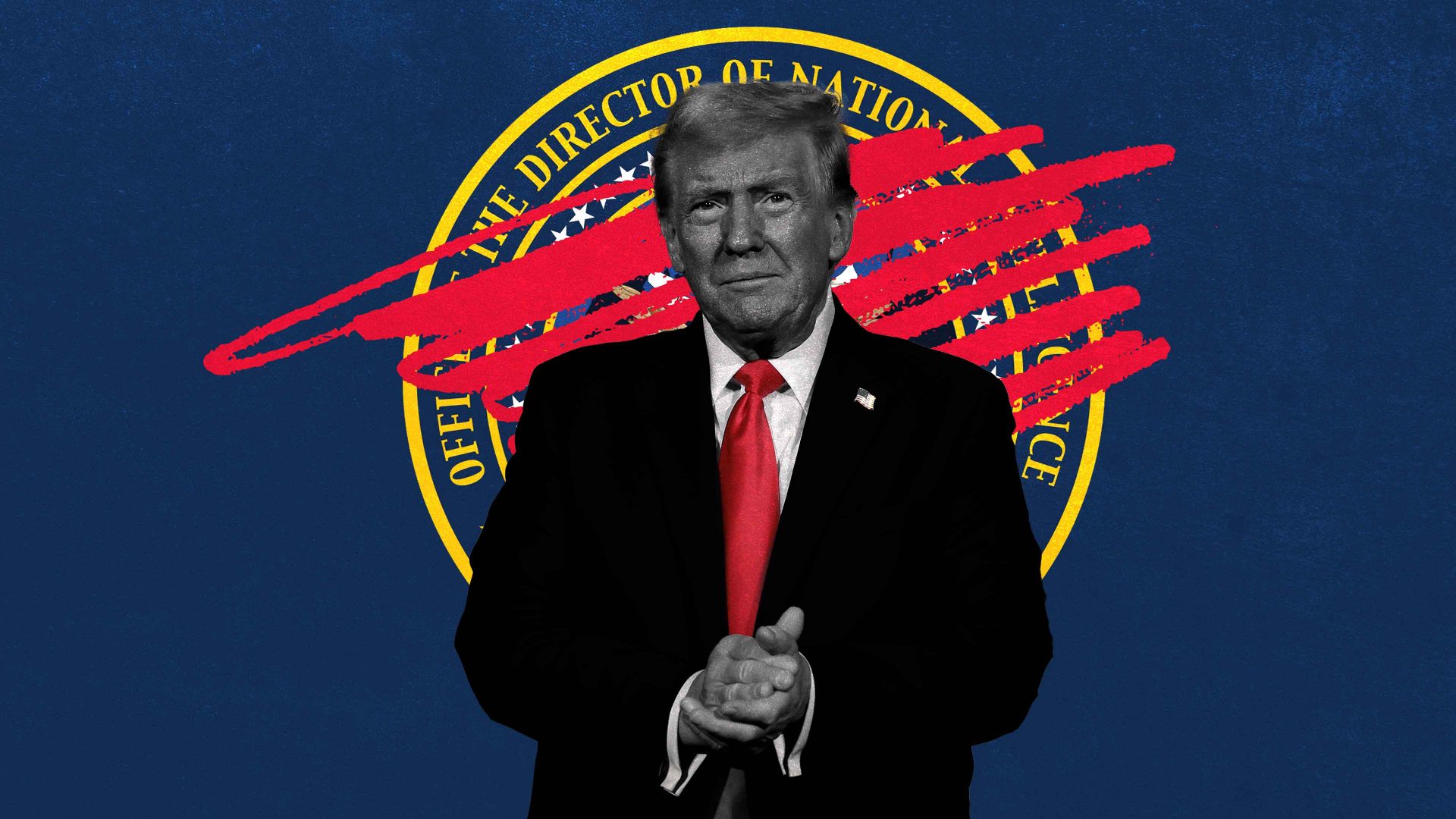
I worked in US intelligence agencies for half a century, starting as a member of the Senate investigation into intelligence practices in the 1970s. Then I became a consumer of intelligence on the National Security Council staff, eventually becoming chair of the National Intelligence Council (NIC), America’s top intelligence analysis agency.
If presidents wanted to know the CIA view on a particular issue, they could simply ask it. But there are seventeen intelligence agencies in the US, and if you wanted to know what they all think, then the question then went to the NIC.
Watching the Trump administration destroy the US intelligence system is a personal sadness as well as a national disaster. Under the banner of “depoliticising” intelligence, the administration has not just politicised intelligence but weaponized it.
I knew this was coming. I received my first security clearance, Top Secret plus access to Sensitive Compartmented Intelligence (TS-SCI) more than fifty years ago. On Inauguration Day, Donald Trump’s executive order revoked those clearances, accusing me and fifty other intelligence veterans of having “willfully weaponized the gravitas of the Intelligence Community to manipulate the political process and undermine our democratic institutions.”
What was my alleged offense? In October 2020 I had signed a letter with those fifty colleagues in which we expressed the opinion that the laptop purporting to belong to Hunter Biden, and which press reporting suggested contained emails showing that the son had used his father’s presidency for personal gain, and that his father was aware of it, “had all the hallmarks of a Russian influence operation”.
What we expressed on the Hunter Biden issue was an opinion, our assessment as experienced intelligence professionals. In the years since the letter I have been occasionally harassed by Fox or New York Post reporters asking whether I regretted signing. I always gave the same answer: what we said in 2020 was true and still is.
In fact, it did have the hallmarks of a Russian influence operation, and our assessment was reinforced by the fact that my last service in government was supervising the report on the three-pronged Russian attack designed to influence our 2016 elections. Trump still lies about that attack, calling it a hoax.
For me, losing the clearance was no big deal. Sure, I lost some mentoring work I was doing, but I’ve been inclined to keep my head down, all the more so because for the first time I felt physical danger.
Suggested Reading
Trump’s lies are trashing the dollar
The Trump administration didn’t stop with us 51 letter-signers. Later it removed clearances from my vice chair at the NIC, a distinguished CIA officer who was Trump’s briefer in his first term. My NIC colleague in charge of cyber also had his clearance nullified. He was an NSA analyst who had been recruited at 17.
Meanwhile Tulsi Gabbard is the current director of national intelligence. She has no qualifications for that job.
The dismantling of US intelligence is most visible at the FBI, where the fifty-year effort to remove the Bureau from partisan politics has been reversed. As officers have been reassigned to border or immigration missions, not only has intelligence suffered but so has law enforcement: there is no better time to be a white-collar criminal.
The acting chair and vice chair of the NIC, both distinguished CIA analysts, were fired, and so far as I can tell the NIC has all but disappeared. The president does not read, and so whether he receives his president’s daily brief is also unclear.
Former allies, like Britain, have stopped sharing intelligence on, for example, Caribbean issues, and Senator Ron Wyden has raised critical questions about whether the CIA overstepped its bounds in the seizure of Venezuelan president Nicolás Maduro.
What we know is that intelligence is ignored or dismissed if it questions the president’s whims. The damage to institutions that the nation needs, and about which I care, is enormous. This will take a generation to repair.
Gregory F. Treverton was chair of the US National Intelligence Council. He is now professor emeritus at Dornsife College, University of Southern California, and chair, Global TechnoPolitics Forum
 Most popular
Tony Blair’s never-ending legacy tour
Face it: Trump’s going mad
Is university worth it?
The coercive control of Marco Rubio’s Munich doctrine