Doubt and morality are words not readily associated with the Condor Legion, the Wehrmacht unit responsible for the bombing of Guernica and the birth of the concept of ‘total war’. Yet the family of one of its members believe that he expressed both – and that it may have cost him his life.
The destruction of the Basque town on April 26, 1937 – a market day, when thousands of visitors had flocked in, and up to 300 were killed – outraged the world and inspired Picasso’s masterpiece, an enduring and still shocking symbol of the horrors of war. Two hours of bombing by German planes, supported by aircraft from fascist Italy, showed that Adolf Hitler had betrayed his promise not to intervene in the Spanish civil war on behalf of General Francisco Franco, a fact confirmed when British journalist George Steer found bomb casings inscribed with the German eagle insignia amid the rubble.
This early example of ‘strategic bombing’, in which wave upon wave of attacks devastated military targets but also brought terror to civilians by destroying landmarks and homes, helped to set a pattern for the war years to follow. But nearly 90 years after the 1937 attack, it has emerged that not all the members of the German unit were die-hard Nazis.
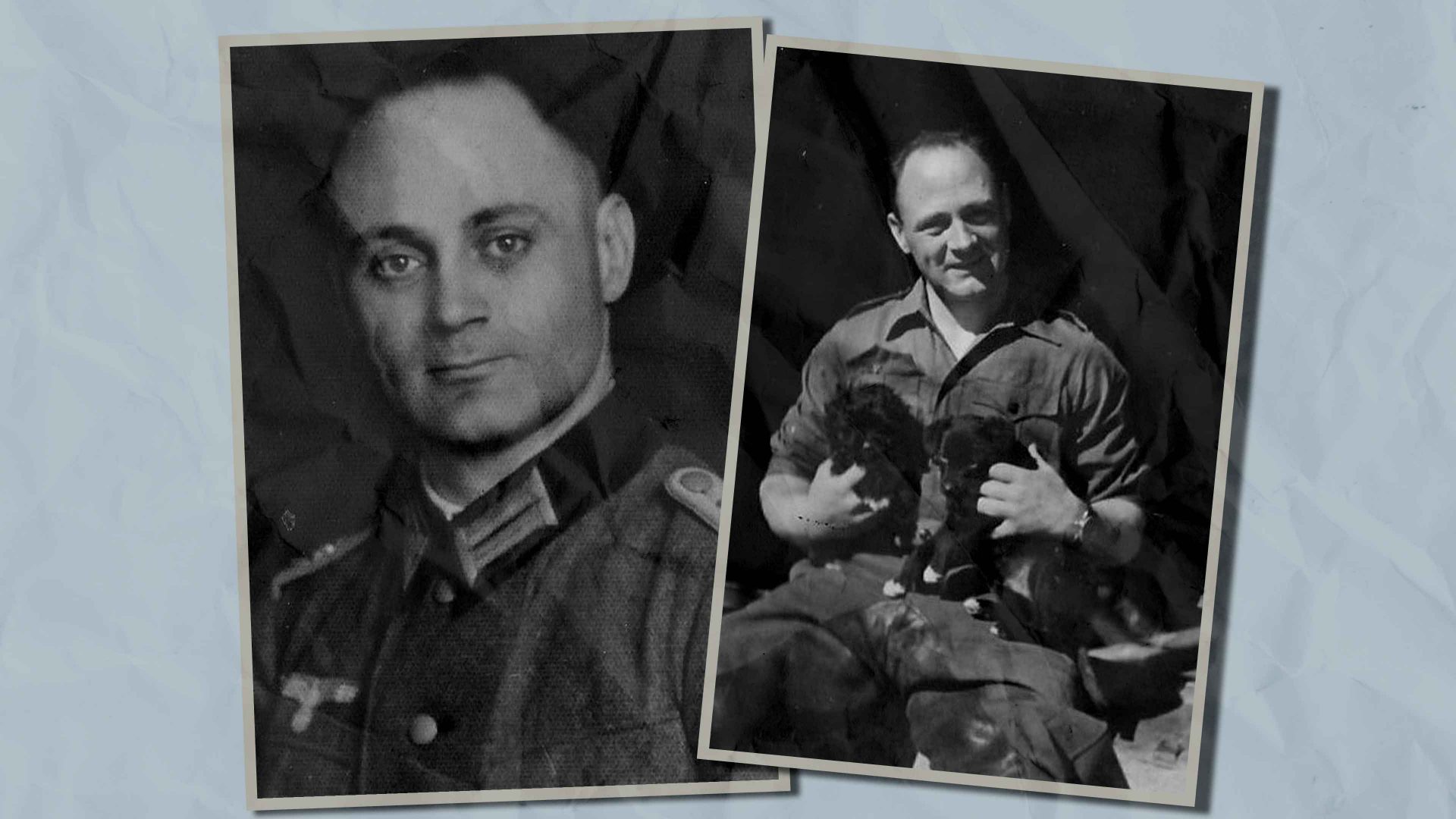
Tender letters from a Condor Legion lieutenant to his girlfriend reveal a man who – perhaps like many others – bitterly opposed Hitler, even turning down an opportunity to become the Führer’s chauffeur.
Gustav Trippe, however, had the courage to speak out, even in the knowledge that his letters home were being censored. Today, his family believe that Trippe’s honesty – and bravery – might have cost him his life.
They were informed by the Wehrmacht that Trippe had died in the line of duty in 1938. He was 29. However, shortly after his death, they say a man who had fought alongside Trippe in the Spanish civil war visited the family in Germany to make a shocking confession.
He told Trippe’s family that he had been ordered to kill the lieutenant and asked for their forgiveness. The man, who did not give his name, did not explain why he had murdered another German.
Markus Stange, Trippe’s nephew, said the story had been a closely guarded family secret but his mother, who is now 100 years old, had told him it was time to speak out.
Suggested Reading
The Nazis who went from Nuremberg back into power
Stange, 70, a piano teacher who works at a university in Karlsruhe, Germany, said his uncle had joined the army before the Nazis came to power in 1933. A keen motorcyclist, he then became a tank instructor in the Condor Legion, which was composed of bombers and army units.
From Spain, he wrote to his girlfriend Trude Hühn in Berlin, correspondence she shared with the family after his death. “In these letters he wrote under another name, Peter. Maybe it was a nickname or a codename,” Stange said.
The pair had intended to marry on his return from the front, so the letters were filled with domestic matters. But Trippe also told her about the situation in Spain.
“Of course, he knew (the letters) were all read by the censors. He said (the situation) was ‘other’, in other words ‘other than you think’. He starts describing how there was no water, there was extreme heat, they only had sardines to eat and it was 400km to the nearest cigarette.”
Stange says his uncle then wrote what appears to be a comment, condemning the Francoist forces. “On October 15, 1938, in his last letter, he wrote that he didn’t understand. ‘Spain is such a big country, they have everything on the earth, fruit, meat and they are strong people, but slaves in their thinking’. This was his description of the Francoists around him.”
Stange says he believes his uncle opposed Franco’s conservative Catholicism. A proud military man, he did not support the Nazis either, passing up a chance to drive for Hitler.
He had to train SS soldiers at one point, but in one diary, Stange says he wrote the SS were “insensitive and arrogant” and that he took delight in training these men “as hard as possible”.
In 1937, Trippe announced he had ‘volunteered’ to fight in Spain, though his family had doubts that he had asked to serve abroad, rather than being told to go. At that point, Hitler was keen not to provoke a wider European war – he wanted to build up the Nazi war machine first – so the Condor Legion was secretly sent to Spain to support Franco’s coup.
The mission became known as Operation Magic Fire, with a dummy company created to hide the purpose of the transfer of Junker Ju-52s bombers.
Stange believes that all this set in motion the murder of his uncle. “He disliked the personality of Adolf Hitler. We still don’t know the real reason he was killed. It could be that he was killed because he refused the order to become a chauffeur of Hitler. Maybe these letters could be the reason,” Stange said.
“I think he must have seen what the Francoists did in Spain. There were mass killings in villages. He disagreed with such a thing.”
Stange said he did not know if his uncle was aware of the bomb attack on Guernica, but one entry from his diary, long before he was sent to Spain, points to a soldier for whom morality was his guiding light.
“Conscience is my everything,” Trippe wrote in his diary in 1931. Stange says: “He was a passionate soldier, but he could not act against his conscience even if it meant dying.”
 Most popular
Stephen Miller, American psycho

The Farage-Trump friendship has gone cold

Trump’s Iran war could not be going more wrong

Isabel Oakeshott and some familiar words