At his stand-up shows, up-and-coming comedian Björn von Morgenstern has a routine about the unsolicited scolding German Gen Zers get from their (great-)grandparents’ generation. You know the type: elderly citizens who corner you and declare: “With your generation, we would have no chance to win a war.”
His response: which generation, exactly, has won one? “We’re 2-0 down. Last time we played, the club was dissolved. We were barred from competition for years. And I don’t even want to get started about what happened to the coach. As for the players, they transferred to South America.”
His audience loves it.
Suggested Reading


This EU act of self-sabotage makes no sense
Looking at the current state of affairs, however, the joke may be on us. Not just because a recent bestseller bears the title Why I Would Never Fight For My Country. Nor because of the far left party Die Linke campaigning loudly against militarism (German militarism, that is, not the Russian sort).
Last week, I attended a Linkspartei event in Munich. Military spending and defence contractors were heavily criticised. Ukraine wasn’t mentioned once, in 90 minutes.
Instead, a 17-year-old city council candidate, still at school, told the audience: “The only option this state offers us is a call to arms. You can’t be serious!” Apparently, no one had suggested that she might want to chat with her peers in Yemen or Russia and then talk about choices.
The outrage is linked to renewed efforts to boost Bundeswehr numbers. Germany suspended conscription in 2011 because policymakers judged the post–cold war situation to be relatively stable, and wanted to cut costs. So Wehrpflicht – compulsory military service – was put “on hold”.
The Christian Democrats favour a return to national service, arguing that it is the fastest, perhaps only, way to meet Nato requirements: increasing troops from 184,000 to around 260,000 and building a large reserve force.
The Social Democrats prefer a voluntary model: sending questionnaires to all 18-year-old men, requiring them to respond and undergo a physical examination.
More than 40,000 have been sent out since January. Young women got them, too, but may simply ignore them.
That’s what the Frauenunion (CDU and CSU women) wants to change.
The group has submitted a motion to the party conference on February 20-21 calling for women to have to fill out the questionnaire as well. Radical stuff.
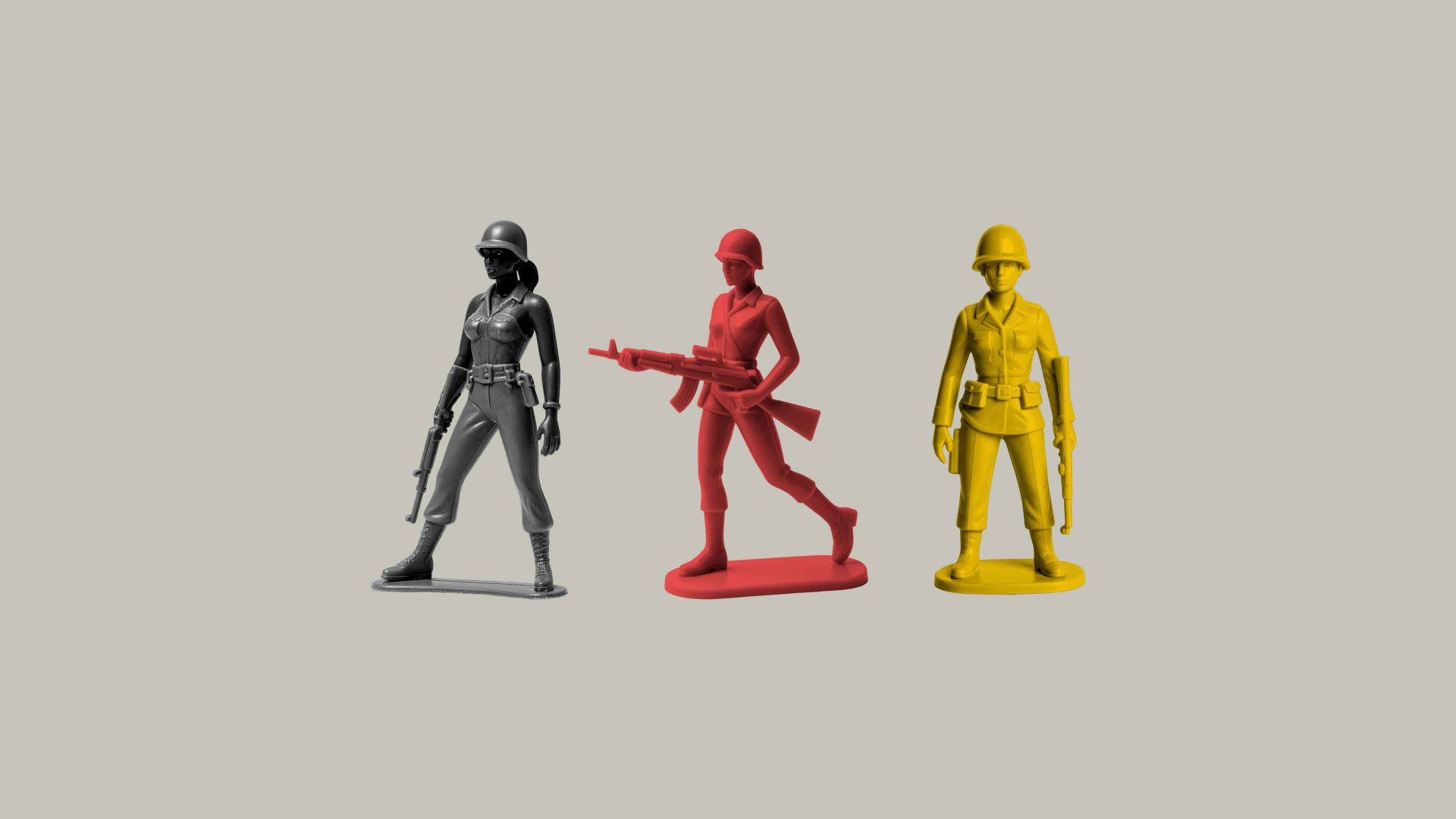
But the long-term idea is clear: women, too, should be required to perform military or social service, beyond the roughly 25,000 female Bundeswehr volunteers. What is striking is that those who otherwise insist on gender neutrality either fall silent or are openly hostile.
Carmen Wegge, chair of the SPD Women, said in a radio interview that she rejects anything that has “to do with coercion and obligation”. Women, she said, should be able to join the armed forces “on an equal, voluntary basis”.
Equally voluntary. Spot the mistake. Then again, Article 3 of Germany’s Basic Law states that “men and women are equal before the law” – not, notably, that they are equally obliged.
Wegge went on to argue: “We as SPD Women say that we only see a duty once the other inequalities affecting women no longer exist.” Such as unequal pay, lack of childcare and care for the elderly – burdens that still disproportionately affect women.
Valid points. But not every woman becomes pregnant; men are increasingly caring for elderly parents; and in any case, none of this can be known when someone is 18.
Linking the gender pay gap to national defence is hardly convincing either. Equal pay for equal military service could, moreover, be guaranteed without difficulty.
For the moment, the German constitution poses a barrier, as Article 12a stipulates that women may “under no circumstances be compelled to perform service involving the use of weapons”. And although society is no longer the one of 1956, when this article was adopted, the two-thirds majority necessary to amend the constitution is beyond reach. Even if all moderate parties combined were in favour (which isn’t the case), they’d need the far left (“No cent for the Bundeswehr”) or the far right (“no foreign wars”). And as the CDU won’t cooperate with either, we’ll have to wait for new majorities.
All the more reason to have this debate now, not only when an acute threat forces our hand.