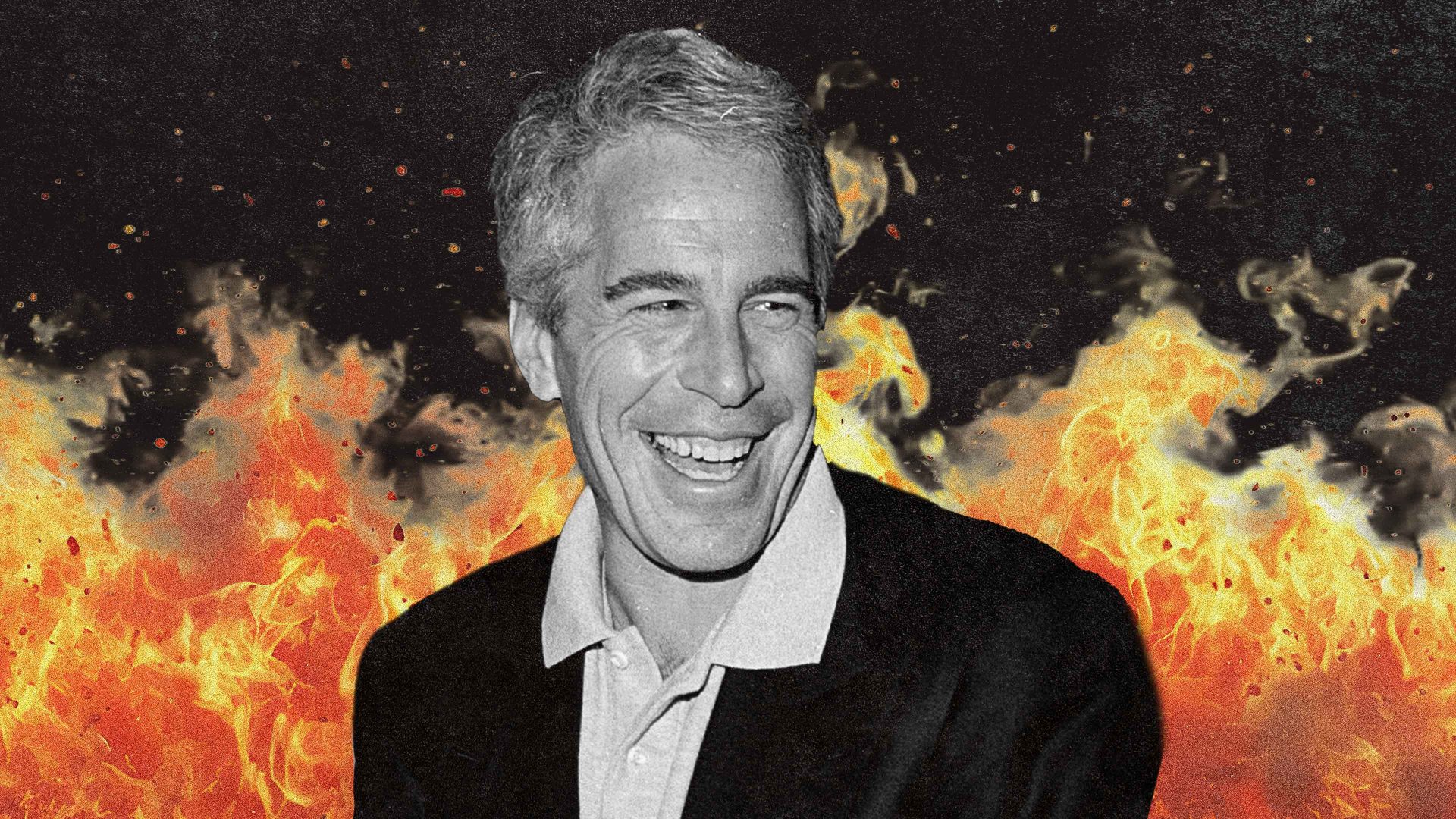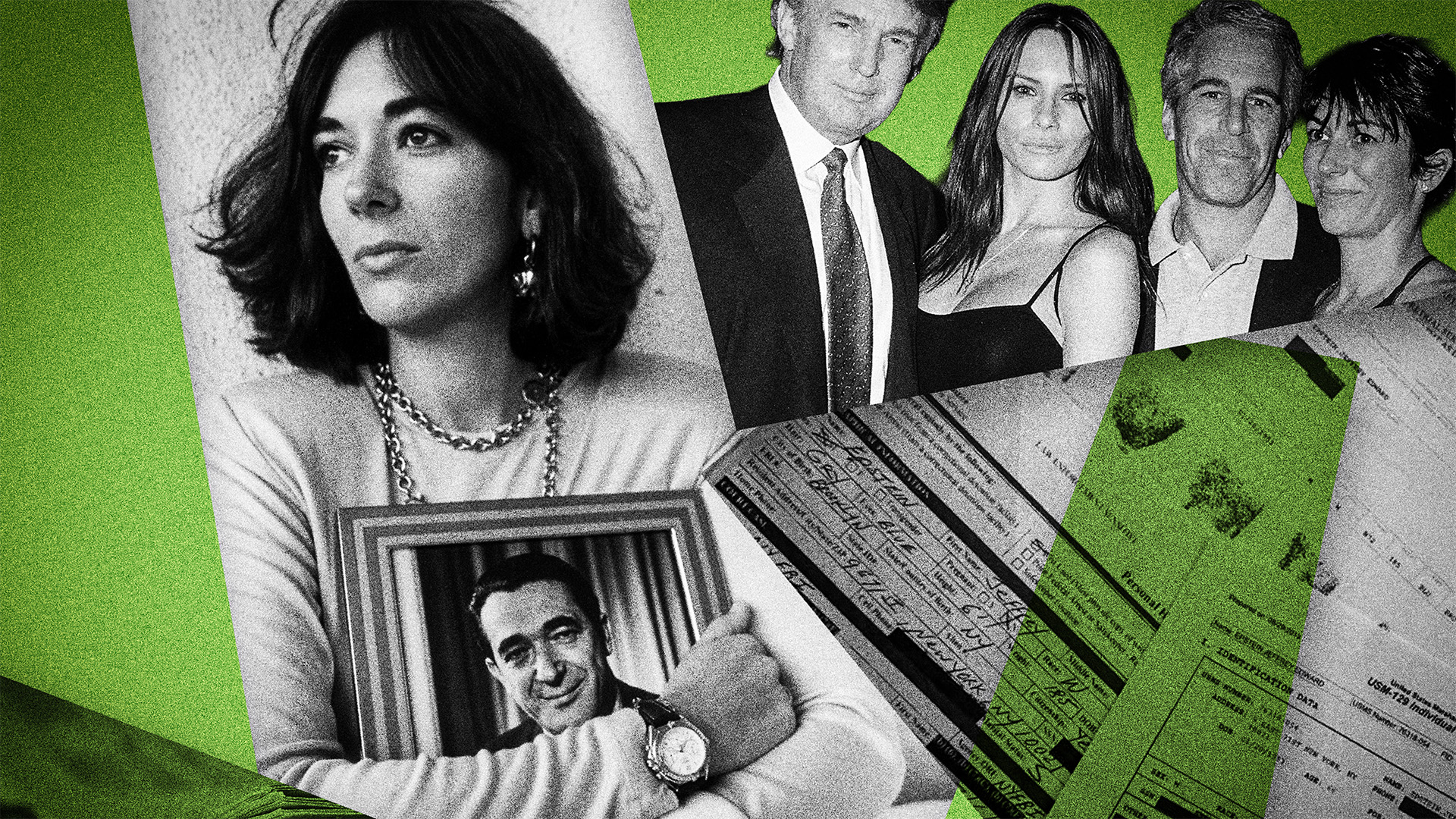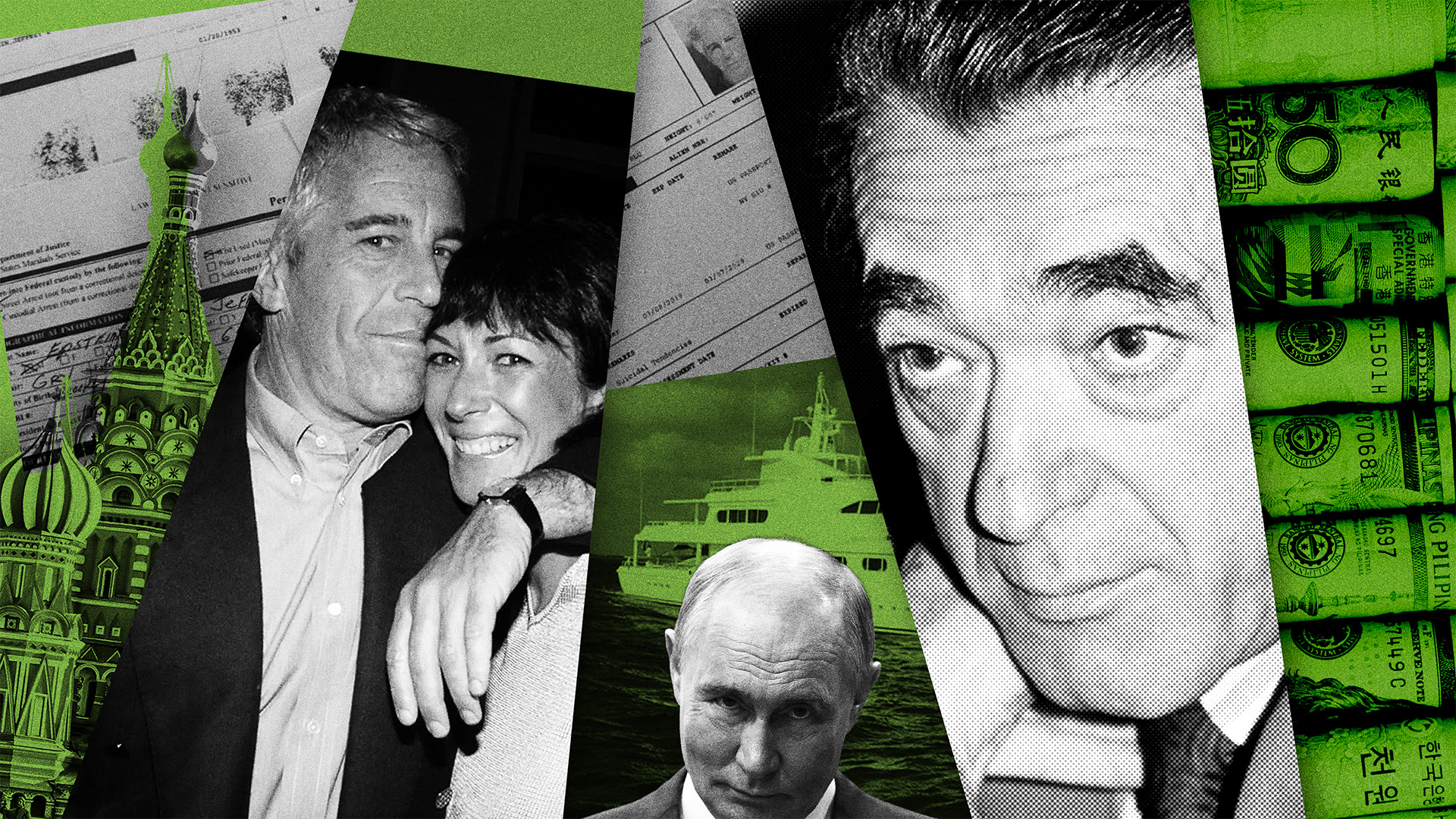
The Epstein case is associated in the public mind with the scandal of the gigantic pedophile ring that Epstein and his accomplice Ghislaine Maxwell organised and exploited with impunity for years. The question of the hidden protections enjoyed by the two accomplices gave rise to a string of hypotheses encouraged by Epstein himself, who claimed to “belong to intelligence”.
The MAGA movement insists on the role of Mossad in the meteoric career of the pedophile con artist. Tucker Carlson claims that Epstein was an Israeli agent and that Trump is covering up the case for this reason. The left accuses the CIA of playing a part in Epstein’s quick release after his first arrest in 2008. In 2019, Russian state media had a field day with the Epstein affair, a golden opportunity to denounce “degenerate global elites.”
In the US, the political debate revolves obsessively around the “client list,” the tree that hides the forest, namely the construction of a blackmail empire whose products are accessible to hostile powers.
As for President Trump, many observers have been surprised that he equates the Epstein affair with what he calls the “Russia Hoax,” the investigation into Russian interference in his favor during the 2016 election: “Why is he linking Epstein to Russia?” asks Christopher Steele, a former agent of the British Secret Intelligence Service and a Russia specialist. “It’s clear that in his mind, Epstein is associated with Russia.”
Jeffrey Epstein’s Russian connection first came to light in an investigation by the Dossier Center, an organisation funded by Mikhail Khodorkovsky that tracks the criminal activity of Russian government officials. It revealed a very close partnership between Epstein and the Kremlin.
Epstein had contacts at the highest level in Moscow. He was interested in exploiting the financial opportunities offered by Russia, and the Kremlin was eager to seek advice from an expert in tax havens and money laundering. Russia also accepted Epstein’s offer of help to provide cover for the agents it was sending into the US. It also used Epstein to gain access to American individuals of interest to the FSB.
Epstein’s contact was Sergei Belyakov, then deputy minister of economic development and, later, director of the St. Petersburg International Economic Forum, a favourite hunting ground for attractive escorts tasked with harpooning businessmen on behalf of Russia’s secret services. Unsurprisingly, Belyakov is also a graduate of the FSB Academy. He was also an advisor to Oleg Deripaska, the Russian oligarch, and assistant to the minister of economic development, Elvira Nabiullina, who is now head of the Russian central bank. Documents obtained by the Dossier Center team reveal that in the spring of 2014, Belyakov sought Epstein’s advice on how to circumvent western sanctions.
In addition, Epstein shared his views on the Russian economy with Belyakov. For example, when in December 2014 the Russian Central Bank raised its benchmark rate to 17 per cent, Epstein wrote: “Bad advice to raise rates. it sends the wrong sign.” Epstein was thus feeding the Kremlin strategies to counter the economic war that was being waged on Russia by the West.
In addition, he used his network to send leading western business executives to the St. Petersburg Economic Forum for possible recruitment. These included Reid Hoffman, co-founder of LinkedIn and Nathan Myhrvold, former chief technology officer at Microsoft. This assistance was crucial for Moscow at a time when many westerners were boycotting Russia.
In July 2014, Belyakov, then deputy minister of economic development, personally intervened to help Epstein obtain a Russian visa and to set up a series of high-level meetings for him in Moscow. Arrangements were made for Epstein to meet Sergei Storchak, the deputy finance minister, Alexei Simanovsky, central bank deputy chairman, and even the minister of economic development himself, Alexei Ulyukayev. But here, there is some doubt: it is not known whether this particular visit actually took place.
Suggested Reading
Techno-financial fascism is at the depraved heart of the Epstein files
What is known is that, in July 2015, Epstein contacted Belyakov with an urgent problem: a “Russian girl from Moscow, Guzel Ganieva,” was in New York and “trying to blackmail a group of powerful businessmen.” Ganieva had ensnared a close friend and associate of Epstein, the billionaire Leon Black. No problem: Belyakov provided Epstein with a detailed intelligence file on Ganieva, who he claimed was working alone and would be highly sensitive to the threat of deportation from the United States. Leon Black paid huge sums to Epstein.
But this time, Epstein was also engaged in large scale sexual abuse, and a confidential treasury department file on Epstein showed that Epstein used several Russian banks, now under sanctions, to process payments related to his sex trafficking network. A significant number of his victims came from Russia, Belarus, and other East European countries, establishing a direct financial link between his criminal enterprise and financial institutions in the region. The scale of the transactions is staggering: one of his bank accounts alone recorded 4,725 transfers totaling nearly $1.1billion, representing thousands of potential leads for investigation.
The sex trafficking was a cover for something else. It turns out that Epstein had a predilection for Russian female employees. His assistant, Svetlana Pozhidaeva, known as “Lana”, obtained an O-1 talent visa for the United States thanks to a letter of recommendation from Belyakov.
Pozhidaeva’s background is highly revealing. She graduated from the prestigious Moscow State Institute of International Relations, the foreign ministry’s academy that trains Russian diplomats and intelligence agents. But despite her brilliant academic record she ended up becoming a model, represented by MC2, a modeling agency owned by a Frenchman named Jean-Luc Brunel, a sexual predator and Epstein’s pimp. Arrested in 2020, he was found hanged in his cell, like Epstein.
Pozhidaeva moved to the United States and became an associate of Jeffrey Epstein, involving herself in charity work, and a group known as Education Advance, a New York association whose aim is to support science and technology in education. Most of its $56,000 in funding was provided by Epstein, in 2017. Epstein also donated $50,000 to Pozhidaeva for the Open Cog Foundation, a project to develop an open-source artificial intelligence framework. Epstein also offered her the opportunity to study and attend conferences with scientists.
Yuri Shvetz, a KGB defector, was one of the first to show how Epstein’s network had converged with the FSB. When it came to Pozhidaeva, Shvetz asked: “How could someone as smart and educated as Pozhidaeva become a women’s rights activist while seeking the support of Jean-Luc Brunel and Jeffrey Epstein, who led and participated in human trafficking and the rape of underage girls for more than two decades?”
There is only one explanation. She was an agent infiltrated with the help of Jeffrey Epstein to penetrate “the American network linked to supercomputers and artificial intelligence.”
“Seventeen thousand Russian computer scientists work in the United States, and many of them are linked to Russian intelligence services – brilliant people who have been employed by Apple, Microsoft, and other companies for years.”
Shvetz recalls that Putin considers artificial intelligence, supercomputers, and control of advanced information technology to be the most crucial national security issue for Russia, “as essential to the survival of his regime as the atomic bomb was to Stalin.”
Epstein’s sex trafficking thus served to conceal another essential mission he carried out on behalf of Russian intelligence: providing cover for Russian women tasked with infiltrating Silicon Valley. It is instructive to set this in the context of the pro-Russian orientation of many of the Big Tech giants. The Wall Street Journal reports that Epstein arranged meetings in 2006 between Peter Thiel and the Russian ambassador to the United Nations, Vitaly Churkin. Three days after Churkin’s death, Epstein sent this email to Peter Thiel: “My friend the Russian Ambassador is dead. Life is short, let’s start with dessert.”
But where did the money come from? Epstein left Bear Stearns in April 1981, when the company was under investigation for insider trading. In 1982, he founded his own financial management company J Epstein & Co, and boasted that he would only accept clients with assets worth over $1billion. “This is where the mystery thickens,” writes Landon Thomas, Epstein’s first biographer. “According to legend, Epstein immediately began collecting clients in 1982”. But he kept all his contracts and clients secret, with one exception: the billionaire US retailer Leslie Wexner.
Wexner’s associates never understood the hold Epstein had over their boss. Shortly after they began working together, Epstein moved into Wexner’s Upper East Side home. “It’s a strange relationship,” commented a Wall Street trader who knows Epstein. “It’s just unusual for someone that rich to suddenly give his money to a stranger.”
Suggested Reading
The Epstein scandal shakes Slovakia
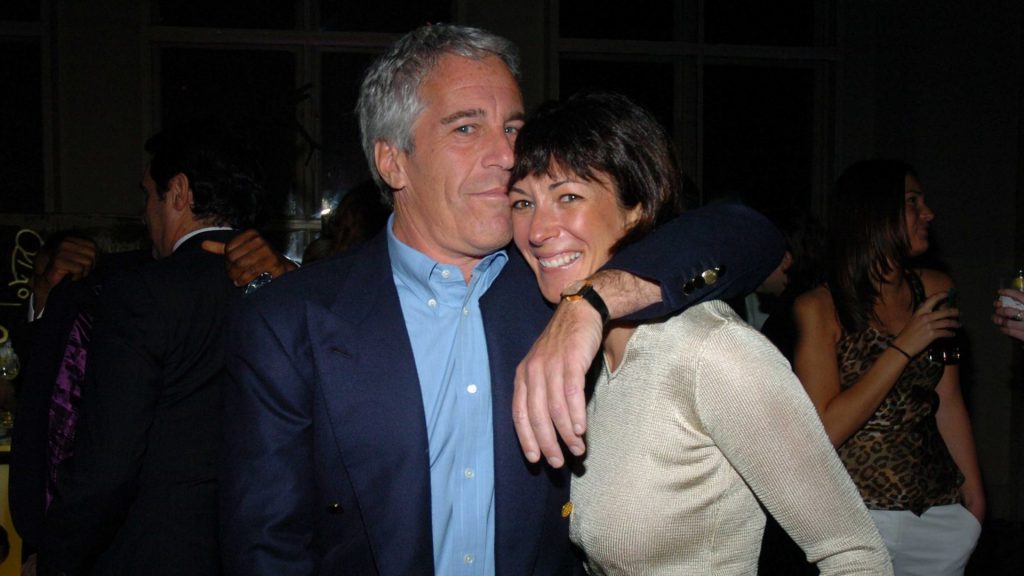
The exact date when Ghislaine Maxwell and Jeffrey Epstein met for the first time is shrouded in mystery. Ghislaine was Robert Maxwell’s favorite daughter, his emissary and confidante and was deeply involved in his business affairs. Shortly after her father’s death, fleeing scandal in the UK, Ghislaine Maxwell moved to New York and it is believed that this is where she first met Epstein, at a party some time in the early 1990s.
Her father, Robert Maxwell, had a career that involved the fusion of media power, sophisticated financial fraud, and the exploitation of links with state intelligence services for personal gain and protection. Maxwell was a master at manipulating the institutions of capitalism and intelligence and turning them against themselves.
Epstein met Robert Maxwell and it seems the two had dealings together. These financial links were mentioned by Jean-Luc Brunel. “Jean-Luc told [his acquaintances] that Ghislaine’s father, Robert Maxwell, was one of the reasons why Jeffrey Epstein had money. He said that Maxwell had been one of Epstein’s first investor clients,” one of the Frenchman’s former close associates told The Sun in 2020.
Maxwell’s career was, in some ways, a forerunner of Epstein’s own. Between 1989 and 1991, the KGB transferred to the west eight tons of platinum, 60 tons of gold, truckloads of diamonds, and up to $50 billion in cash. The cash part was in rubles, an officially non-convertible currency. But the Soviets made it convertible by creating a vast network of shell holding companies across the West. According to the Russian dissident Alexander Boot, “the focal point of that transfer activity in the west was Maxwell,” who became “the midwife overseeing the birth pains of the so-called Soviet oligarchy.” Upon Robert Maxwell’s death, Epstein inherited more than just his favorite daughter. Epstein also inherited part of Maxwell’s networks.
Post-communist Russia was a gold mine for resourceful and unscrupulous individuals and during the Yeltsin years, a new instrument of political control emerged: “kompromat.” KGB officers who found themselves penniless after the end of the USSR recycled themselves into the lucrative business of compiling compromising files that the oligarchs fought over in their merciless fratricidal struggle. When Vladimir Putin came to power, he transformed “kompromat” into an instrument of government. The gathering of “kompromat” became one of the essential tasks of the presidential administration.
Kremlin strategists gradually realised that “kompromat” was much more than just a means of controlling foreign leaders. It was the equivalent of a nuclear weapon against democracies: all you had to do was drag all the elites, politicians, businessmen, scholars, and clergy through the mud and the institutions they represented would lose their raison d’être. The goal of Russian propaganda is no longer to paint an idealised picture of Russia, but to persuade citizens of democracies that their compatriots, and especially their elites, are all capable of degeneracy. In a world populated by crooks and perverts, only a dictatorship can offer salvation.
That is why Epstein’s creation in the United States of a “kompromat” supermarket whose merchandise was accessible to anyone who pays, could only delight the Kremlin. Epstein cultivated the cream of American society and the international jet set, inviting them to his luxurious homes filled with young women, where the walls were studded with secret cameras.
According to the investor Eric Weinstein, Epstein felt that to be accepted into the elite, a person had to have a skeleton in their closet, otherwise they were not considered trustworthy. Epstein provided the skeletons, understanding that the rich can control everything except their reputations. For a clever man, there was a gold mine to be exploited. Epstein used kompromat to become a billionaire.
Epstein was arrested in 2006 and indicted by a grand jury on charges of soliciting prostitution. When he got out, according to an article in Rolling Stone, he boasted to various people, including journalists, that he “advised a whole series of foreign leaders, including Vladimir Putin, Mohammed bin Zayed, Mohammed bin Salman, various African dictators, Israel, the British, and, of course, the Americans.” He also told several of these same people that he had made his fortune through arms, drug, and diamond trafficking.
Suggested Reading

Why Virginia Giuffre is our Person of the Year
The relationship between Trump and Epstein appears to go back to the 1980s when the two were close friends, with Epstein – among other things – advising Trump on how to evade tax. The New York Times reported that in 1992, Mar-a-Lago hosted a “calendar girl” contest in which about 20 women flew in to participate – the only guests present were Trump and Epstein. Trump told New York magazine in 2002 that Epstein was a “terrific guy”, and he traveled on Epstein’s jets between Palm Beach and New York, according to flight logs.
But the friendship ended when the two men argued over a bid for the same beachfront property in Palm Beach in 2004. The property, acquired by Trump for $41 million right under Epstein’s nose, was eventually sold for $95 million to Russian oligarch Dmitry Rybolovlev after Trump had the faucets painted gold.
Epstein was furious and claimed that it was a money laundering operation. As a result, according to him, Trump took revenge by reporting him to the Palm Beach police, which was the beginning of his legal troubles. Journalist Michael Wolff heard Epstein say: “The problem with Trump is that he has no scruples.”
The declassification of the Epstein files was one of the rallying cries of the MAGA presidential campaign in 2024. Vice president JD Vance spent years calling for their release before becoming Trump’s running mate. The MAGA movement hoped that full disclosure would unmask the deep state elites who they accused of covering up the Epstein case, which had become bound up with Trump’s promise to “drain the swamp” in Washington.
Conspiracy theories and slander are the driving forces behind revolutions and revolutions devour their children. The conspiracy theories on which Trump based his campaign are now turning against him. Trump, the great manipulator of conspiracies against his enemies, now finds others using the same weapon against him. And he is paralyzed.
Françoise Thom is an honorary lecturer in contemporary history at Paris-Sorbonne University. This is an edited version of an article published by desk russie