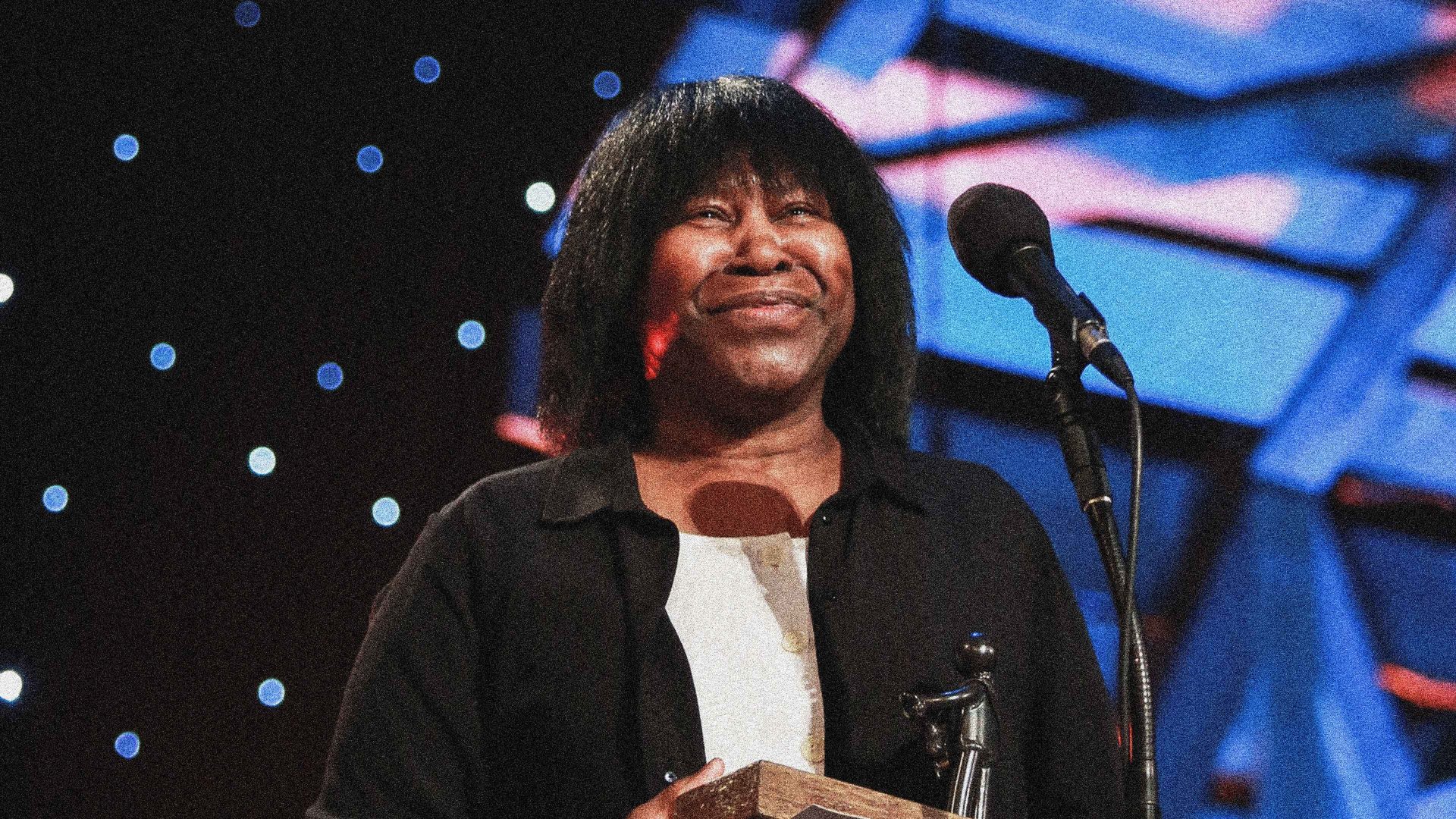
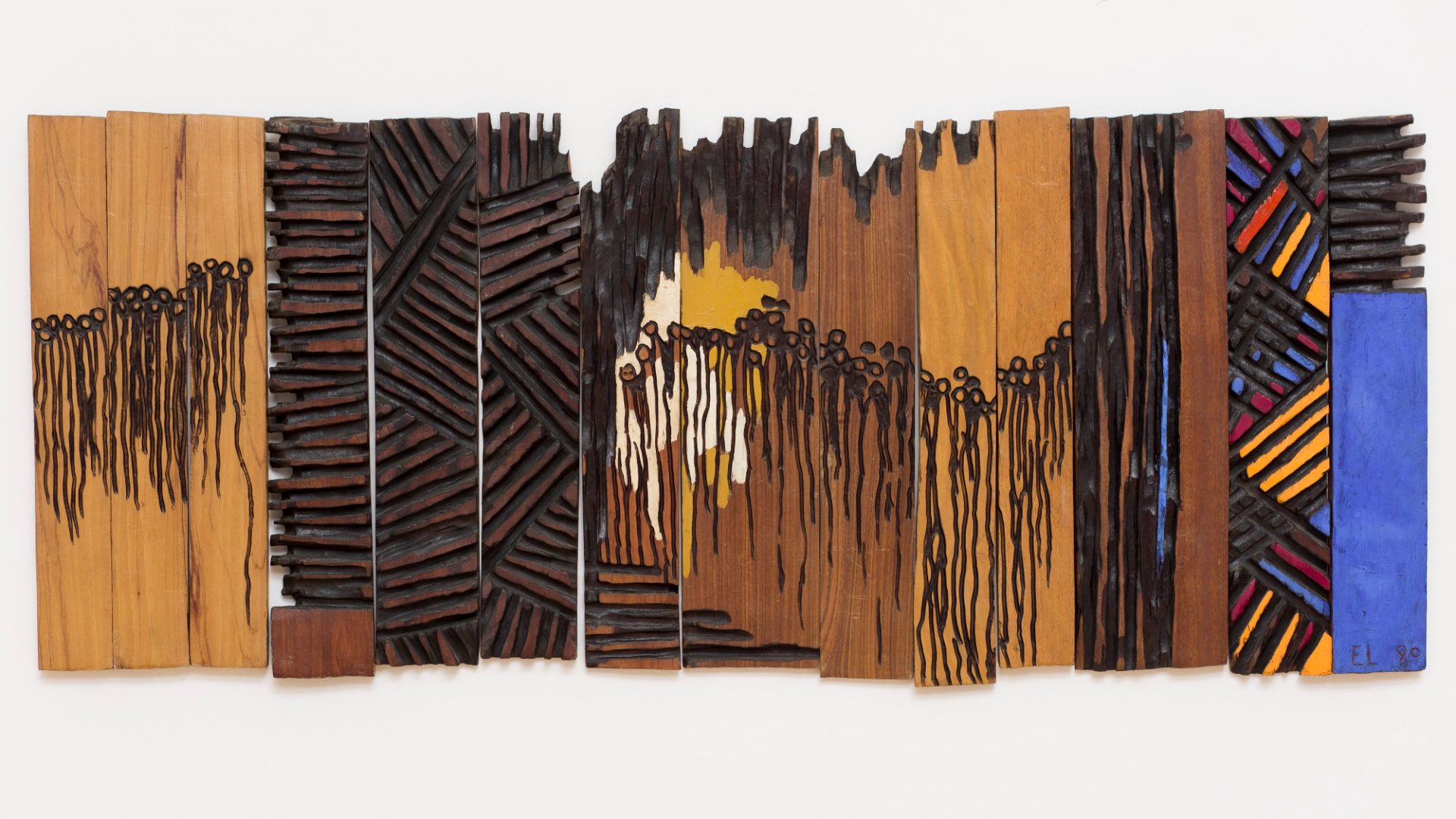
In 1961, a remarkable thing happened. The Daily Mirror commissioned Nigerian artist Ben Enwonwu to make a sculpture for the courtyard of its HQ in Holborn, London. Carved in African hardwood, it comprises seven figures, of which five hold newspapers that look also like wings or hymn books. These represent, said Enwonwu, “the wings of the Daily Mirror, flying news all over the world”.
The now barely credible idea of a newspaper having either the funds or the will to commission a piece of contemporary art is a measure of how times have changed. The figures are currently installed towards the beginning of Nigerian Modernism, the first UK exhibition to look at the vibrant flourishing of the country’s modern art.
The sculpture stands for a particular moment in Nigeria’s relationship with Britain in the aftermath of independence in 1960. It embodies the bonds and injuries of the colonial era, but using an almost futurist language of long lines and soaring outlines, it proposes an optimistic future.
Its symbolism is made all the more poignant by the sculpture’s fate. A few years after its unveiling, as Nigeria descended into civil war, the figures disappeared and were recovered only in 2013, when they were found in a pile of rubbish at the east London school formerly attended by the Kray twins.
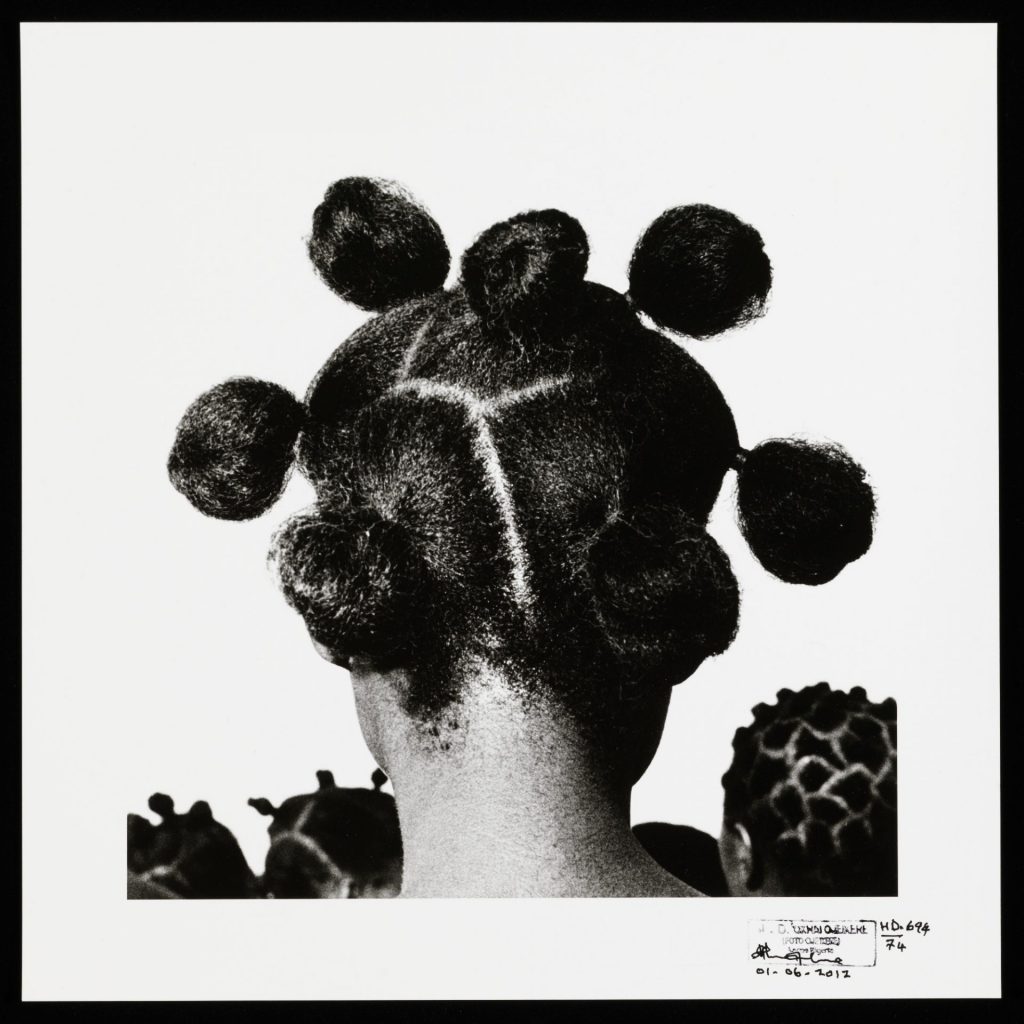
Spanning 50 years in which Nigeria experienced British colonial rule, independence and civil war, the exhibition brings together around 250 works by 50 artists who, in dazzlingly different ways, reinterpreted African traditions through the forward-thrust of European modernism, to redefine Nigeria and its people in a new post-colonial world.
Says curator Osei Bonsu: “There’s something really profound about the ways in which these artists were channelling this idea of nationhood against the grain of a long period of indirect rule, during which time many of their traditions and indigenous forms were marginalised or suppressed.”
Born in 1917, Ben Enwonwu was a child of colonial Africa, whose upbringing and artistic training instilled in him a deeply felt tension between the culture of his ancestors, and that of British colonisers. Trained first by his father, an Igbo sculptor, and completing his studies at London’s Slade School of Fine Art, he embodies the story of synthesis and resistance, tradition and radicalism that this exhibition narrates.
Enwonwu was awarded an MBE in 1955, followed a year later by a commission from the Nigerian government to produce a portrait sculpture of Queen Elizabeth II. But he was no apologist for colonialism.
His western training was a tool with which he set about reinforcing and reinvigorating Black and African culture. “The preservation and continuity of the characteristic quality of African Art, depends largely on how modern African artists can borrow the techniques of the west without copying European Art,” he wrote in 1956.
It was an approach in tune with Négritude, a movement he became involved with that same year, when he met one of its leading lights, the poet Léopold Sédar Senghor, later the first president of Senegal. Born in Paris in the 1930s, Négritude took the celebration of Black and African culture and beauty as a means of building worldwide solidarity to fight racial oppression and injustice.
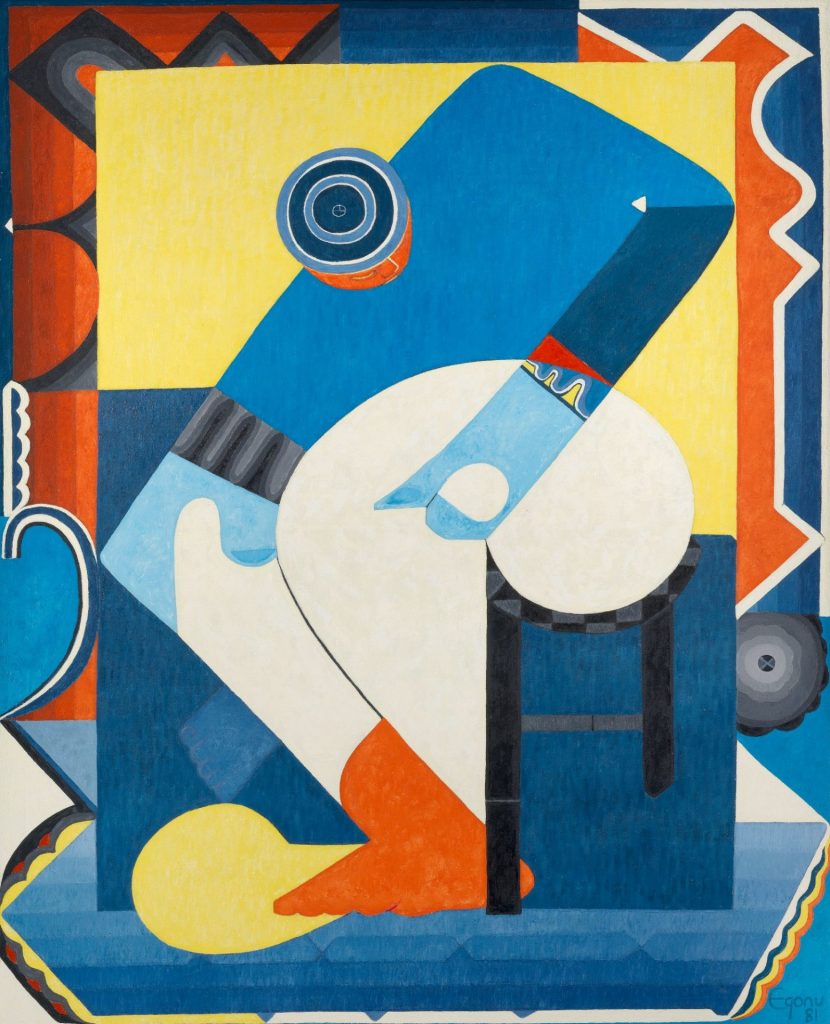
For Enwonwu, it inspired a series of paintings in which he pictured Black African emancipation in the dynamic figures of nude female dancers. One of these paintings, Black Culture (1986), serves as the exhibition’s arresting poster image. Seen in the context of a generous sample of his work, Enwonwu’s dancers link clearly to his paintings of Igbo masquerades, events integral to the Igbo culture of one of Africa’s largest ethnic groups, and which range in function from entertainment to communicating with ancestral spirits.
Another of Nigeria’s internationally celebrated artists is potter Ladi Kwali, whose distinctive water jars, incised with patterns and animal forms, and glazed with rich translucent colours, continue to inspire European studio pottery today. She was the first woman to train with the British potter Michael Cardew, who in 1950 opened the Pottery Training Centre in Abuja, an initiative of the colonial government to bring western pottery techniques to Africa.
When she met Cardew, she was already a skilled maker of the water jars traditionally made by women in her native Gwari region, which are inscribed with patterns and figures that contain stories and cultural knowledge. To these, Ladi Kwali began to introduce western glazes and techniques, perpetuating and strengthening the traditional storytelling practice by incorporating Nigeria’s colonial experience into her work.
Western involvement in Nigeria had some curious consequences, and a number of Europeans immersed themselves in the country’s indigenous cultures to such an extent that they seem to have been accepted as naturalised community member. Austrian artist Susanne Wenger became a Yoruba priestess, known as Adunni Olorisa (the initiated, the divine).
Suggested Reading
Lee Miller beyond the bathtub
In 1958, the Yoruba priests of Osogbo asked her to help preserve the crumbling shrine of the fertility goddess Osun. Wenger took on local craftspeople in what became a major project that injected artistic invention of such revitalising force that it gave rise to a New Sacred Art Movement.
It was Nigeria’s extraordinary ethnic diversity, and its consequent wealth of indigenous cultural practices that made it such a fertile ground for experimentation, says Bonsu: “Nigeria was one of the real hubs for the development of modern African art, in part because of its multi-ethnic, multi-religious identity, but also because by independence in 1960 it had become a melting pot… So you had sort of various kinds of magazines, theatre groups, poets, artists, kind of congregating to ask the question: ‘what could be the new art for a new nation?’”
Wenger’s sometime husband, the German writer and publisher Ulli Beier was the founder of the francophone literary journal Black Orpheus. In 1961, he founded the Mbari Artists and Writers Club, the first, and most significant centre for debate and artistic exchange in post-colonial Africa.
For a brief period before civil war broke out in 1967, the Mbari Club was an engine room of innovation. The discovery of oil fields in the Niger Delta had added wealth to the sum of national good fortune, and here writers, artists, actors and musicians could thrash out ideas, and experience art from all over Africa, rediscovering indigenous traditions through the prism of the colonial legacy.
It’s a miserable realisation that the cultural and ethnic diversity that makes Nigeria such an artistically fertile country, is also what made the civil war inevitable. Tens of thousands were killed in a three-year conflict which reignited fundamental tensions between at least 250 distinct peoples and territories, forced together as Britain’s biggest colony, under the entirely artificial banner of Nigeria.
Nigerian Modernism: Art and Independence, Tate Modern until May 10