The tiny village of Carona, in the mountains above Lake Lugano in Ticino, Switzerland’s southernmost canton, seems almost untouched by the passing of time. Those daring enough to drive up here – passing gingerly through narrow streets better suited to mules than cars – are no longer permitted to park in the Piazza Montaa, so that its 18th-century stuccoed villas, built as holiday retreats for notables including the Bishop of Milan, appear to be the most significant recent addition to a village that has been here since the middle ages.
The square’s fountain, adorned with a pair of entwined, cast bronze snakes, is an early hint that all is not quite as it seems. This oddly exotic motif was designed by the Surrealist artist Méret Oppenheim (1913-85), a gift to the village where, at Casa Constanza overlooking the Piazza Montaa, she spent many happy years, remembering it as “a radiant place, as if the sun always shone there. It was always August.”
Oppenheim is best known for her Object, 1936, a fur-covered cup and saucer that for decades was one of a handful of artworks by women to be acknowledged in books. Less well known is the world in miniature she created at Carona, where in the late 1960s and early 70s, a buzzing artistic community attracted characters including David Weiss, who would go on to become one half of the duo Fischli and Weiss, whose expressions of post-hippy ennui marked a strand in mid-20th-century art akin to Pop Art and Arte Povera.
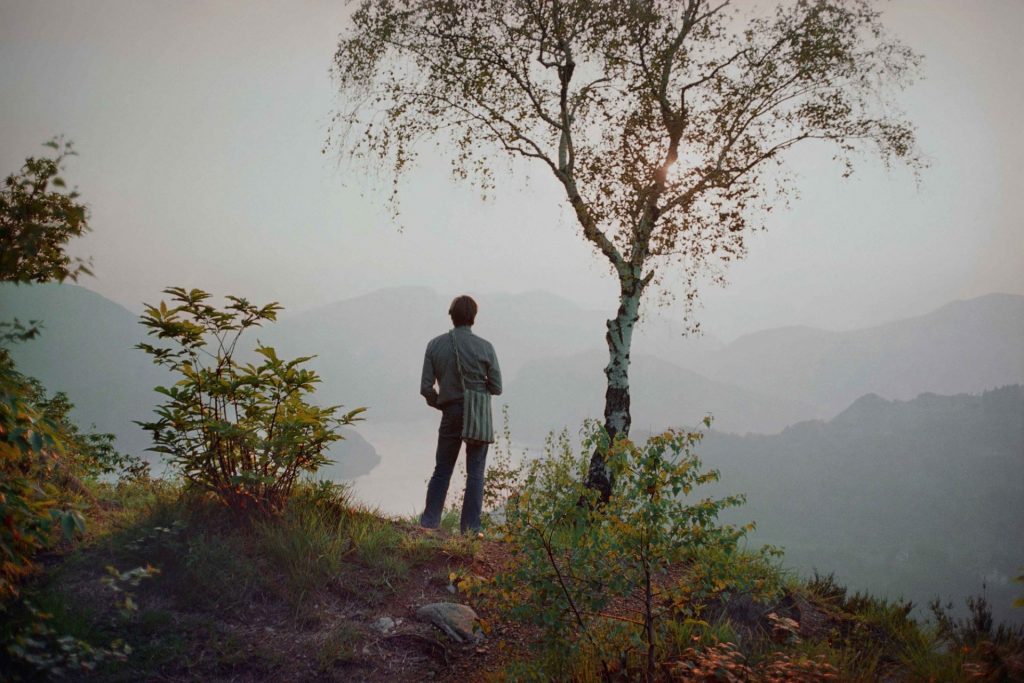
David Weiss: The Dream of Casa Aprile, Carona 1968-1978, at MASI Lugano is the first exhibition to explore the artist’s time in Carona, where in 1969 Oppenheim and her brother added the Casa Aprile, just adjacent to the Casa Constanza, to their fiefdom. Here, as she gradually transformed the Casa Constanza into an extraordinary artistic statement – a “Gesamkunstwerk” as her niece Lisa Wenger, its current custodian, puts it – her nephew Christoph, also an artist, oversaw the renovation of Casa Aprile, offering free hospitality to artists like his friend Weiss in exchange for help with the work.
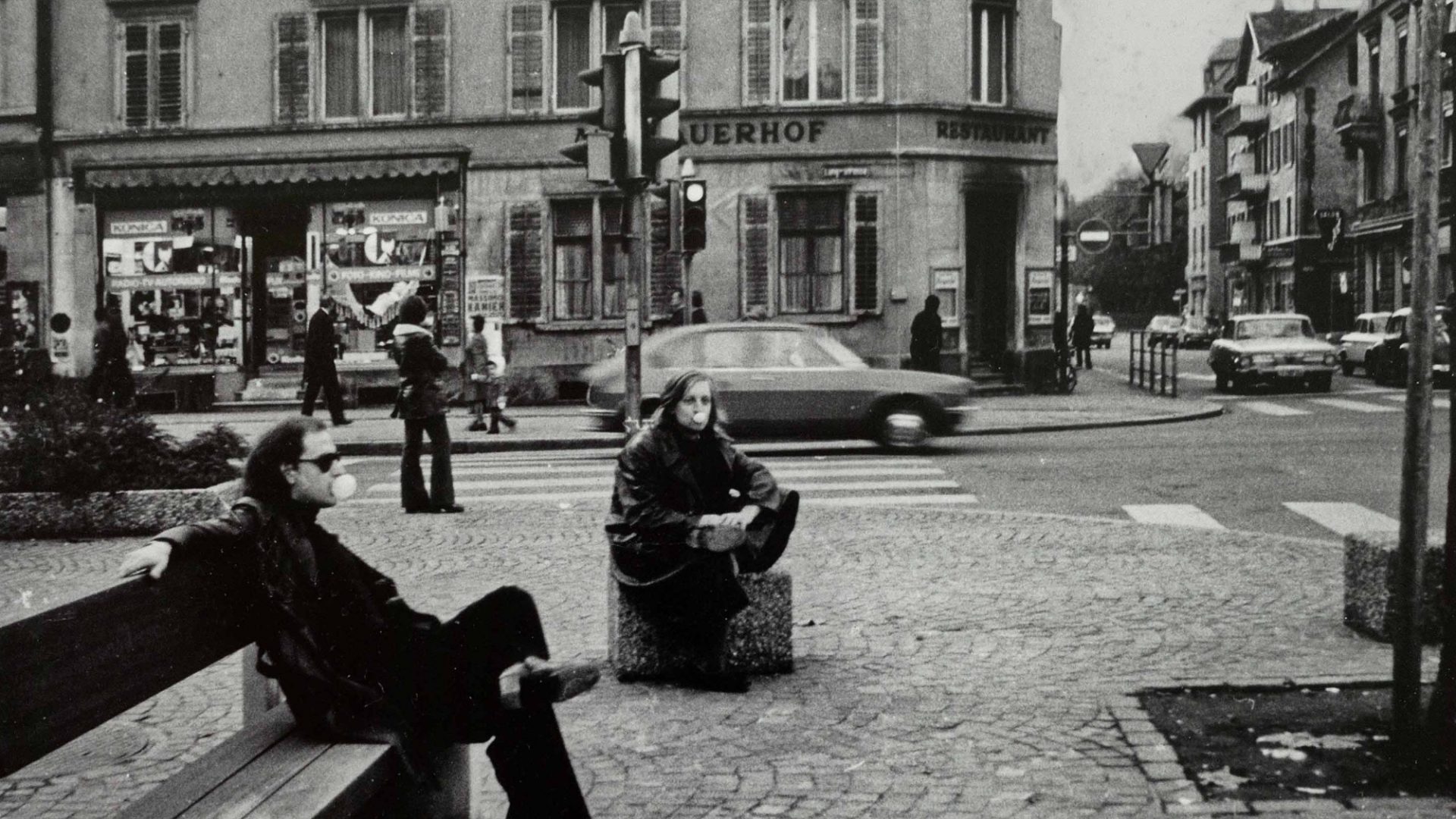
The exhibition is a fascinating collection of archival materials including diaries, books, photographs and drawings by the rag-tag group of artists who drifted through Casa Aprile, among them the photographer Willy Spiller, the conceptual artist Urs Lüthi, and such mysterious figures as the Swiss artist Esther Altorfer, and Penelope Margaret Mackworth-Praed, creator of psychedelic geometries that mix and separate colour.
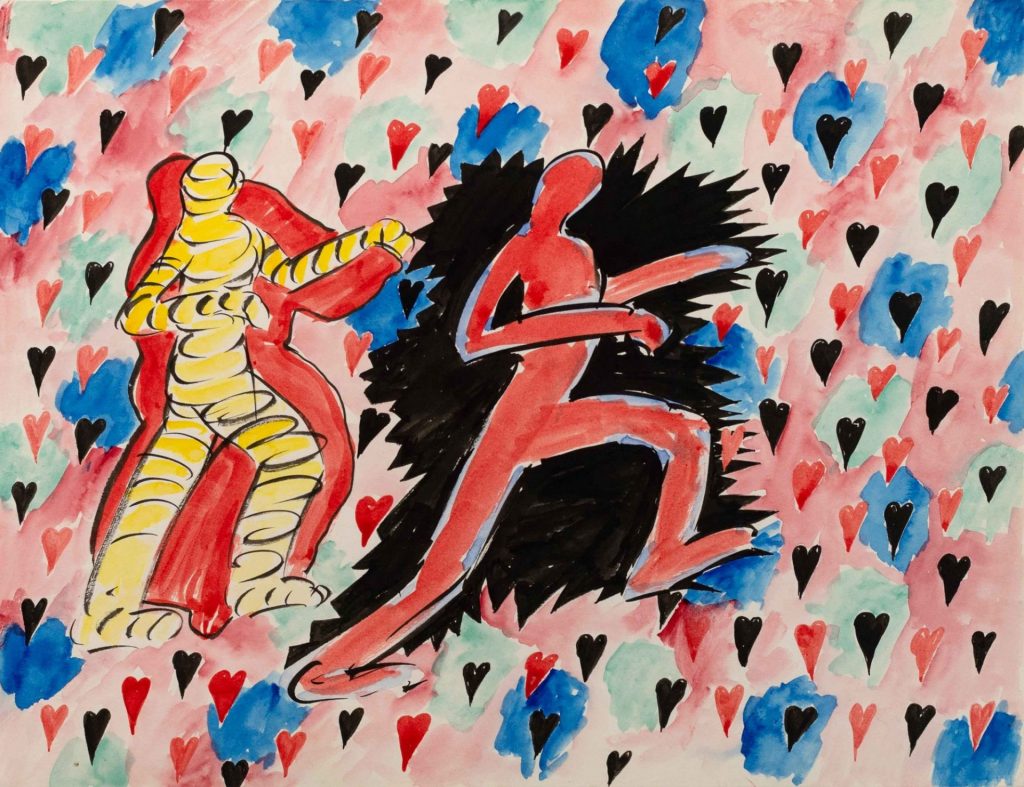
For Weiss, the Carona years were dominated – in artistic terms, at least – by drawing, the examples here switching between hyper-detailed, almost pointillist black and white renderings of interiors and psychedelic cityscapes, to looser, often quite whimsical drawings, and cartoons. One shows two worn-out hippies, one saying to the other, “Ich habe die Nase voll von Drogen” (I’m fed up with drugs”); the other agrees.
Suggested Reading

Women in the frame: the art to see in the next 12 months
Another resident at Casa Aprile was the American psychologist and LSD enthusiast Timothy Leary, who fled to Switzerland having escaped from prison in 1970. “Dressed in his signature white attire,” his presence there “added another dimension to its already vibrant artistic and intellectual milieu,” writes co-curator Virginia Marano in the exhibition catalogue. His own description of life in the village is bizarre: “We have developed a unique ‘schizoid’ fast-moving lifestyle. And I’m never what people expect. The scene changes from week to week.”
We’re left to guess about the impression this bizarre countercultural outpost had on the locals, predominantly farmers, who were quite possibly nonplussed by the hairy dropouts who parked round the square.
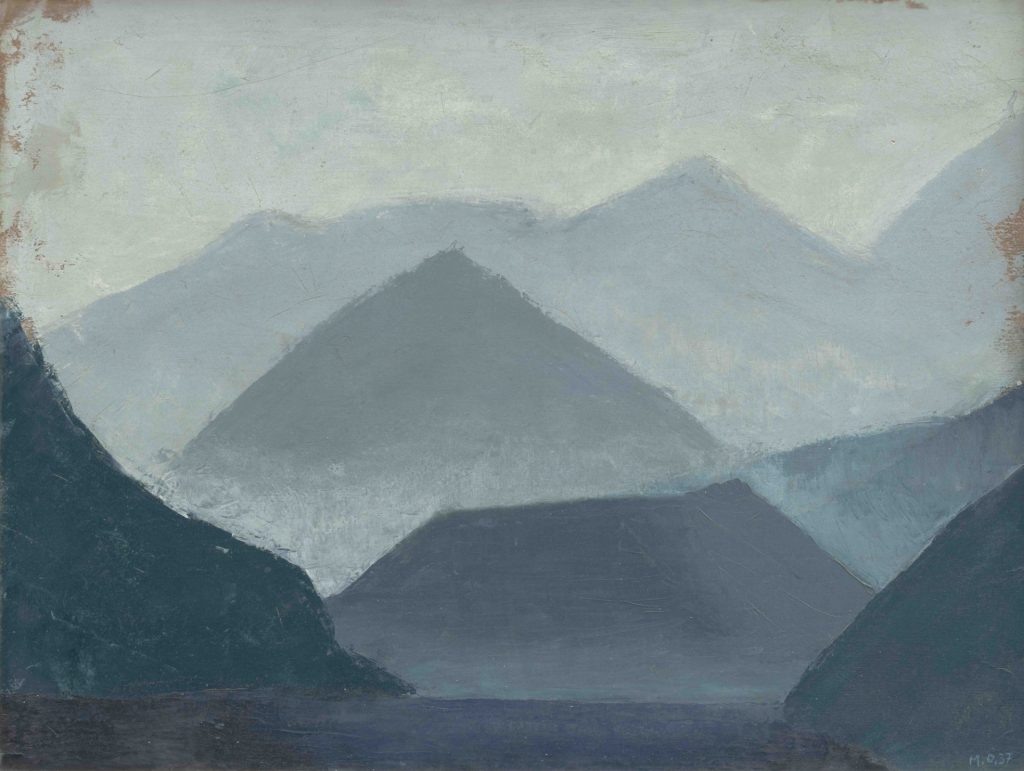
It’s just as likely that the villagers were unfazed by Weiss and his friends, who were the most recent generation in a long line of artists in Carona. Casa Constanza was bought as a holiday home in 1917 by Oppenheim’s grandparents, Lisa and Theo Wenger, both of whom, but especially Lisa, were gifted painters. Hermann Hesse came here on holiday for many years before marrying one of the Wenger sisters, Oppenheim’s aunt Ruth, and his cubist landscapes from the early 1920s are powerfully evocative of the freedom that he and others found here.
In the 1930s, it welcomed refugees from Germany, including Bertolt Brecht, who was invited to Carona by the German writers Kurt Kläber and Lisa Tetzner, themselves refugees who settled here permanently.
Oppenheim’s parents were similarly forced by circumstances to make the Casa Constanza their permanent home, taking the Swiss name Wenger over the Jewish name Oppenheim because, as the current Lisa Wenger explains, “it was getting a bit too dangerous”.
Lisa Wenger and her brother Michael still live in Casa Aprile, from where she keeps the family flame alive, running an outdoor photography biennial in the village, and administering and researching the legacy of her aunt.
What will happen to Casa Constanza next is unclear – Wenger hopes the government might take it on to run as a museum. It would be a fitting tribute to Carona, as a muse to generations of artists, and as a place of sanctuary.
David Weiss: The Dream of Casa Aprile, Carona 1968-1978 is at Museo d’arte della Svizzera italiana, Lugano until February 1, 2026