The lanyards for the Labour and Tory Party conferences have arrived and are swinging hopefully from the fridge. But this year they are staying there. For perhaps the first time in my journalist London life I am having to skip both, summoned back to the US on the eternal hunt for clues in the Epstein scandal.
We are making a documentary for Channel 4, with UK film company Lion TV, which will air in December, and are using the release of three million new files to tell the story of how Epstein was enabled – as a trafficker, fraudster, paedophile – by the systems and organisations that were complicit in his crimes.
The first leg of filming was back in the height of summer when we criss-crossed the US in 10 days – Washington DC to New York to West Palm Beach and finally California – talking to survivors, whistleblowers, legislators and prosecutors. Ahead of this trip, like a bad cop drama, we have been advised to “follow the money”. But in Jeffrey Epstein’s case there is so much money moving in such a vast array of directions it has been baffling to know where to start.
Slowly, however, it is beginning to fall into place. And it’s all leading to the US Virgin Islands. We are looking at what happened to his estate just two days before his death in prison, where we believe he summoned his attorneys to change his will and move hundreds of millions of dollars to the USVI.
The timing of these changes suggests he knew his death was imminent. It messes up the theory someone else was responsible for ending his life. But it also takes us into one of the most extraordinary legal battles of this scandal.
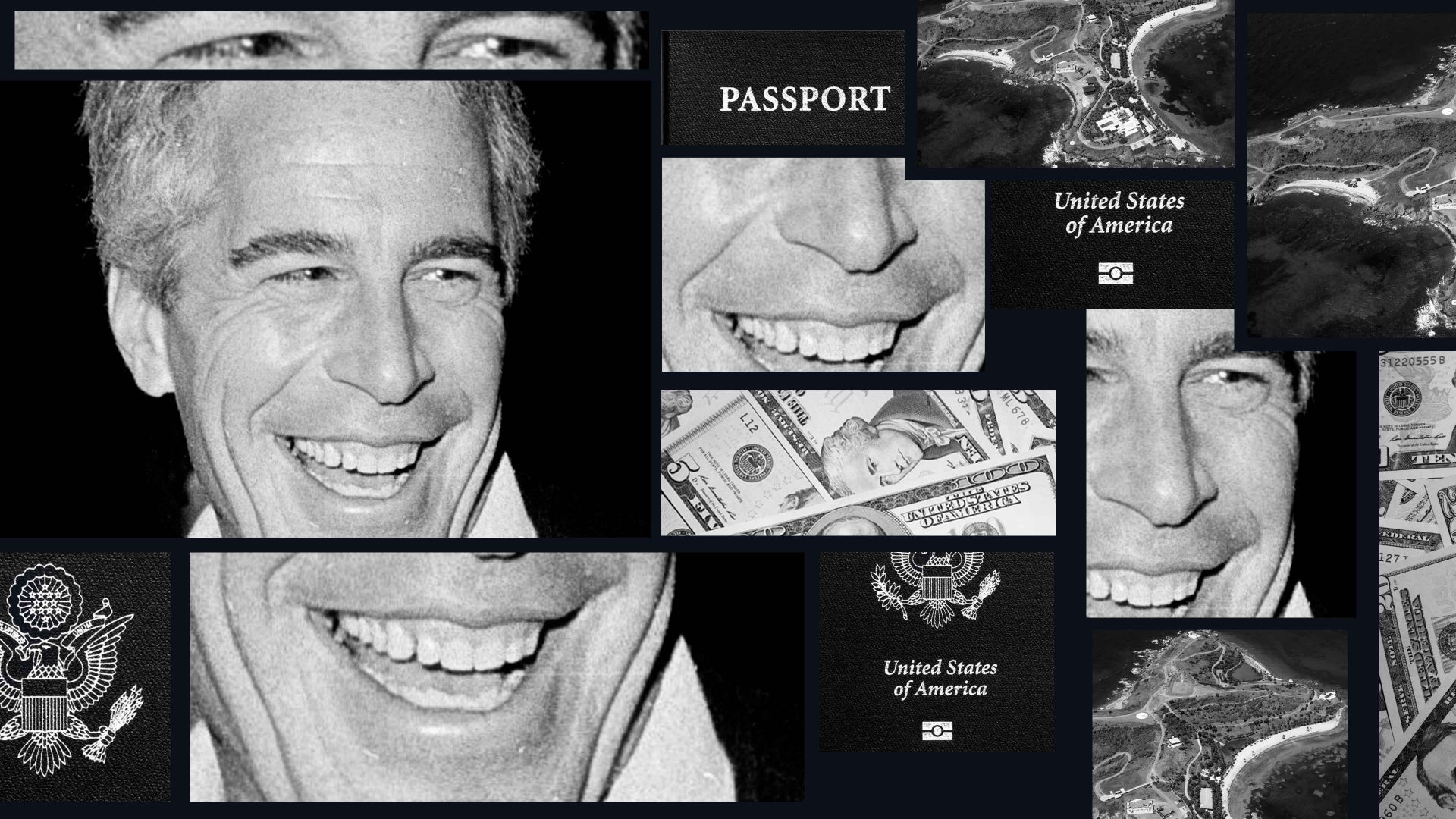
The Virgin Islands worked for Epstein’s crimes on a number of levels. He owned not just the infamous “Little Saint Jeff” – a paradise for his friends and a hell hole for his victims – but a decade ago he also purchased Great St James – the larger island that geographically wrapped around it.
He never built or developed on the larger one, but used it, the government later alleged, to shield his crimes from the mainland. An extra layer of protection from prying eyes. (That rang no bells when it was purchased by a convicted sex offender!)
Over the decade after his Florida conviction, he also began creating numerous USVI shell companies – using the islands to shield his assets from an increasing number of civil lawsuits.

In other words, the Virgin Islands were a hideaway – of both money and girls.
In our interviews, we hear how Epstein became so brazen he was asking the governor to “waive” the notice period he was made to give – as a convicted sex offender – before international travel. For nearly a decade he was able to come and go as he pleased, with no warning given to help countries monitor his movements.
He learned to bypass legislation – the very laws the island put in place – with the help of elected politicians. He learned how to exert control over the island’s administrators.
One year in November he had even tried to purchase 78 Thanksgiving turkeys for each one of the customs officials. Friends at the border are always useful for a human trafficker.
After Epstein’s death, with his estate fully established in the US Virgin Islands, things would change. Now, finally, a hero emerges – in the shape of the new attorney general, who begins asking the questions that should have been asked years earlier.
Who facilitated him? Who moved his money? Who funded his trafficking operation?
It takes her to the door of one of the biggest banks in the world – JP Morgan – where Epstein banked until 2013. She finds thousands of “red flag warnings” about his suspicious financial activity – to a total value of over a billion dollars.
The flags were raised. But nothing was done to stop the transactions. And they were never reported.
She uses the civil lawsuits to freeze his assets and investigate his behaviour. In November 2022 she reached a cash settlement with the Epstein estate worth $105m (£79.5m). A year later she won a settlement with JP Morgan for $75m (£57m). She lost her job.
But our conversation has left me with so many counterfactuals: if the sex offender travel restrictions had been kept in place during that decade, would his trafficking operation have been unable to expand? If the bank had heeded its own flashing red warning system, would the crimes have been stopped? If people in other words had just done their jobs, how much would have been different in so many victims’ lives?
The story that has dominated the airwaves here in the US this week feels depressingly related. The Cornell case centres on what happened to a 20-year-old woman at a university frat house two years ago, and why her allegation of multiple rape by seven men was treated by the university as a disciplinary matter rather than an actual crime.
Having spent all week asking why institutions were so quick to look the other way and shield the perpetrators of Epstein’s trafficking ring rather than the victims, there is a familiar ache on a cellular level to all this. And it is no surprise when Donald Trump enters the fray to offer his sympathy to – you guessed it – the alleged rapists.
But there is something even more systemic at play here – and that is to do with a specific New York state law that distinguishes between being drunk (by your own hand) versus being mentally incapacitated because someone else has drugged you. The “voluntary intoxication loophole” has tied this case in knots – and pushed many activists now to demand an urgent change to the law.
We are putting in 12- to 14-hour filming days – more if there are location changes along the way. There is a lot of lugging of luggage and setting of set.
In these instant days of the smartphone, it’s a real reminder that TV documentary demands acres of time and specialised talent. The crew is superb – and the in-between filming moments yield up golden nuggets of chat. Like Candy, our makeup artist, who describes to me how she’s already being replaced by “robot makeup”.
What does that mean, I ask, as she blots the jetlag bags beneath my eyes. She tells me how she was dropped from a job at a snazzy New York studio when the corporation that hired her decided to do their in-house shoot at their offices instead. “They used a green screen” – she explains – and “drew the makeup on afterwards in post.”
I am thinking hard. If they can paint on the makeup and cut the artist, how long before they dispense with the messy corporeal humanity of the presenter’s body, too.
“That’s the future!” she laughs. But it isn’t any more. It’s the present.