Twenty years ago, the Conservatives, Ukip (now Reform), and the BNP decided the best way to mobilise Britain against Europe was to attack the presence of Poles in Britain.
In 2008, the Federation of Poles of Great Britain published a report on 100 anti-Polish stories in one paper alone – the Daily Mail. Inflammatory, anti-Polish headlines in the Mail, Sun, and Daily Telegraph were common, as Tories drummed up hate against the 116,000 Polish nationals who had come to Britain in 2015 to use their skills and technical abilities to boost the UK economy, especially in the construction, IT and decorating sectors.
Under the Russian-German partitions of Poland during the 18th and 19th centuries, Poles had to emigrate to richer, western Europe, then the US, in order to live a decent life. Not any longer. Now Poland is seeing a return of Poles to their homeland for the first time in 300 years.
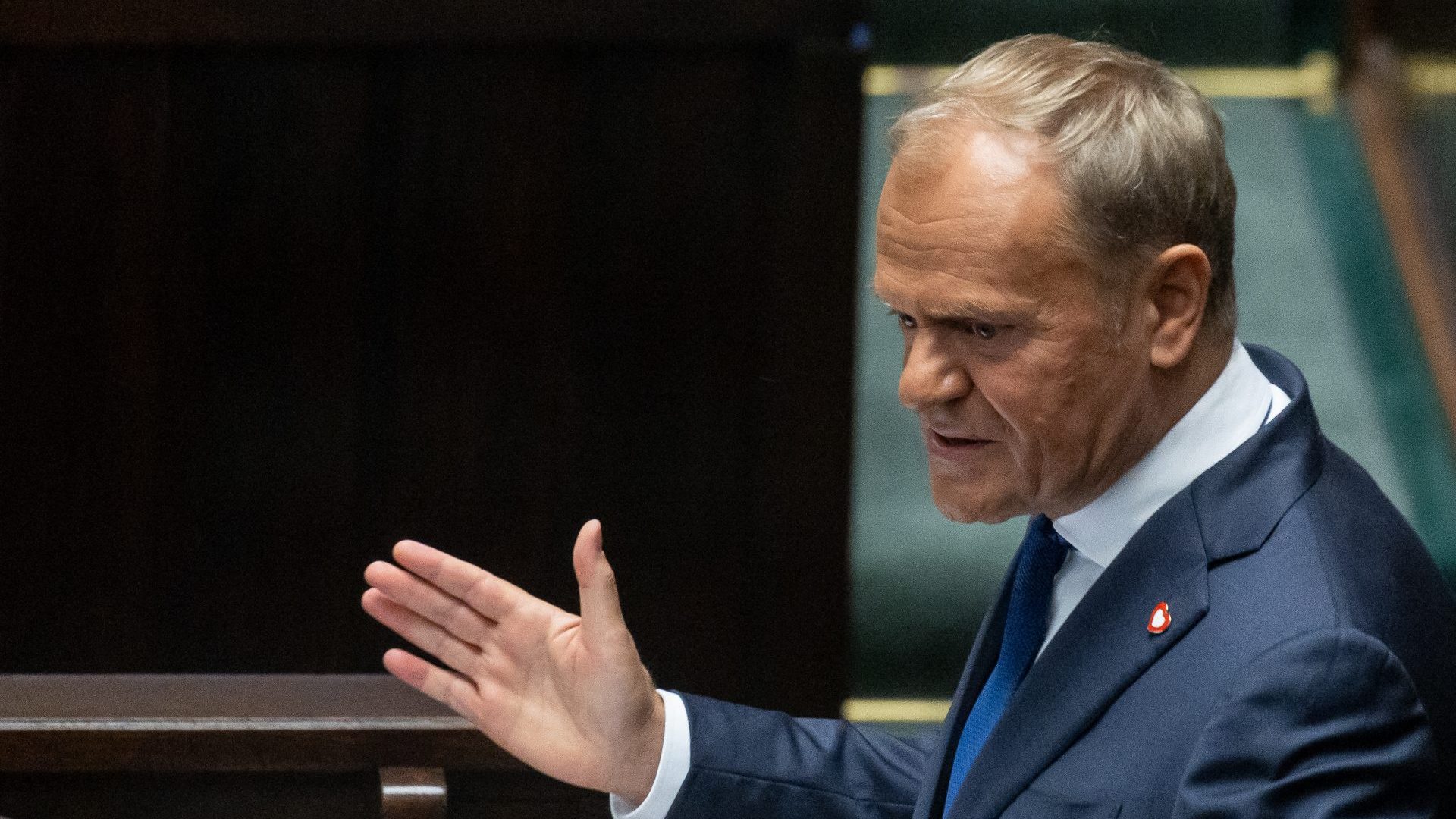
Thanks to the leadership of Poland’s prime minister, Donald Tusk, one of the unsung and largely unknown stars of modern Europe, Poland is enjoying the best years since the formal foundation of Poland in 966, as a Christian European nation. That was a century before a Norman Duke arrived in small boats across the Channel with an army of greedy thieves wanting to steal England’s wealth.
Tusk was a young historian from an unfashionable part of northern Poland. He challenged the assumption of the Catholic nationalist right that Poland should become an illiberal nation in the manner of Viktor Orbán’s Hungary or Robert Fico’s Slovakia. He rejected the idea that Poland should become hostile to modernity, especially the rights of women, and encouraged the nation to face up to the anti-Semitism that permeated pre-war Poland before 1939 and communist-run Poland after 1945.
Tusk became leader of the Civic Platform party. He was prime minister from 2007-2014 but was ousted by the Law and Order Party which had formed an anti-European nationalist group in the European Parliament with David Cameron’s Tories.
Tusk had a second career as president of the European Council and then president of the European People’s Party, the federation of centre right parties taking in all major Christian democratic and conservative parties in Europe save England’s isolationist Conservatives.
Tusk came back as prime minister in 2023 and this year launched an ambitious economic plan based on an end to what he calls “naïve globalisation”. It is based on maxing out the economic advantages of full participation in the EU.
Today, according to the World Bank, Poland’s purchasing power-adjusted income per capita is poised to surpass that of Japan and on present trends, given the slow growth UK Brexit economy, Poland will rise above Britain in economic league tables within a decade.
Using his influence across Europe, Tusk has been the most effective mobiliser of pan-EU support for Ukraine. He is not welcome in the White House as he disagrees fundamentally with Trump on the nature of the threat Putin poses to Europe, and to global democracy.
Suggested Reading

Is Poland Europe’s literary giant?
The American Maga nationalists gravitate more towards the rightist president of Poland Karol Nawrocki who won the presidential election in August against the liberal candidate, Rafal Trszaskowski, the Mayor of Warsaw. But Nawrocki is as hostile to Putin as Tusk, and supports Poland’s active membership in the EU, two policies that are inimical to the Trump worldview.
Poland’s foreign minister, Radek Sikorski, was a young Solidarnosc activist who escaped after the communist suppression of the independent workers’ union to study at Oxford in the 1980s. There he was in the Bullingdon Club with Boris Johnson, but today hr has nothing but scorn for Johnson’s rancid anti-Europeanism.
Tusk, now 68, is looking at the 2027 election. He faces a major problem of the large number of judges appointed by the nationalist ultra-catholic right-wing president. They act as a block on Tusk’s plans to improve women’s rights and increase media freedom.
When Starmer addressed the Labour Movement on Europe in 2022, he told the crowd he was set on “making Brexit work”. But now the government seems to be leaving behind that self-imposed delusion. As it emerges into the European light, Labour could do worse than building a new alliance with Tusk, and with Poland the EU’s most anglophile member state.
Denis MacShane is the former minister of Europe. In 1982 he was imprisoned in Warsaw for running money to the underground Polish Solidarity Union
 Most popular
‘Operation Epic Fury – as it happened’

Is Star Wars dead?
Morrissey returns.. and heaven knows he’s mythical now

Iran War: Trump has now sealed his own fate