Owning a new car as a freelance journalist with an unstable income was nearly impossible in Nepal until a few years ago. Cars were classified as luxury goods, and the government imposed a hefty 300% import tax. Whenever I crossed the open border into India, I’d marvel at how affordable cars were there. In Nepal, however, the state seemed more interested in revenue than in helping families to own a vehicle. A green tax on petrol added to the burden.
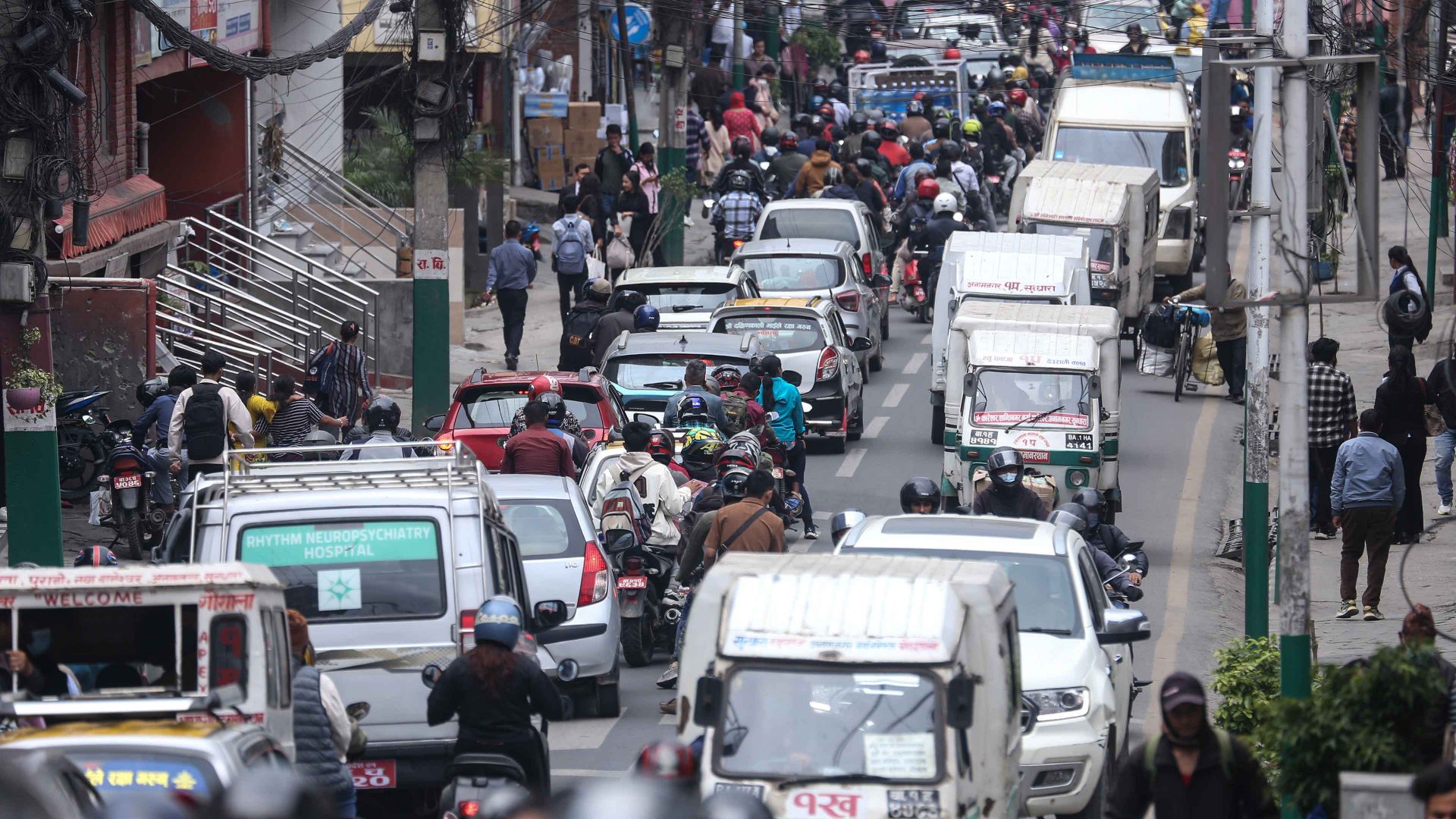
For more than 20 years, I rode motorbikes – an easy and agile choice on Nepal’s narrow roads, but one that comes with risks. Winters were the worst: I carried home layers of dust and exhaust on my clothes, and when I washed my face at night, I could feel the grime collected from a day of weaving through traffic.
During the monsoon, I used to joke that no raincoat on earth could stop water from seeping into my underwear. Then, in October 2023, while returning from a meeting on a traffic-choked road in Kathmandu, a taxi’s wheel rolled over my foot. That moment of helplessness – realising how vulnerable two wheels made me – pushed me to dream seriously about owning a car.
Still, the idea felt distant. I spent weeks scrolling through Facebook Marketplace, checking secondhand Hyundai models. The i10 was my personal favourite. I even visited a few showrooms for reconditioned cars. But the cars were old, driven tens of thousands of kilometres and clearly destined for frequent repairs, something I couldn’t afford.
But things changed a couple of years ago. The government offered tax concessions on electric vehicles to boost domestic electricity consumption. After months of deliberation, I finally decided to buy a new EV last year. The India-made Tata Tiago EV glided silently and came with a great German sound system – perfect for humming along to Nepali songs. I didn’t even mind that it had no spare tyre. The drive felt effortless.
Owning an EV in Nepal is both liberation and compromise. It means scanning for charging stations before every long trip and joining a growing tribe of EV owners swapping advice on Facebook groups. It also means witnessing a transformation: car showrooms now filled with EVs, even as the roads remain potholed and damaged by monsoon rains that triggered landslides and floods.
Suggested Reading
Welcome to AI city
Everything was fine until I started hearing rumours – cars catching fire, batteries failing, EVs being unsafe. This October, when I told my middle-aged aunt that we were riding in an electric car, she hesitated. She had seen countless TikTok videos of EVs bursting into flames.
Even friends who understand the technology insisted that petrol engines had decades of proven reliability, established repair networks and a steady supply of spare parts. EVs, they argued, were still untested.
A popular Nepali refrain didn’t help: “Aja EV Maa, Bholi TV Maa,” or “Ride an EV today, appear on TV tomorrow”, in other words: prepare to be in a traffic accident. I initially chalked the fear up to misinformation pushed by the petrol lobby, which is rapidly losing ground, but it’s clear that consumer confidence will take time to build.
For me, the benefits were obvious: economic and environmental. EVs contribute to cleaner air and reduce fossil-fuel use. Financially, the monthly instalment isn’t too bad. Nepal generates surplus clean electricity from its snow-fed rivers, and tax incentives were meant to encourage its consumption. With few large industries, the transport sector became the primary target. EVs also help cut the annual petroleum import bill of Rs350bn (£2.9bn).
The shift is visible. EVs made up more than 70% of four-wheeler imports last year. Nepal now trails only Norway in the transition, emerging as a global frontrunner. While private car sales are dominated by Chinese and Indian EVs, the government still needs to incentivise the shift in public transport.
Despite misconceptions and fear, every time I sit behind the wheel, I feel I’m making a small contribution to cleaner air and renewable energy. The roads may be potholed, but the journey brings a quiet sense of contentment.
Deepak Adhikari is an investigative journalist based in Kathmandu