

Peter Trudgill
25 June 2025
Claret: clearly not French

Claret really is an English word, not French. The best French translation of English claret is probably vin rouge de Bordeaux.
Read the full article18 June 2025
When deft turned daft: the mysteries of semantic shift

How can it be that if we go far enough back in the history of the English language, these two words were originally one and the same word?
Read the full article11 June 2025
A weak and feeble woman

Why did Queen Elizabeth I, in her famous speech at Tilbury in 1588, use two words with almost identical meanings to describe herself?
Read the full article05 June 2025
When the Great Heathen Army came to Norfolk

A large Scandinavian Viking army landed on the East Anglian coast in 865, giving places names which remain to this day
Read the full article28 May 2025
Why learning language is child’s play

Children have an innate ability to learn foreign accents that is lost as they grow up... but is it always an advantage?
Read the full article21 May 2025
Going ballistic in the Balearics
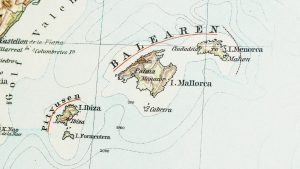
The original inhabitants of the popular Mediterranean archipelago were renowned for their use of catapults and slingshots as weapons
Read the full article14 May 2025
Heathens and pagans
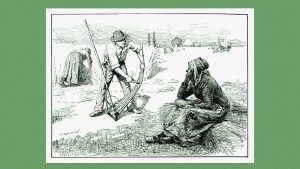
Both terms were applied to people living in rural settings, outside urban Christian religious communities
Read the full article07 May 2025
Trump’s war on language

A respected linguistic society has hit back at Donald Trump’s attempt to make the US a monolingual country
Read the full article30 April 2025
Reaching out to loved ones

Is the increasing influence of American linguistic usages in Britain making us stiff-upper-lip types more ‘touchy-feely’?
Read the full article23 April 2025
Never have I heard such nonsense

The relationship of English to the Germanic language family meant that we once used the ‘verb-second rule’, now only rarely used
Read the full article09 April 2025
An evocative call to arms

While English does not use the vocative case, many other languages do
Read the full article02 April 2025
The history of giving it some welly

Just because a phrase is relatively recent doesn’t mean it doesn’t have a long or distinguished history
Read the full article26 March 2025
Scotland’s most valuable ashet

The country has long had strong political and cultural ties with France, which are reflected in the language
Read the full article19 March 2025
Swearing on the Bible: where ‘bigot’ comes from

While the UK has its own home-grown bigots, the word itself may have come to England from France in the 16th century
Read the full article12 March 2025
Why being a convicted felon sucks

Felony has meant many things in the past, from crime, wickedness and sin to deceit and villainy. Just ask Donald Trump
Read the full article05 March 2025
A linguistic hat-trick for Woakes, Foakes and Stokes

How the world of cricket promises another pleasing rhyming headline in the not-too-distant future
Read the full article26 February 2025
The Prayerbook Rebellion: How Cornwall’s language was lost

Cornish was doomed after Latin was banished from church services in favour of English during the 1500s
Read the full article12 February 2025
Why coleslaw is literally a word salad

When is a cabbage not a cabbage? When it’s a kool sla. How Dutch influence shaped both ‘coleslaw’ and ‘cookie’ in American English
Read the full article05 February 2025
The Greenland-eyeing monster

If Donald Trump really wants to take control of this Danish territory, he’ll need to get to grips with Inuit or Old Norse
Read the full article29 January 2025
Inconstant Constantine

Istanbul has had many names over time – including Greek, Latin and Byzantine versions – before settling on its Turkish incarnation
Read the full article22 January 2025
What a mist opportunity

English spelling is notoriously difficult to learn; how might we benefit by reforming it – and what would we lose?
Read the full article15 January 2025
’Twas the night before Romjul

There is usually a way to translate supposedly untranslatable words into English – even if it does take a bit longer
Read the full article08 January 2025
A river runs through it
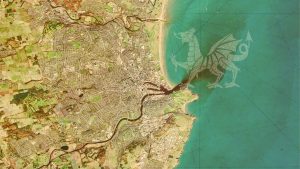
Aberdeen may be in Scotland, but its name derives from the Welsh for river mouth. Why?
Read the full article01 January 2025
The pet name of the game

Pet names, known technically as hypocoristics, often use abbreviation, rhyming, and vowel changes to express familiarity and fondness
Read the full article18 December 2024
Is it too much to aks?
The verb ‘to ask’ may have already been transposed in the past, but it took a lot longer for it to be used as a noun
Read the full article11 December 2024
The Farage garage barrage

The pronunciation of his name has always been debatable, but its origin seems clear enough – and it’s not from the Huguenots
Read the full article04 December 2024
Monolingual world rule

Trump is descended from immigrants and has a multilingual family. Why is he not more tolerant of bilingual arrivals?
Read the full article27 November 2024
Words that were borrowed but never returned

Many languages, including English, contain loan words ‘borrowed’ from other languages. But there is one notable exception – Icelandic
Read the full article20 November 2024
Chagrin of the Chagossians

This ethnic group of Afro-Indian origin have their own language, derived from French after their ancestors were brought to the islands as slaves
Read the full article13 November 2024
Was Ludwig van Beethoven actually a famous Belgian?
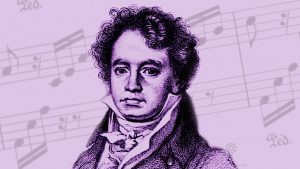
Discussions on whether there are any famous Belgians often throw up the same names – but very rarely is Beethoven one of those suggested
Read the full article07 November 2024
In praise of small boats
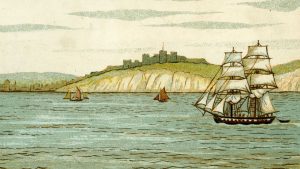
Our English language was brought to us across the North Sea by boatmen landing on the east coast
Read the full article30 October 2024
Joe Green and a name to envy
What links Philip Glass, Volodymyr Zelensky and Giuseppe Verdi?
Read the full article